
How to Remove Grass Stains From a Football Kit
This post contains affiliate links. As an Amazon Associate, we earn from qualifying purchases.
To remove grass stains from a football kit, treat them as a two-part stain: the green chlorophyll pigment and the underlying plant protein. Start by brushing off dried mud, then pre-soak the kit in cold to lukewarm water (under 100°F/38°C) with an enzyme-based biological detergent for at least an hour. Never use hot water or a dryer first, as heat permanently sets the protein, locking the stain in place.
The green colour is barely water-soluble and often needs a different solvent, while the protein bonds to the fabric and needs an enzyme to break it down. Most washing fails happen because people treat these two problems as one, usually with a single hot wash that cooks the protein into the fibres. This is a key reason why learning how to remove grass stains from a football kit properly is important.
What follows is the breakdown: why grass stains work the way they do, the step-by-step fix that separates pigment from protein, and how to handle the disagreements between kit manufacturers, laundry scientists, and the professionals who clean kits for a living.
Key Takeaways
- Treat grass stains as two separate problems: the green chlorophyll pigment and the plant protein underneath.
- Heat sets protein stains for good. Always start with cold to lukewarm water (under 100°F) and air dry until the stain is completely gone.
- An enzyme-based biological detergent is essential for breaking down the protein part of the stain.
- Skip fabric softener entirely on football kits, especially those with performance fabrics like Dri-FIT, as sources like Nike, The Spruce, WaveMAX Laundry, and CanDo all advise against it.
- For persistent stains, the American Cleaning Institute recommends sodium hypochlorite bleach (if fabric-safe) or oxygen bleach after the initial enzyme treatment.
The Two-Part Problem That Makes Grass Stains Stubborn
A grass stain isn’t one mark. It’s two different substances working together, and if you treat them as a single problem you will set the stain instead of removing it.
The green colour comes from chlorophyll, the pigment that makes plants green. WaveMAX Laundry, a commercial laundry service, points out that chlorophyll is barely soluble in water. A plain water wash might dilute it to a pale green shadow, but it often leaves that shadow behind. That’s why a dab of rubbing alcohol on a cotton bud can sometimes do more in a minute than a full wash cycle, alcohol dissolves chlorophyll better than water.
Underneath that green pigment is plant protein and sugar, ground into the fabric weave by a knee or a slide. This protein is what actually bonds to the fibre. It’s the glue that makes the stain cling, and it’s the part that an enzyme-based detergent is specifically designed to attack.
Heat cooks the protein, causing coagulation between the fibers in the yarns of the fabric, making the stains more difficult to remove. Protein stains will set if exposed to hot water, an iron, or a dryer. . Iowa State University Extension
If you use hot water or toss the kit in the dryer while the stain is still visible, you permanently set that protein glue, which is the primary mistake in how to remove grass stains from a football kit. The chlorophyll pigment gets locked in underneath it. The green left behind at that point is usually permanent, and it gets blamed on the grass when the wash is what did it.
Your Pre-Wash Battle Plan: Step-by-Step
The fight is won or lost before the kit ever goes in the machine. This sequence is built around keeping the stain cool and giving chemistry time to work.
Step 1: Let Mud Dry, Then Brush
If the kit is caked in mud, your first move is to do nothing. Hang it somewhere with moving air and let the mud dry completely until it turns grey and powdery. Then, turn the garment inside out over a bin and knock the panels together. Brush them down with a stiff, dry brush (a washing-up brush works; a wire brush damages fibres). This mechanical removal stops you from grinding particulate matter deeper into the weave during the wet stages.
Step 2: The Cold Water Rinse
Once the dry mud is off, rinse the kit in cold water. The goal here is to remove loose sand and dirt, not to treat the stain. Use a utility sink or even a hosepipe outside. CanDo Laundry Services stresses to use COLD water, never hot, at this stage to avoid setting any stains.
Step 3: The Pre-Soak – Where Sources Disagree
This is the most critical step, and expert recommendations on timing vary. You must use cold to lukewarm water (under 100°F/38°C) and add an enzyme-based biological washing powder.
| Source | Recommended Soak Duration | Key Rationale |
|---|---|---|
| Nike | At least one hour | Ensures enzyme detergent has time to break down proteins. |
| The Spruce | At least one hour or overnight | Longer soaks help lift stubborn, set-in stains. |
| CanDo Laundry | 2-4 hours, overnight for best results | Extended time allows oxidising stain removers to work fully. |
| WaveMAX Laundry | Twenty minutes does most of the work | The majority of available stain breakdown happens quickly in cold water. |
The consensus is clear: soak for at least one hour. If the kit is heavily soiled, extending it to several hours or overnight, as CanDo suggests, gives the enzymes and oxygen from an added stain remover more time to work. Use biological powder and an oxidising stain remover in your soak bucket, following the product’s instructions or a specific method like CanDo’s, which uses a cup of biological powder and half a cup of oxidiser in the pre-wash.
Step 4: Targeted Pre-Treatment
After soaking, inspect the kit. For any remaining grass marks, apply a targeted pre-treatment. The Jersied stain removal guide recommends creating a paste with enzyme detergent and cold water, applying it to the stain, and letting it sit for 30 minutes before washing. Alternatively, spray stains with an oxygen-based cleaner and let it work for at least 15 minutes, per The Spruce’s advice.
Choosing Your Weapons: Detergents and Stain Removers
You have three main lanes for attack: enzyme detergents, oxygen-based cleaners, and professional-grade products. Your kit’s fabric and the stain’s age decide which lane to use.
Biological (Enzyme) Detergents
This is your first line of defence. As the Iowa State University Extension states, enzyme-based products (pre-soaks and detergents) work best for protein stains. The enzymes essentially “eat” the protein glue. Look for terms like “bio” or “enzyme action” on the label. Use this in both your pre-soak and your main wash.
Oxygen-Based Stain Removers (Oxygen Bleach)
Products like Vanish Oxi Action fall into this category. They are safe for colours and are excellent for lifting the chlorophyll pigment. Vanish instructs applying their Oxi Action Liquid directly to the stain, gently rubbing it in, and leaving it for up to 10 minutes before washing. The American Cleaning Institute also recommends oxygen bleach for persistent stains if chlorine bleach isn’t fabric-safe.
The Professional vs. Manufacturer Divide
Here’s where a non-commodity insight appears. Nike, as a manufacturer, recommends using detergents specifically formulated for athletic uniform care. However, the Iowa State article notes that professional ‘Clubbies’, the people who launder uniforms for major league teams, suggest a specific two-part product called Slide Out as a post-stain remover. It’s a professional-grade option that highlights the gap between home care and pro care.
When to Consider Bleach
For white kits with stains that won’t budge, you may need to consider bleach. The American Cleaning Institute recommends laundering with sodium hypochlorite bleach, if safe for fabric, or oxygen bleach. This is a last resort. Always check the garment’s care label first and test on a hidden seam.
Fabric Care: What Not to Do
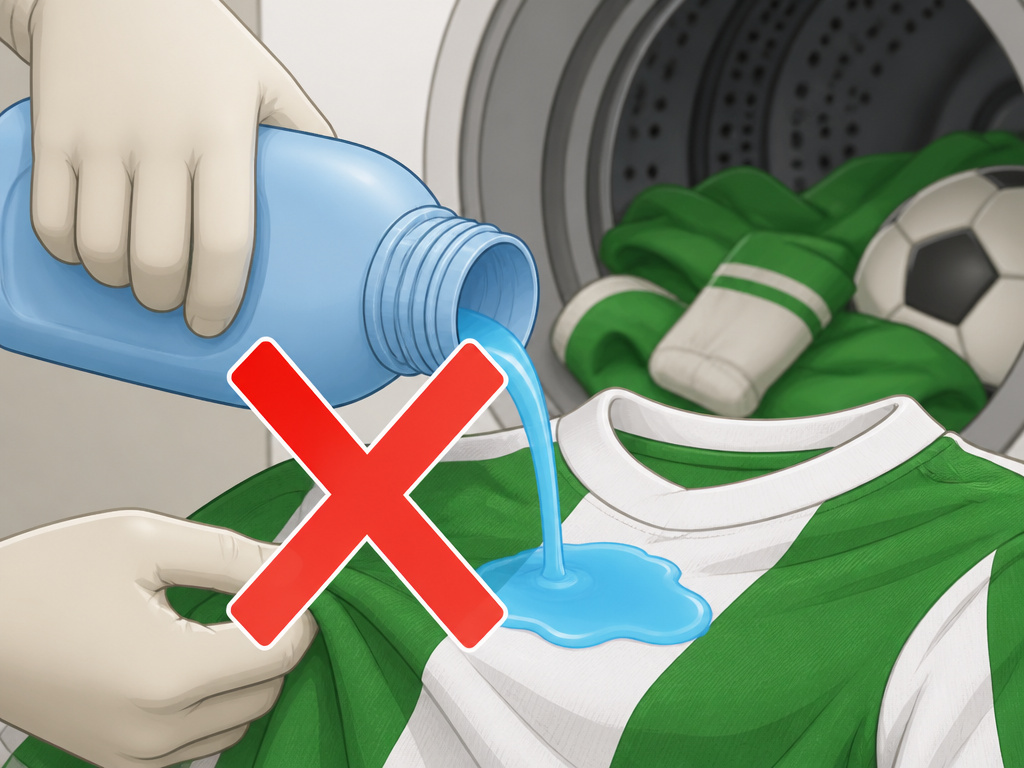
Modern football kits are usually polyester or polyester blends with moisture-wicking tech like Nike’s Dri-FIT. How you care for the fabric is as important as how you attack the stain.
Common mistake: Using fabric softener on a football kit. It coats the fibres, clogging the moisture-wicking finish and trapping odours. Softener is the enemy of performance fabric. Nike explicitly says to avoid using fabric softener on garments with Dri-FIT materials. The Spruce and CanDo Laundry echo this, stating it has little effect on grass and mud stains and ruins the fabric’s ability to manage sweat. If your kit feels stiff after washing, that’s usually residue from too much detergent, solve it with an extra rinse cycle, not softener.
The Dryer Debate
This is another area of clear disagreement among sources.
- Iowa State University Extension: Warns dryers (and irons) will set protein stains.
- The Spruce: Says if you must use a dryer, use low heat on the permanent press cycle.
- Vanish: Recommends drying naturally out of direct sunlight.
- CanDo Laundry: States it is possible to tumble dry the football kit on a low heat.
Sources disagree on drying: Iowa State warns dryers set stains, The Spruce and CanDo allow low-heat tumble drying, and Vanish recommends air drying. The safest approach to avoid heat-setting stains is to air dry. This is the only way to guarantee you don’t accidentally heat-set a faint remnant of a stain. It also protects screen-printed logos and numbers from cracking and peeling. I turned a replica sponsor logo into a wavy mess in one dryer cycle, and my Sunday league mates still bring it up. Air dry, every time.
Dealing with Specific Stain Types and Kit Parts
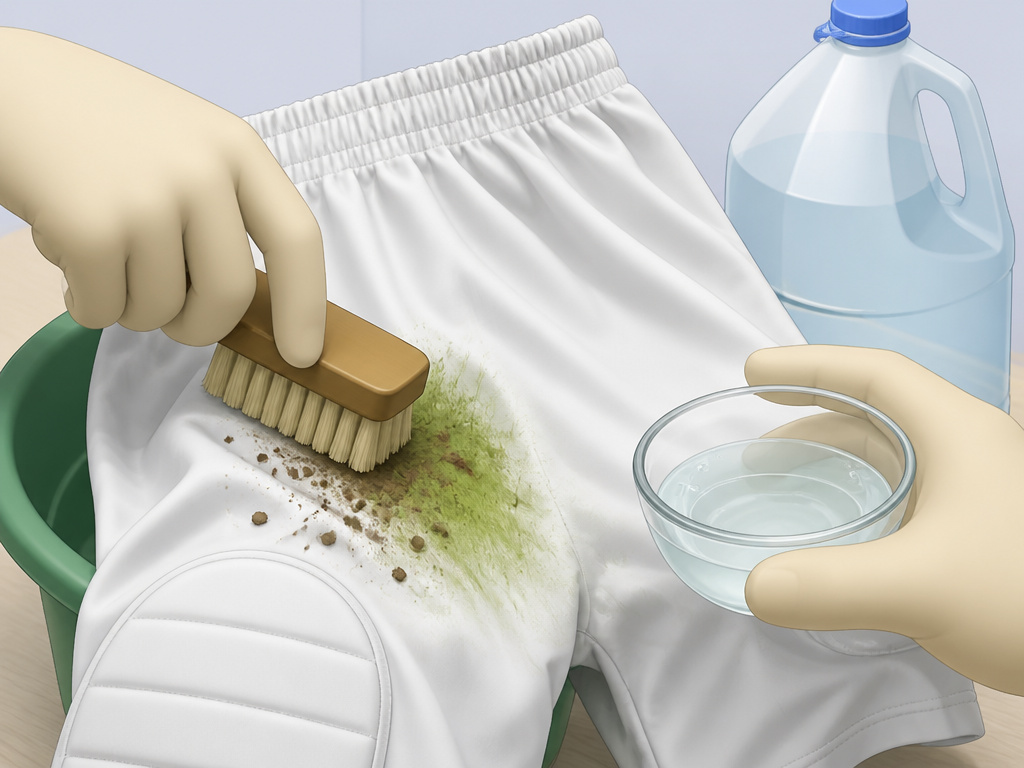
Grass rarely comes alone. Here’s how to adjust your approach for common companions.
Grass & Mud Combination Stains
Follow the dry-brush, cold-rinse, and extended soak protocol. Mud is mineral-based, so the mechanical removal (brushing) is crucial. The long soak with biological powder tackles the organic elements.
Blood Stains
Always start with cold water. Hot water will cook the protein in blood, setting it instantly. The Jersied guide confirms this, noting cold water prevents coagulation. Use an enzyme detergent on the stain before washing.
Brightening White Kits
For white pants that have yellowed, The Spruce suggests a brightening soak: let them sit in a solution of 1/2 cup detergent in 1 gallon of water for about an hour. Swish occasionally, then rinse and wash as usual.
Odour Control
Sweat odours come from oils and bacteria. Add 1 cup of baking soda to the washer drum for odor control. Add 1 cup of distilled white vinegar to the rinse cycle. Never use vinegar at the same time as bleach.
Using household remedies (vinegar, hydrogen peroxide, baking soda)
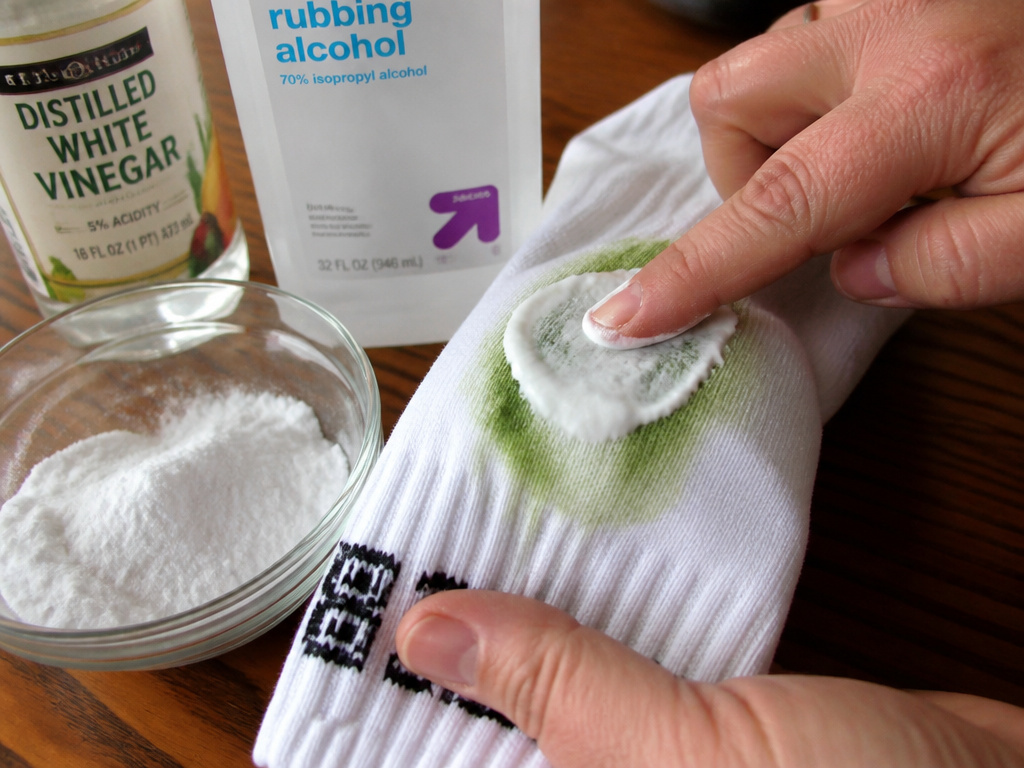
Household items can be part of your stain-fighting toolkit, but they work best when used correctly. For grass stains, which are protein-based, avoid heat at all costs. A paste made from baking soda and cold water can be applied to the stain before washing. Adding a cup of distilled white vinegar to the rinse cycle can help with odour control and rinsing away residues. Some sources note that rubbing alcohol can be effective for dissolving the green chlorophyll pigment. Always test any remedy on a small, hidden area of the fabric first to check for colourfastness.
Acting quickly on fresh stains
The moment grass hits the kit, the clock starts. Protein stains like grass will set permanently if exposed to heat from hot water, a dryer, or an iron. Your first move is always to rinse or soak the stain in cold to lukewarm water. This helps to flush out the loose pigment and protein before they bond to the fabric. Never use hot water on a fresh grass stain, as it will cook the protein into the fibres, making it much harder to remove later.
Checking care labels and washing instructions for kit fabrics
Your kit’s care label is the final authority. Manufacturers design fabrics for specific performance, and their instructions trump general advice. For example, some athletic materials explicitly warn against using fabric softener, as it can clog moisture-wicking fibres. Labels will tell you the maximum safe water temperature and whether bleach is an option. If the label permits, an oxygen-based bleach is often recommended for persistent stains. Following the manufacturer’s guidelines helps preserve the technical properties of the fabric and avoids accidental damage from well-meaning but incorrect home remedies.
Frequently Asked Questions
Can I use washing-up liquid like Dawn on grass stains?
While dish soap is a decent wetting agent for general dirt, grass stains are a more complex, two-part problem requiring an enzyme-based biological detergent. An enzyme-based biological detergent is far more effective at breaking down the plant protein that bonds the stain to the fabric. Save the dish soap for greasy kitchen towels.
How do I remove old, set-in grass stains?
Old stains are challenging because the protein has likely bonded firmly. Your best shot is an extended, overnight soak in a cold water solution with a heavy dose of biological powder and an oxygen-based stain remover. If the fabric is white and colour-safe, a follow-up wash with oxygen bleach (per the American Cleaning Institute) might help. Be prepared for some stains to be permanent.
Is it okay to wash my football kit with other clothes?
No. Wash your kit separately. The heavy soil and need for a robust wash cycle (not a gentle one) can damage other clothing. Also, lint from cotton towels or t-shirts can cling to the kit’s lettering and numbers. As Vanish notes, always wash “like with like.”
Can I use rubbing alcohol on all kit colours?
Rubbing alcohol can help dissolve chlorophyll, but you must test it first on a hidden area, like an inside seam. Apply a small dab with a cotton bud and blot it after a minute. Check for any colour transfer or fading. If it’s safe, it can be a useful spot treatment for the green pigment before the main wash.
Why does my kit still smell after washing?
This is usually a two-part issue. First, body oils soak into polyester fibres. A cool wash alone might not remove them, and they smell when the kit warms up again. Second, detergent or softener residue can trap odours. The fix: wash with a proper dose of biological detergent (not too much), add baking soda, use a vinegar rinse, and never use fabric softener. For a deep clean, check out our guide on how to stop boot smells; the principles for tackling ingrained odours are similar.
The Bottom Line
Removing grass stains is a game of chemistry and patience, not brute force. The single most important rule is to keep everything cool until the stain is completely gone. Heat is your opponent, turning a temporary mark into a permanent badge of a muddy Saturday.
Treat the chlorophyll and the protein as separate enemies, hit them with the right agents, enzymes for protein, oxygen or alcohol for pigment, and give them time to work. Your routine for general football shirt care starts the same way: cold, inside out, and with a lot more patience than you think you need. Because a clean kit isn’t just about appearance; it’s about making sure the shirt you wear for the story doesn’t become a story about the stain you couldn’t get out.
