
Finger Save Goalkeeper Gloves Pros and Cons: How to Choose
This post contains affiliate links. As an Amazon Associate, we earn from qualifying purchases.
Finger save goalkeeper gloves, often called “finger spines” or “Fingersave,” provide protection against hyperextension injuries by limiting how far your fingers can bend backward. The trade-off is a reduction in ball feel, hand flexibility, and natural grip. The choice isn’t universal, it depends on your age, injury history, and whether the spines are removable.
That’s the technical answer. The real question is what you give up for that safety net, and whether the trade makes sense for your game.
What follows is a breakdown of the mechanics, the hard data from manufacturers and patent offices, and the specific scenarios where the math flips. We’ll walk through the youth debate, the rehab use case, and why some pros use them while others wouldn’t touch them.
Key Takeaways
- Sources disagree on the primary use case: Storelli states the best time to wear them is after a finger injury, while West Coast Goalkeeping suggests they can help youth players prevent hyperextension injuries.
- For youth players, sources directly conflict: T1tan says children should NEVER use them, while West Coast Goalkeeping suggests they can prevent ER visits for kids with small hands.
- Removable spines offer flexibility; brands like West Coast Goalkeeping and Keepher build them into all current models to give the goalkeeper a choice.
- The protection comes at a cost: many sources, including Storelli, T1tan, and Elite Sport, note a loss of sensitivity and natural finger flex, which can hinder technique development.
- If you choose to use them, hand-strengthening exercises are crucial for all goalkeepers to stabilize fingers.
The Core Technology: How Finger Spines Actually Work
You can trace the idea back decades. The German Patent and Trademark Office (DPMA) archives show patents for finger protection systems, with specific patents like DE 35 16 545 C2, EP 1 487 289 B1, and FR 2 882 898 A1. The core challenge hasn’t changed: adding protection stiffens the glove.
Increased padding reduces flexibility of the fingers and the palm. This drawback must be counteracted by means of suitable segmentation of the palm of the glove, or cuts and embossments in the cover layers. . German Patent and Trademark Office (DPMA)
Modern finger spines are inserts that sit along the back of your fingers inside the glove. They are constructed to offer movement in one direction (to make a fist) and to harden when pressure is applied in the opposite direction. As T1tan’s support guide puts it, they “offer movement in one direction (so that you can make a fist) and to harden when pressure is applied” backward. This allows you to catch normally but locks before your joint hyperextends.
That locking action is the whole point. It turns a potential sprain or dislocation into a jarring stop.
Where this goes sideways: A spine can’t stop a finger from jamming straight back into the hand. West Coast Goalkeeping notes this is a common thumb injury, and their thumb saves “aren’t made to prevent jamming.” The protection is specific.
The spines gave me confidence on hard, low drives. But softer back-passes and crosses became a problem. I’d go to gather a ball and palm it awkwardly away, the plastic robbing me of the subtle pressure feedback that tells your hand it’s secure.
The Inevitable Trade-Off: Pros vs. Cons Sourced from the Industry
Every manufacturer and retailer agrees on the fundamental exchange. Here’s how the leading sources break it down.
| Aspect | The Pro (According to Source) | The Con (According to Source) |
|---|---|---|
| Injury Protection | Prevents hyperextension from powerful shots. (Voetbalshop.nl, West Coast Goalkeeping) | Does not protect against jamming injuries, particularly for thumbs. (West Coast Goalkeeping) |
| Confidence & Psychology | Provides “peace of mind” and security, especially for youth or injured keepers. (West Coast Goalkeeping, Elite Sport) | |
| Ball Feel & Sensitivity | — | Reduces sensitivity and limits feedback from the ball. (Storelli, T1tan, Elite Sport) |
| Hand Movement & Flexibility | — | Restricts natural hand movement and finger flex. (Storelli, Voetbalshop.nl) |
| Grip & Control | — | Can weaken grip on the ball. (Storelli) |
The “pros” column is short and situational. The “cons” column is consistent and mechanical. This isn’t a matter of good vs. Bad glove design; it’s physics. Adding a rigid element to a garment meant to mold to a ball and a hand will change its behavior.
Spines reduce sensitivity and limit the feedback you get from the ball. . Elite Sport
This is why the conversation quickly shifts from “should you use them” to a direct analysis of the finger save goalkeeper gloves pros and cons to see when the protection outweighs the performance cost.
Who Should Use Them? A Scenario-Based Guide
This is where sources disagree, sometimes violently, on the finger save goalkeeper gloves pros and cons. You can’t get a single answer because the use cases are fundamentally different. Match the scenario to the sourced advice.
Scenario 1: Returning from a finger injury.
- Source Stance: Strong recommendation. Storelli is direct: “The best time to wear finger protection is AFTER a finger injury.” Elite Sport agrees, noting they’re “especially useful for goalkeepers who already had an injury and want to prevent recurrence.”
- The Why-Layer: A recently healed joint is weaker and more prone to re-injury. The spine acts as an external ligament, providing stability while the natural one regains strength. It’s a temporary brace, not permanent equipment.
Scenario 2: A youth goalkeeper (under ~14).
- The Source Conflict: Here lies the biggest debate.
- T1tan’s Stance: “Children should NEVER play with goalkeeper gloves with finger protectors. NEVER!” They argue it prevents learning proper catching technique.
- West Coast Goalkeeping’s Stance: “For youth players with developing hands and hands that are smaller than the ball, it can help keepers to avoid those costly trips to the ER.”
- The Verdict: It’s a risk calculation. If a child is playing with a senior-size ball and taking hard shots, the hyperextension risk is real. There is no universal rule.
Scenario 3: An adult keeper seeking “extra protection.”
- Source Stance: Sources offer different guidance. Storelli emphasizes hand-strengthening exercises as crucial, while West Coast Goalkeeping takes a neutral, pro-choice stance. Storelli calls them “crucial for all goalkeepers to stabilize fingers.”
- The Why-Layer: The protection becomes a crutch.
Scenario 4: The professional or serious amateur.
- Source Stance: Mixed. Elite Sport observes that “many active professional goalkeepers use them, especially after injury.” West Coast Goalkeeping says they have “pros who use them and pros who hate them,” noting one MLS starter who sized up to fit two spines per finger.
- The Reality: At the top level, it’s a pure performance calculus. Does the marginal loss of feel cost more than the risk of a season-ending finger injury?
Removable vs. Fixed: Why Your Glove’s Design Is the First Decision
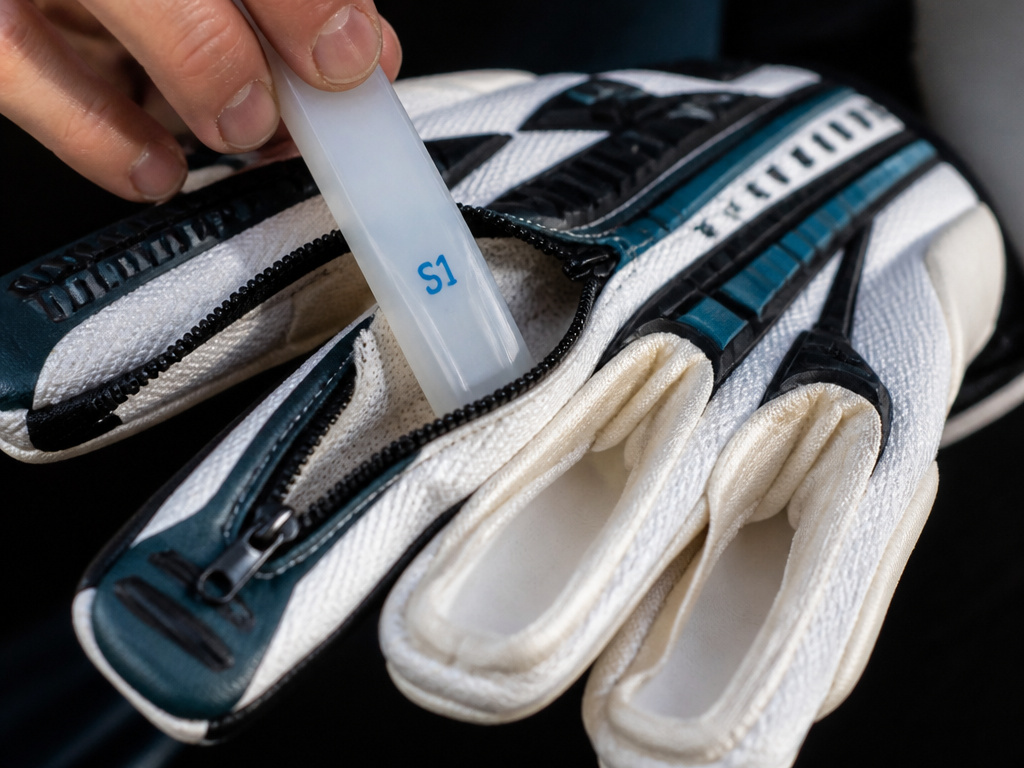
This is the single most important feature when considering finger-save gloves. It changes them from a fixed tool to a flexible option.
Removable Finger Saves are the modern standard for a reason. Brands like West Coast Goalkeeping, Keepher Soccer, and Storelli all champion them.
- How they work: A zippered or velcro-sealed compartment on the backhand allows you to insert or remove plastic spines for each finger individually.
- The huge advantage: Choice. You can protect a healing index finger while leaving the others free, or take them all out for training to maintain feel. West Coast Goalkeeping puts them in all their gloves specifically so “it is YOUR choice.”
Fixed (Sewn-In) Spines, as described by Elite Sport, “offer maximum protection and perfect fit but eliminate the flexibility to play without protection.” You are locked into that stiffer feel for the life of the glove.
When you’re looking at goalkeeper gloves or specific glove cuts, check the product description for “removable finger saves.” You can find recommendations for the best goalkeeper gloves and explanations of different glove cuts online. It’s the feature that makes the whole debate practical.
The Critical Alternatives and Complements
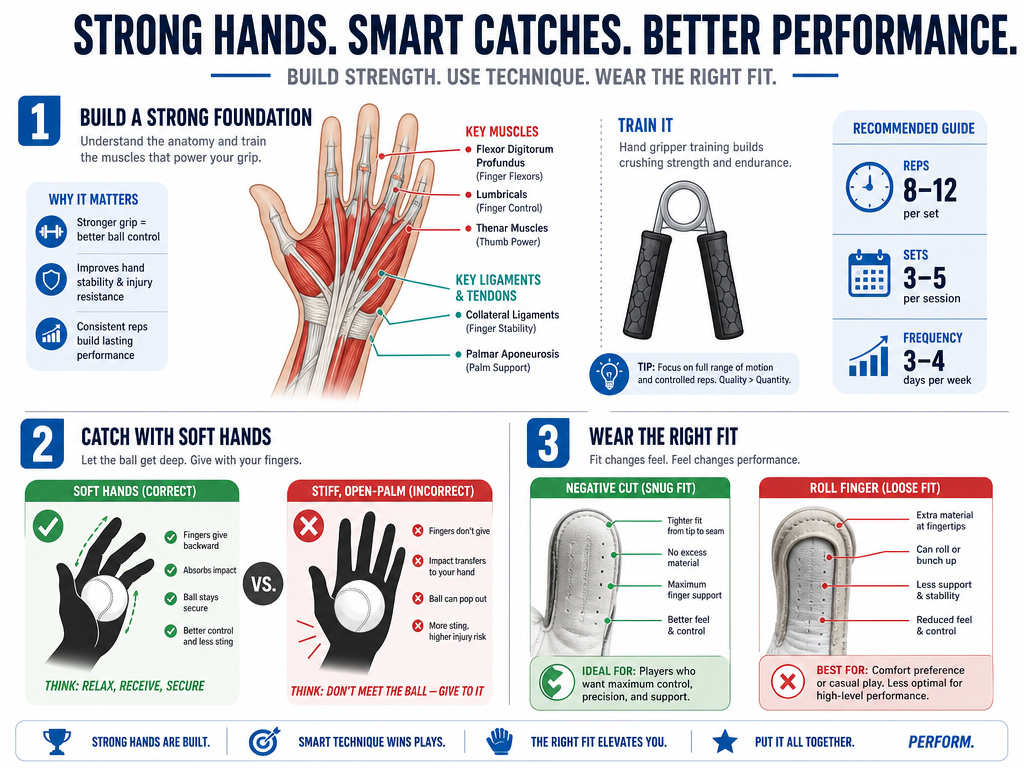
Finger spines shouldn’t be your first or only line of defense. Two other approaches often deliver better long-term results.
1. Dedicated Hand Strengthening.
This is the unanimous recommendation from manufacturers. Stronger muscles and ligaments around the finger joints are your built-in spine. Hand strengthening exercises are crucial for all goalkeepers to stabilize fingers and prevent overstretching.
2. Proper Technique (Especially for Youth).
This is the heart of T1tan’s argument against spines for kids. Learning to catch with “soft hands,” where your fingers give slightly backward to absorb impact, is a fundamental skill. A rigid spine can teach a child to meet the ball with a stiff, open palm, leading to more rebounds and less control. Good coaching here is better than any piece of plastic.
3. Choosing the Right Glove Cut and Latex.
Your glove’s design impacts safety. A snug negative cut glove can offer more support than a loose roll finger. The glove latex matters too, a softer, grippier palm can help you secure the ball faster, reducing the time your fingers are exposed to impact forces. Sometimes, the best protection is a better catch.
I made a glove design mistake myself, buying a roll finger for the large surface area, only to find the snugger negative cut on my old pair gave me more control. You can read a comparison of negative cut vs. Roll finger goalkeeper gloves for more details. The right tool for your specific conditions is its own form of protection.
Frequently Asked Questions
Do any professional goalkeepers use finger save gloves?
Yes, but it’s not the norm. As Elite Sport notes, many active pros use them, especially when returning from a specific finger injury. West Coast Goalkeeping confirms they have pros on both sides, with some opting for the extra security. The majority at the highest level prioritize unimpeded feel and rely on strength and technique.
What are the best goalkeeper gloves with removable finger protection?
Many top brands offer models with the feature. West Coast Goalkeeping’s EXO and Helix lines have removable thumb and finger saves. Keepher Soccer includes them in all current models. Many brands offer models with removable spine systems. The key is checking the product description for “removable” before you buy.
Are finger save gloves bad for developing technique?
They can be, particularly for young players. The restriction in natural finger movement can inhibit learning proper catching form, where the hands give slightly to absorb power. Sources like T1tan and community coaches argue this is a significant risk for developing keepers, which is why they often recommend against them for children focused on skill development.
How do I know what size finger save to get?
The spines are integrated into the glove itself. You don’t size them separately. The critical step is proper glove sizing. A glove that’s too large will allow the spine to sit incorrectly against your finger, reducing its effectiveness and comfort. A glove that’s too small will be unbearably tight with the spine inserted. Get the fit right first.
Can I add finger saves to a glove that doesn’t have them?
Generally, no. The glove must be manufactured with the internal pockets or channels to hold the spines securely. You cannot retrofit them safely or effectively. Some brands, like West Coast Goalkeeping, sell replacement spine sets for their own glove models that were designed to use them.
Before You Go
The finger save decision ultimately hinges on a short-term versus long-term calculation informed by the finger save goalkeeper gloves pros and cons.
If you have a current finger injury, use them. Follow Storelli’s advice and treat them as a rehab tool. If you’re a parent of a young keeper facing hard shots with a big ball, the short-term safety might justify it, but be aware of the technique trade-off that sources like T1tan warn about.
For everyone else, the long-term path is almost always hand strength and better technique. Invest the time in exercises and coaching. When you do shop for gloves, prioritize removable systems to keep your options open, and remember that the perfect glove fit and latex type for your playing conditions will do more for your performance and safety than a piece of plastic ever will.
The best protection is a ball caught cleanly in the first place. Everything else is a backup plan.
