
How to Bounce Back From a Mistake in Football
This post contains affiliate links. As an Amazon Associate, we earn from qualifying purchases.
To bounce back from a mistake in football, you must separate the error from your identity and execute a clear mental reset. The research-backed 5F framework (Frick, Finish, Fix, Focus, Forgive), developed by mental performance consultant Dr. Nicole Detling, gives you that exact sequence. Acknowledge the frustration, finish the play with full effort, mentally fix the error with visualization, refocus with a grounding breath, and forgive yourself to prevent a fear-of-failure mindset.
The difference between a player who spirals and one who recovers is the presence of a plan, including knowing how to bounce back from a mistake in football, not talent. Without one, a single misplaced pass can unravel your entire half. With one, the game resets on the very next touch.
What follows is that plan. We’ll break down the 5F framework step-by-step, explore how coaches and teammates should react, and show you how to train for mistakes so they don’t surprise you when the pressure is on.
Key Takeaways
- Use the 5F framework (Frick, Finish, Fix, Focus, Forgive) as your in-game script, starting with a verbal acknowledgment of the error.
- Your first action after a mistake should be a simple, successful play, like a simple pass or a solid tackle, not a hero-ball attempt to make up for it.
- Coaches must model composure and delay instruction until the next break in play; coaching in anger shatters fragile confidence.
- In training, intentionally create high-pressure situations where mistakes are likely to build your recovery reflex before match day.
- Separate your self-worth from performance; you are not a bad player because of one error, and dwelling on it guarantees more will follow.
The Elite Athlete’s Playbook: The 5F Framework
The 5F framework (Frick, Finish, Fix, Focus, Forgive), cited by Psychology Today from mental performance consultant Dr. Nicole Detling, provides a structured cognitive sequence for athletes to process and move past errors. It begins with acknowledging frustration, proceeds through completing the physical action, mentally correcting the error via visualization, refocusing on the present task, and concludes with self-forgiveness to maintain a growth mindset.
Everyone in the game makes mistakes. The elite ones aren’t immune; they just have a better system for flushing them, which is the essence of how to bounce back from a mistake in football. Dr. Nicole Detling’s 5F framework is that system. It turns a messy, emotional reaction into a clean, repeatable procedure.
Frick. That’s step one. Let the frustration out with a quick, controlled verbal release. “Ah, darn,” or whatever your version is. The key is to acknowledge it happened instead of pretending it didn’t. Bottling it up just means it leaks out later as nervous energy or a reckless tackle.
Finish. You’re still in the play. The whistle hasn’t gone. The framework says to give all effort possible for that last sprint or that last defensive recovery. Don’t just go through the motions. This physical commitment bridges the gap between the error and the mental reset that comes next.
Fix. Now, in the seconds after the play stops, mentally re-run it. Visualize yourself making the pass, the tackle, the shot exactly as you wanted. This isn’t daydreaming. Research shows a positive correlation between visualization and improved sports performance. You’re literally wiring the correct neural pathway for next time. It also gives your brain closure, you’ve “fixed” it, so you can move on.
Focus. Your brain is now clear to re-engage. Use a grounding exercise: feel both feet planted on the pitch, take a deep diaphragmatic breath with a long exhale. This is a physiological process. It pulls your nervous system out of fight-or-flight and back into the present moment, where the next pass is waiting.
Forgive. This is the part players skip. Beating yourself up doesn’t change the past. It only installs a fear-of-failure mindset that makes the next risk feel terrifying. Forgive yourself. You made an error while trying to make something happen. That’s the job.
But mastering how to bounce back from a mistake in football requires practice. It’s a skill like any other.
What Your Coach (And Teammates) Should Do Next
Your internal process is one thing. The external reaction from the sideline and your own team is another. It can either reinforce your reset or blow it up completely.
The research from Soccer Psychology Tips is blunt: a coach should model composure so the athlete learns by observation how to deal with adversity. Confidence is fragile. So the first job is to model composure. A coach who stays calm teaches by observation how to deal with adversity.
The second rule is timing. Do not coach under the umbrella of anger. Wait until you calm down. Save the instruction for the next break in play, when you and the player have both cooled off. Instruction delivered in heat reads as an attack, and the player hears none of the tactical point.
Most importantly, the player needs to know you still have confidence in them. A quick nod, a clap, a “next one” – these are small signals that carry enormous weight. This is where real football leadership shows itself, in the moments after a setback.
Teammates have the same responsibility. A cohesive team shows support instantly. A missed shot? A quick “unlucky” or a pat on the back. It tells the player they’re not alone. Ask your squad to commit to this. The psychology in football isn’t just individual; it’s a collective project.
Where this goes sideways: A coach yelling immediate corrections while red-faced. The player hears anger, not advice, and their confidence crumbles. They’ll play safe for the next twenty minutes to avoid another confrontation.
The First Action Rule: Correct, Don’t Compound
I see this every Sunday on parks pitches. A player makes a mistake, feels the need to atone for it immediately, and tries an absurdly difficult pass or dribble to “make up for it.” It goes wrong. Now they’ve compounded one error with another, and the spiral begins.
The coaching blog Morsink Soccer nails the antidote: don’t try to do too much. Miss a pass? Recover with a good, clean tackle. Get beat on defense? Focus solely on completing your very next simple pass.
This is the First Action Rule. Your next touch after an error must be a high-percentage, basic football action. That simple success resets your nervous system. It finds the tempo of the game for you. It’s a small win that stops the snowball.
Think of it as tactical patience. You don’t erase a mistake with a single moment of genius. You erase it by returning to reliable, fundamental play and letting the game come back to you. This is a cornerstone of developing confidence, it’s built on a pile of small, completed actions, not one spectacular gamble.
Train for the Mistake: Building Resilience Before Kick-Off
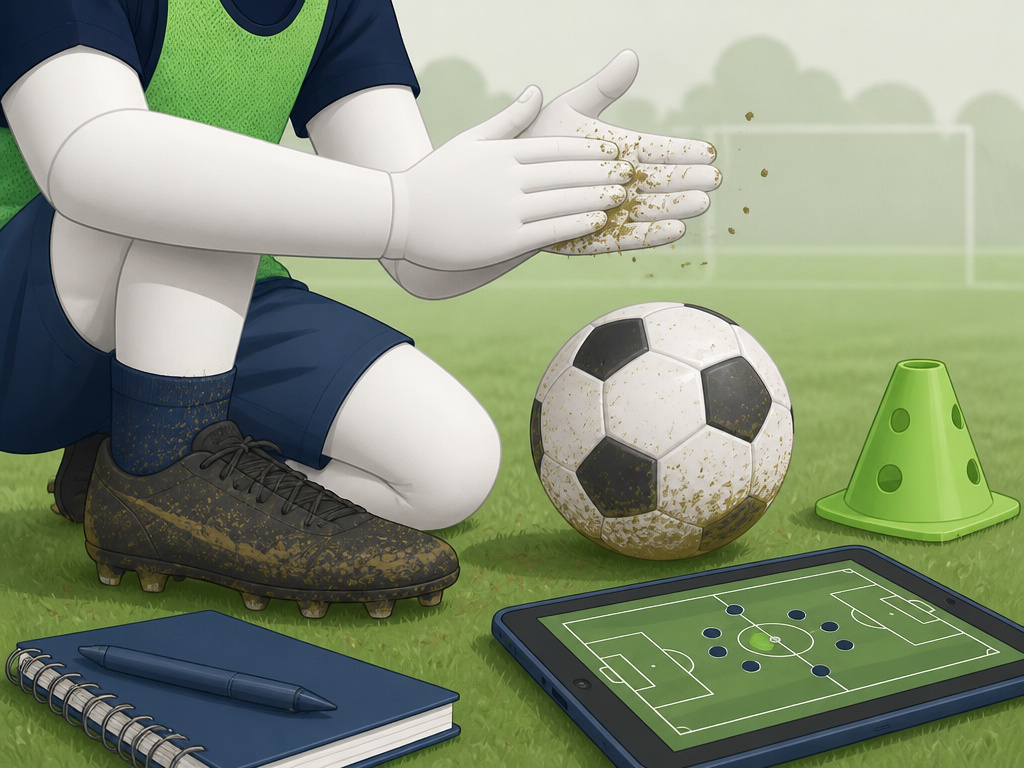
Resilience is a skill you build in training, not a personality trait you are born with. If you only ever practice in low-pressure, mistake-free drills, you’ll be completely unprepared for the real thing.
FootballGPT’s advice is spot-on: intentionally make mistakes in practice. Set up a high-pressure rondos where losing the ball is likely. The moment you do, practice your reset routine, clap your hands, say “next ball,” take that deep breath. You’re not practicing the skill; you’re practicing the recovery from the failed attempt. Normalize the process.
You can also use post-match reflection properly. The key is timing. Psychology Today’s framework says to “Fix” the mistake mentally during the game, while FootballGPT advises learning from mistakes after the match, not during it. After the match, ask: what went wrong, why did it happen, how can I improve? During the match, that kind of analysis is paralysis. Save it for the video session.
This is where practical mental imagery exercises extend beyond just seeing success. Visualize yourself making a mistake, then see yourself executing your reset routine perfectly and winning the next duel. You’re inoculating yourself against the shock of error.
| Mistake Type | Definition | Recovery Mindset |
|---|---|---|
| Stretch Mistake | Pushing beyond your current ability, trying a new skill. | “Good. I’m learning. What did I feel?” |
| A-ha Mistake | Executing your plan but realizing it was the wrong choice. | “Okay, now I know. Next time I’ll choose X.” |
| Sloppy Mistake | Lack of concentration on a routine task. | “Wake up. Reset. Next action is simple.” |
| High-Stakes Mistake | Error that leads directly to a goal or big chance. | “Breathe. The game is 90 minutes. My team needs me now.” |
Handling the Noise: When Mistakes Feel Personal
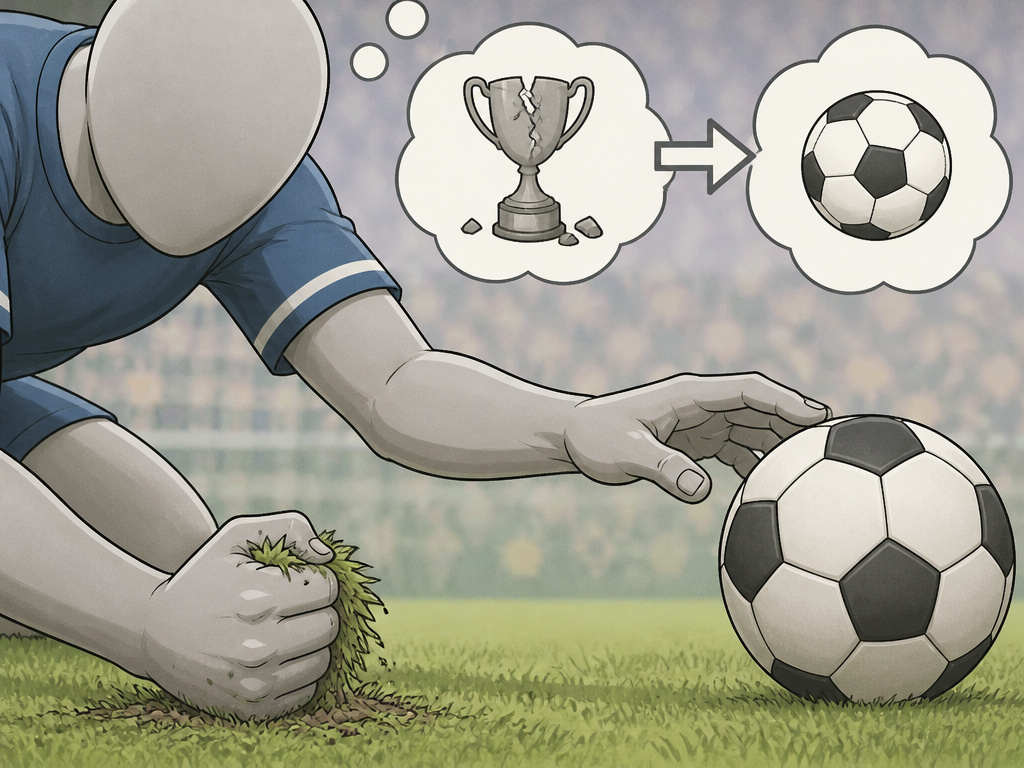
For some players, especially younger or more sensitive ones, a mistake isn’t just a tactical error. It feels like a personal failure. The crowd groans, a teammate sighs, a parent on the touchline throws their hands up. The noise gets internalized.
Sport-Excellence identifies this player: the one whose head goes down for ten minutes, who wants the game to end. The issue is often a “faulty expectation” of themselves. They’ve tied their self-worth to flawless performance.
The solution starts with separating identity from performance. You are not a bad person because you misplaced a pass. Everyone, including Lionel Messi and Mary Earps, makes errors. Your response is what matters, not the error itself. This is a fundamental part of the mental game.
Positive self-talk is the tool here. It sounds cheesy until you need it. Replace “I’m terrible” with “next ball.” Swap “I’ve cost us” with “recover now.” It’s not about lying to yourself. It’s about directing your focus to the only thing that helps: the next action.
Finally, if you’re a coach or parent, your language dictates their climate. Remind them they are supposed to make mistakes. It’s how the brain learns. Talk in process terms, “what did you see?” not “why did you do that?” This builds motivation rooted in mastery, not fear.
Frequently Asked Questions
What’s the very first thing I should do after a mistake?
Acknowledge it internally with a quick verbal cue like “Frick!” or “Ah, come on.” This is the “Frick” step from the 5F framework. It allows you to feel the frustration and release it, rather than letting it simmer and affect your next five touches.
How should I react if my coach is yelling at me after an error?
Try to understand the timing. If it’s in the heat of the moment, the advice from sport psychology is that they shouldn’t be, coaching in anger is ineffective. Your job is to stick to your reset routine: breath, refocus, next action. You can process any tactical instruction from them at halftime or after the game when emotions have cooled.
I keep making the same mistake. How do I stop?
First, stop trying to fix it during the match. Dwelling on it guarantees more errors. Play the game. Afterwards, in training, break the skill down. Was it a technical flaw (poor passing technique) or a decision error (wrong choice of pass)? Isolate and rep the correct action. Then, as FootballGPT advises, put yourself in high-pressure drills where that same situation occurs, and practice getting it right.
How can I help a teammate who is struggling after a mistake?
Show immediate, unconditional support. A simple “keep going” or a pat on the back. Don’t ignore them. Your role is to demonstrate that the team’s confidence in them is unshaken. This collective support is a mark of a truly strong side and is more powerful than any individual pep talk.
Before You Go
The single most effective thing you can do this week is to introduce a mistake drill to your training. For ten minutes, practice a technical skill at the edge of your ability, one-touch passing in a tight grid, for instance. Every time you mess up, you must perform your physical reset routine (e.g., clap, deep breath, “next ball”) aloud before you touch the ball again. You’re not training the pass. You’re training the recovery.
The principles are the same, but the stakes are higher, so your reset routine needs to be even more automatic, more ingrained. Your first save or simple clearance after an error is your version of the “first pass.”
Most guides talk about bouncing back. The real goal is to not get knocked down in the first place. You do that by knowing, deep in your muscles, that a mistake is just feedback, not failure. And you already have the plan for what comes next.
