
How to Prevent Football Injuries: Step-by-Step
This post contains affiliate links. As an Amazon Associate, we earn from qualifying purchases.
The most effective way to prevent football injuries is to perform a structured, evidence-based warm-up program like the FIFA 11+ at least twice a week. Peer-reviewed studies show such programs reduce overall injuries; for example, the FIFA 11+ program reduces overall injuries by 39%, with specific reductions of 60% for hamstring and 48% for knee injuries. This approach, combined with proper load management, correct technique, and fitted protective gear, addresses the majority of modifiable risk factors.
Forget luck. The data from systematic reviews and randomised trials is clear: structured routines done consistently cut injury rates by a third or more. This is the core of how to prevent football injuries.
What follows is a breakdown of the programs that work, the exact numbers behind them, and how to layer them with smart training, safe technique, and the right gear in the broader context of how to prevent football injuries. By the end, you’ll know which 20 minutes to invest in before training to save yourself weeks on the sidelines.
Key Takeaways
- Perform a structured warm-up like the FIFA 11+ at least twice weekly, adherence below this minimum dose of at least twice a week reduces its 39% overall injury reduction benefit.
- Prioritise neuromuscular control, programs targeting balance, strength, and agility can reduce ACL injuries in female athletes by 61%, a far higher rate than general population studies show.
- Manage training load progressively, as sudden spikes in weekly volume are a primary trigger for overuse injuries like tendinopathies and stress reactions.
- Return from injury only when strength is restored, not when pain stops, compensatory movement patterns developed during recovery are a major cause of re-injury.
- Choose gear for fit and certification, not brand, a mismatched stud pattern or loose shin guard creates more risk than it solves, regardless of price.
The 39% Rule: Why Your Warm-Up Is Everything
The 2017 systematic review in the British Journal of Sports Medicine pooled data from a large number of players and found the FIFA 11+ program reduced overall football injuries by 39% (IRR 0.61) compared to control groups. More specifically, it cut hamstring injuries by 60%, knee injuries by 48%, and ankle injuries by 32%.
That’s not a suggestion. It’s a quantified outcome from a FIFA 11+ systematic review. It’s a quantified outcome from research. The difference between a generic jog-and-stretch and a program like the FIFA 11+ or FUNBALL is the difference between hoping you don’t get hurt and statistically making it less likely.
The magic isn’t in the sweat but in understanding how to prevent football injuries through the sequence: running exercises, strength and plyometrics, and finally sport-specific drills. This progression systematically raises heart rate, activates stabilising muscles, and trains your body to control the awkward landings and sharp turns that cause non-contact injuries. A generic warm-up misses the neuromuscular patterning, the bit that tells your knee how to stay aligned when you change direction.
Minimum dose matters. The same study noted that while the program is designed for at least twice a week, adherence in real-world conditions can be challenging. The preventative effect dropped off sharply below that frequency. Your proper warm-up is a prescription, not an option.
| Program | Target Group | Key Reduction | Minimum Effective Dose |
|---|---|---|---|
| FIFA 11+ | Recreational to elite players (age 13+) | Overall injuries: 39% | 2x per week (requires 10-12 weeks for results) |
| FIFA 11+ Kids | Children under 12 | All injuries: 48% | 2x per week |
| FUNBALL | Male adolescents (13-19) | Overall injuries: 31%; Severe injuries: 49% | 15-20 mins, 2x per week |
| NMT Programs | Female athletes | ACL injuries: 61% | 10 mins, 2x per week |
Where this goes sideways: Skipping the strength and plyometric section to save five minutes. Those exercises specifically load the hamstrings and knees in a controlled way, preparing them for match forces. Leave them out, and you keep the cardio but lose the 60% hamstring protection.
Football Injury Prevention Checklist
Prevention isn’t one thing. It’s a stack of habits that build a resilient player. Tick these off over a season, not in a week.
- Implement a Structured Warm-Up. Adopt the FIFA 11+ or a similar evidence-based program. Do it before every training session and match. Consistency here pays off more than any other single factor.
- Integrate Strength Training. Two sessions per week focused on lower-body strength, core stability, and eccentric hamstring work (like Nordic curls). This isn’t about building mass; it’s about building robust tissue. Our guide on strength training for injury resilience details the exercises that matter.
- Manage Your Training Load. Use a simple app or diary to track weekly minutes. Avoid sudden spikes in your total load from one week to the next, as this is a key guardrail against overuse injuries.
- Master Proper Technique. This includes safe tackling, proper heading technique, and learning to fall. Good technique distributes force safely. Bad technique channels it into one vulnerable joint.
- Invest in and Maintain Your Gear. Boots must suit your pitch condition (firm ground vs. Soft ground studs). Shin guards must be the right size and worn under socks. Replace any equipment after a significant impact or when worn.
- Prioritise Recovery. This means a post-match cool down, adequate sleep (7-9 hours), and nutrition that supports repair. Fatigue is an injury risk factor.
- Listen to Your Body. Distinguish between muscle soreness and pain. Sharp, localised, or persistent pain is a stop sign, not a challenge. Playing through it is how a 3-day problem becomes a 3-month one.
- Get a Pre-Participation Screen. A physio or sports doctor can identify muscle imbalances, mobility restrictions, or previous injury residuals that put you at higher risk. It’s a baseline.
Build a Resilient Body: Strength and Load Management
Strength is your armour. But it’s not just about the weight on the bar. It’s about the capacity of your tendons, ligaments, and bones to handle the specific stresses of football, the jumps, the cuts, the 90-minute grind.
A 2025 football injury prevention umbrella review framed it perfectly: prevention works across an epidemiological chain, and building robustness is a primary intervention.
Common mistake: Only training muscles in the “short” range, like leg extensions or short, fast lifts. Football injuries often happen when a muscle is stretched under load (eccentric phase), like when your hamstring lengthens to brake a sprint. That’s why Nordic hamstring curls are non-negotiable.
Load management is the other half. Think of your body as a bucket. Training, matches, and even life stress fill it. Sleep, nutrition, and recovery empty it. Injury happens when the bucket overflows. A sudden spike in training volume, like a triple-game week after a light period, is the fastest way to make it overflow. Track your minutes. Be boring about it. It works.
Gear Up Right: Equipment That Actually Protects
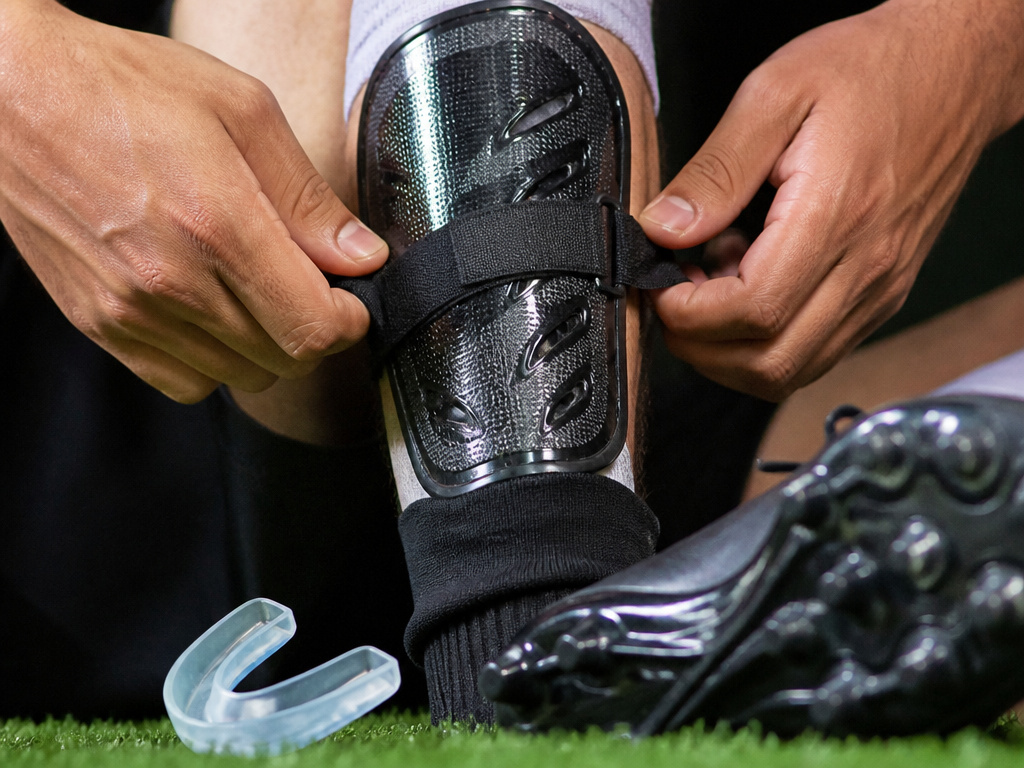
The right gear doesn’t prevent all injuries, but the wrong gear definitely causes some. This is about eliminating unnecessary risk.
Start from the ground up. Boots are your connection to the pitch. Choose boots with a stud pattern suited to the pitch condition to ensure stability and appropriate traction. The studs should feel stable, not wobbly.
Shin guards are not optional. They must cover from just below the knee to above the ankle bone, and be secured tightly so they don’t slide down. A sliding guard exposes the very bones it’s meant to protect.
Mouthguards protect teeth and may offer other protective benefits. Choose a fitted model, not a cheap boil-and-bite. Your protective gear should be functional first.
The Smart Comeback: Returning from Injury Safely
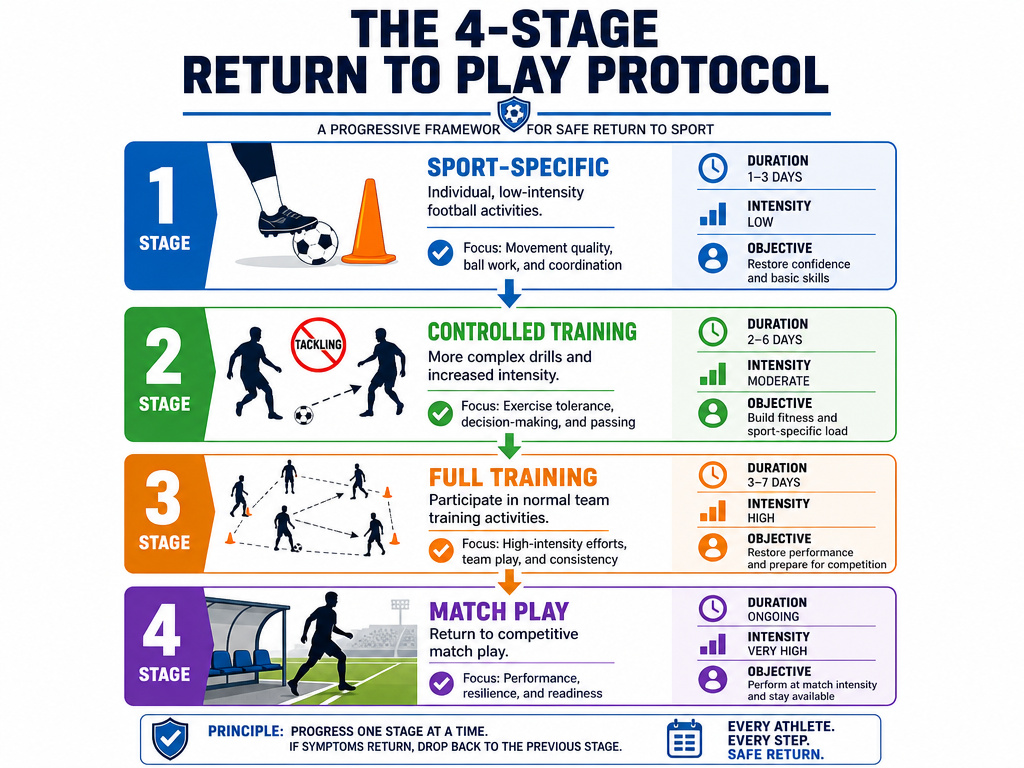
The moment the pain eases is the most dangerous part of any injury. It’s a trick. The tissue is not ready. Returning to full training based on pain alone is the surest route to a repeat injury, often worse than the first.
A structured rehabilitation and return-to-play (RTP) protocol is essential. This isn’t just physio exercises; it’s a graded exposure to football-specific demands. The final stage should look like this:
- Sport-Specific Training: Drills at low intensity, focusing on technique.
- Controlled Training: Integration into team training with modified rules (e.g., no tackling).
- Full Training: Unrestricted participation in all drills.
- Match Play: Initial minutes off the bench, building to a full game.
You’re only ready for step 1 when you have full, pain-free range of motion, near-equal strength compared to the uninjured side, and can hop and land on the injured leg with control. Rushing this process builds compensatory movement patterns that can lead to re-injury. For a full roadmap, see our guide on a structured return to football.
How to hydrate to prevent football injuries
Injury risks for different football positions
Frequently Asked Questions
What are the top 3 most common injuries in football?
The vast majority of football injuries occur in the lower limbs. The most common are: ankle sprains (ligament damage from rolling the ankle), hamstring strains (tears in the back of the thigh muscle, often during sprinting), and knee ligament injuries, particularly to the anterior cruciate ligament (ACL), which often occur during twisting or landing motions.
How can I prevent ACL injuries in football?
The strongest evidence supports neuromuscular training (NMT) programs. For female athletes, a 2025 consensus review showed these programs can reduce ACL injuries by 61%. These programs focus on teaching proper jumping, landing, and cutting technique, training the knee to stay aligned over the foot during dynamic movements. Exercises like plyometrics, single-leg balance, and strength work for the glutes and hamstrings are key components.
Are new injury prevention programs like FUNBALL effective?
Yes. The 2024 FUNBALL program cluster-randomised trial showed a 31% reduction in overall injuries and a 49% reduction in severe injuries (those causing >28 days out) in young male players. Its advantage is its design for youth engagement, using football-specific elements across six exercise categories. It’s proof that effective programs are evolving to be more engaging, which boosts the adherence that drives results.
How long does it take for an injury prevention program to work?
You need patience. Research on the FIFA 11+ indicates a period of at least 10-12 weeks of consistent performance (at least twice weekly) is required to see the significant protective effects. The body needs time to adapt, to build stronger connective tissue, improve neuromuscular pathways, and develop the movement patterns that become automatic under fatigue.
Can proper equipment really prevent injuries?
It can prevent some injuries and reduce the severity of others. Properly fitted shin guards prevent fractures and severe contusions. The correct boot studs for the surface reduce the risk of ankle sprains and knee twists by providing appropriate traction. A mouthguard can prevent dental trauma and may mitigate some concussion forces. Equipment is a critical part of the layers of protection, but it doesn’t replace the conditioning and technique work.
The Bottom Line
Injury prevention in football is no longer a mystery. It’s a series of deliberate, evidence-based choices. The single most impactful choice you can make is to commit to a structured warm-up program, by the numbers, that’s your 39% reduction in risk.
But don’t stop there. Wrap that core habit in intelligent strength work, vigilant load management, and gear that fits its purpose. Understand that returning from injury is a process measured in restored strength and movement quality, not disappearing pain.
The data from the PMC umbrella review of soccer injuries gives us a clear playbook. The work now is in the implementation, showing up for those 20 minutes, twice a week, every week. That consistency is what turns a statistic into a season played on the pitch, not watching from the stands.
