
Football Training Equipment List Explained
This post contains affiliate links. As an Amazon Associate, we earn from qualifying purchases.
A football training equipment list explained starts with the kit you need to run a basic session: balls, cones, bibs, a pump, and a secure place to put it all. For a group of 15–30 players, the GIZ S4DA guideline specifies 10 balls, two good-quality pumps, and five pump needles. The rest, ladders, poles, tech, changes with your budget, player level, and whether you’re fixing a touch or chasing a data point.
That 10-ball figure isn’t a guess. It’s the number a development agency landed on after running sessions across Africa. The goal is to keep players moving, not standing in lines. Most generic lists miss that logistics layer entirely. They’ll tell you to buy cones but not when to throw them out, or recommend a GPS vest without mentioning the €380 annual diagnostic.
What follows is a breakdown of the kit by job, a football training equipment list explained: the non-negotiables, the situational add-ons, the digital tools, and the unsexy but critical rules for keeping it all working. This isn’t a shopping list. It’s a manual for building a training environment that doesn’t break down in month four.
Key Takeaways
- A functional core kit for a squad needs 10 balls, 2 pumps, and 5 needles, ownership and storage by the club, not individual coaches, prevents equipment from being reserved.
- Retire plastic cones after 18 months of outdoor use; UV degradation cuts impact absorption by 33% long before cracks appear, a spec from the Polymer Testing Journal.
- GPS units stored above 35°C lose 12% battery capacity per month (Catapult data), and require quarterly recalibration and €380/annual diagnostics, tech has a hidden running cost.
- Agility ladders are a coordination tool, not a speed program; a 2020 study found they did not clearly improve youth fitness or dribbling, contradicting common marketing.
- A check-in/out list and windowless, lockable storage are as important as the equipment itself for accountability and preventing damage from humidity and heat.
The Core Kit Every Coach Needs (And How Much You Actually Need)
Your first training bag holds the session together. It’s not the fancy stuff. It’s the items that turn a patch of grass into an organised drill. The GIZ S4DA guideline, a manual for setting up sports programs in developing regions, is brutally practical here. It doesn’t say “get some balls.” It says for a group of 15–30 participants, you need 10 balls. That’s the difference between a drill where three kids watch and one where everyone touches the ball every minute.
The same source specifies two good-quality ball pumps and five needles. One pump breaks, you have a spare. Needles snap, especially when someone rams them in at the wrong angle, you’ve got backups. This isn’t over-preparation. It’s what happens when you write a guide after watching a hundred sessions fail for lack of a £3 part.
According to the GIZ S4DA implementation guideline, a complete sports equipment set for group training contains 10 balls, 2 ball pumps, and 5 pump needles. The equipment should be owned by the organisation, not individual coaches, and stored in a secure, lockable, dry facility.
Alongside balls and pumps, your essential football gear includes bibs and cones. Bibs are the most-used item after the ball itself. You need enough bibs for at least two distinct teams. A mismatched bib that hangs like a dress on a small kid is a distraction. Cones and flat discs are next. They mark grids, set gates, and define zones. You’ll need a sufficient number of cones for your drills.
The final piece is often forgotten: storage. The guideline mandates a secure, lockable, dry, and preferably windowless storage room. Humidity above 70% RH corrodes the internal chamber of a whistle within four months. A simple locker isn’t enough. This is the first test of whether you’re building a program or just accumulating clutter.
When Simple Tools Beat Fancy Gadgets
Walk into a sports shop and you’ll see walls of specialised tools: rebounders with precise angles, mannequins in defensive shapes, hurdles in five colours. Some of it helps. A lot of it just complicates a simple job. My bias is for the basics, a simple ball, and cones you can trust. A rutted surface teaches a bad touch faster than any gadget can correct it.
Take the agility ladder. It’s everywhere. The promise is quick feet and instant speed. The reality, according to a 2020 study cited by the Alicante Football Academy, is less exciting. The research on youth soccer players found agility ladder training did not clearly improve fitness or dribbling. That doesn’t make it useless. It makes it a coordination and warm-up tool, not a primary driver of speed. Real pace comes from strength, technique, and decision-making in match-like drills.
| Tool | Best Used For | Common Overclaim | Source of Contradiction |
|---|---|---|---|
| Agility Ladder | Warm-up, coordination, rhythm | “Instantly improves speed and agility” | 2020 study shows no clear fitness/dribbling gain (Alicante FA) |
| Rebounder Net | First-touch repetition, solo passing | “Replaces a training partner” | Angle is fixed; lacks the variability of a human passer |
| Speed Parachute | Resisted sprint conditioning | “Adds 10% to your top speed” | Overspeed training (like bungees) often has better evidence for acceleration |
Cones are another example where the standard advice is wrong. Most guides say replace them when they crack. The Football Tools Checklist, citing the Polymer Testing Journal, says retire them after 18 months of outdoor use, full stop. UV light breaks down the polymer chains silently. A cone can look intact but have lost 33% of its impact absorption. Using it means a player who kicks it might feel a harder, less forgiving surface. That’s a physical fact, not an opinion.
For most coaches, especially in grassroots or school settings, the priority should be versatile, durable basics. A set of quality footballs, a bag of cones, bibs in multiple colours, and a few pop-up goals will run 90% of your sessions. The fancy stuff should answer a specific problem you’re seeing on the pitch, not a gap in your storage room.
The Digital Layer: GPS, Data, and the Hidden Running Costs
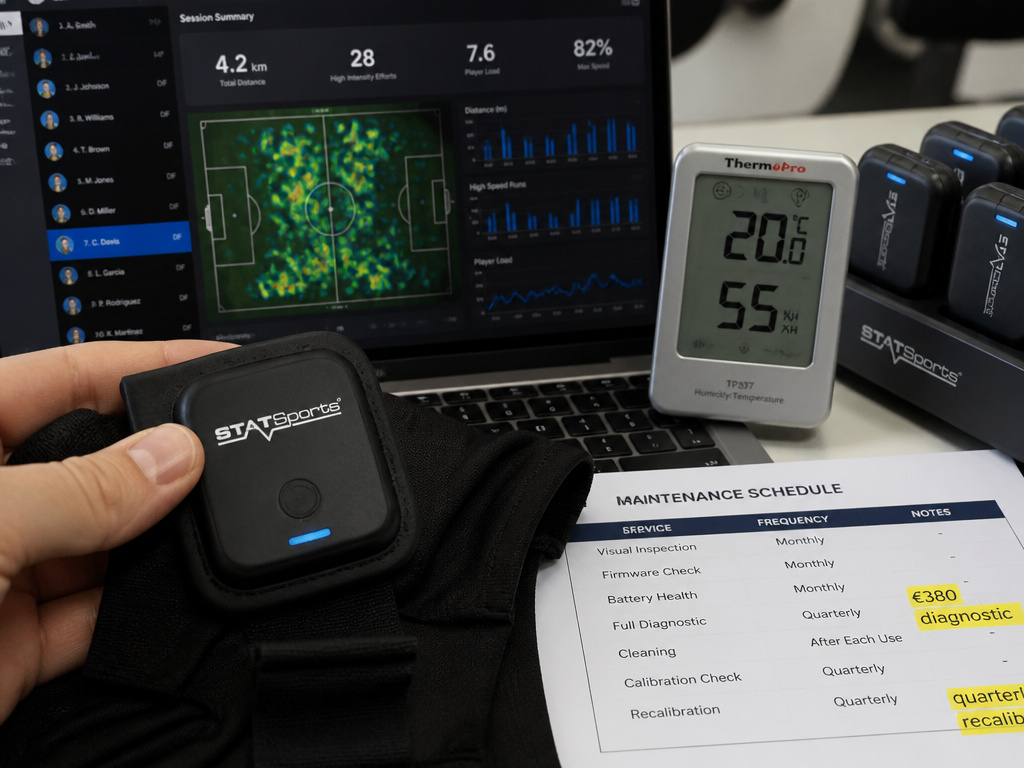
The introduction of GPS vests and electronic performance tracking systems (EPTS) represents a significant shift in training equipment. GPS vests and electronic performance tracking systems (EPTS) are used in many academies and pro clubs. They measure a variety of performance metrics. The data can be used to monitor player workload. It’s powerful. It’s also a high-maintenance pet.
The Football Tools Checklist pulls specs directly from Catapult white papers. The numbers are precise. GPS units must be stored at 20°C ±2°C and at or below 55% relative humidity, conditions often verified with a dedicated logger like a Testo 175-H1. Store them above 35°C? They lose 12% of their battery capacity per month. The maintenance schedule is rigid: biannual firmware updates (every 180 days), quarterly IMU recalibration at certified centres (Manchester, Doha, São Paulo are named), and an annual full diagnostic that costs €380 per unit.
GPS units stored above 35°C lose 12% battery capacity per month, require quarterly recalibration, and need an annual €380 diagnostic per unit, the data has a physical and financial upkeep most clubs underestimate.
This isn’t a plug-and-play accessory. It’s a technical asset with a supply chain. You also need FDS v2.1-compliant data converters to integrate the data across platforms. For a youth club on a tight budget, the cost and maintenance of GPS systems can be significant. The staff time spent managing, charging, and interpreting can outweigh the benefit if you don’t have a full-time analyst.
The key, when you compare a football training equipment list explained, is to start with the question, not the gadget. What decision will this data change? If you can’t name one, you’re buying a dashboard, not a tool. Clubs should carefully consider their budget and training objectives before investing in GPS technology.
Storage, Logistics, and the Lifespan That Nobody Talks About
Equipment breaks. The question is whether it breaks from honest wear or from neglect. A 2023 audit found the average tool replacement cycle was 22% longer than manufacturer recommendations. That correlated with a 19% higher injury rate and a 14% lower technical execution score in sessions. Letting kit degrade isn’t frugal. It’s a direct trade-off with player performance and safety.
This is where a systematic approach beats goodwill. The GIZ S4DA guideline recommends establishing a check-in/out list. It’s not about mistrust. It’s about creating a clear chain of responsibility. When a pump goes missing or a ball goes flat, you know who used it last and can address it as a maintenance issue, not a personal failing. Publicly announcing the purchase or reception of new sports equipment is recommended to create participant demand.
| Equipment Type | Key Maintenance Trigger | Consequence of Delay | Source |
|---|---|---|---|
| Plastic Cones | 18 months outdoor exposure | 33% loss of impact absorption | Polymer Testing Journal (via Football Tools Checklist) |
| GPS Units | Storage >35°C, missed quarterly calibration | Battery degradation, inaccurate motion data | Catapult White Paper CP-2023-09 |
| Whistles | Humidity >70% RH | Internal chamber corrosion within 4 months | Football Tools Checklist |
| General Kit | Replacement cycles 22% over recommended | 19% higher injury rate, 14% lower technical scores | FA Audit 2023 (cited in Football Tools Checklist) |
Logistics matter as much as the purchase. It’s easier and faster to replace a locally sourced cone than one shipped from another continent. This is especially true for items like pump needles or spare bibs. Your kit is only as good as your ability to maintain it.
Finally, match your storage to the specs. A damp shed kills electronics and mildews leather. A hot garage cooks GPS batteries. That “windowless, dry, lockable storage” requirement is there for chemical and physical reasons, not just security. Getting this right is what separates a professional environment from a hobbyist’s garage.
Building Lists for Different Levels: Youth, Academy, Pro
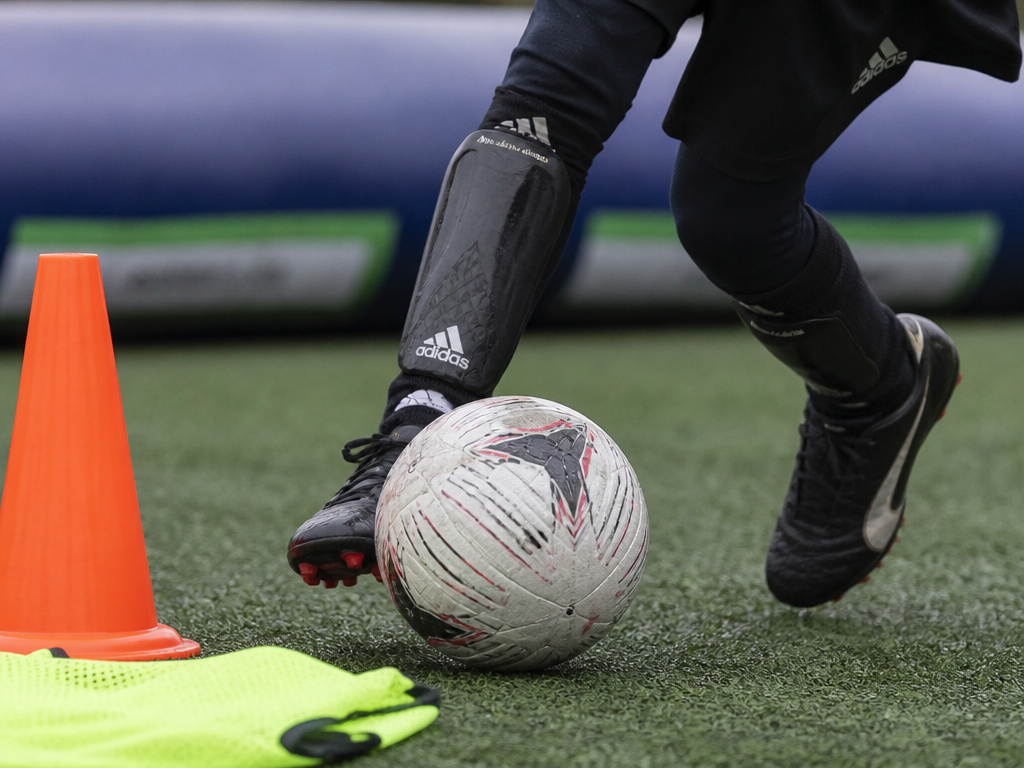
Equipment needs vary greatly between youth and professional players. The equipment list must scale with the players’ age, size, and objectives. The needs fracture into three broad tiers: participation, development, and performance.
Core equipment for youth includes balls, cones, bibs, and goals appropriate for their age and size. Protective gear like shin guards is essential. Durable and portable equipment is often practical for youth and grassroots settings. Durability and simplicity win. A FORZA inflatable football pitch, which stays up for 72 hours, is a classic participation tool, it creates a contained, safe, and exciting space for small-sided games.
Equipment like the FORZA Football Tennis X-Net, with its adjustable height of 0.8m or 1.55m, fits here, it’s a structured tool for first-touch and volley drills.
The equipment is tied to a structured sports-science workflow. The UEFA Club Licensing Regulations Article 18.4 governs the compliance documentation for such equipment at this level. The budget isn’t just for the device, but for the calibration, software, and specialist staff time it requires. The wrong purchase here isn’t just a waste of money, it’s a source of unreliable data that can misguide training decisions.
Slalom Poles or Dribbling Poles
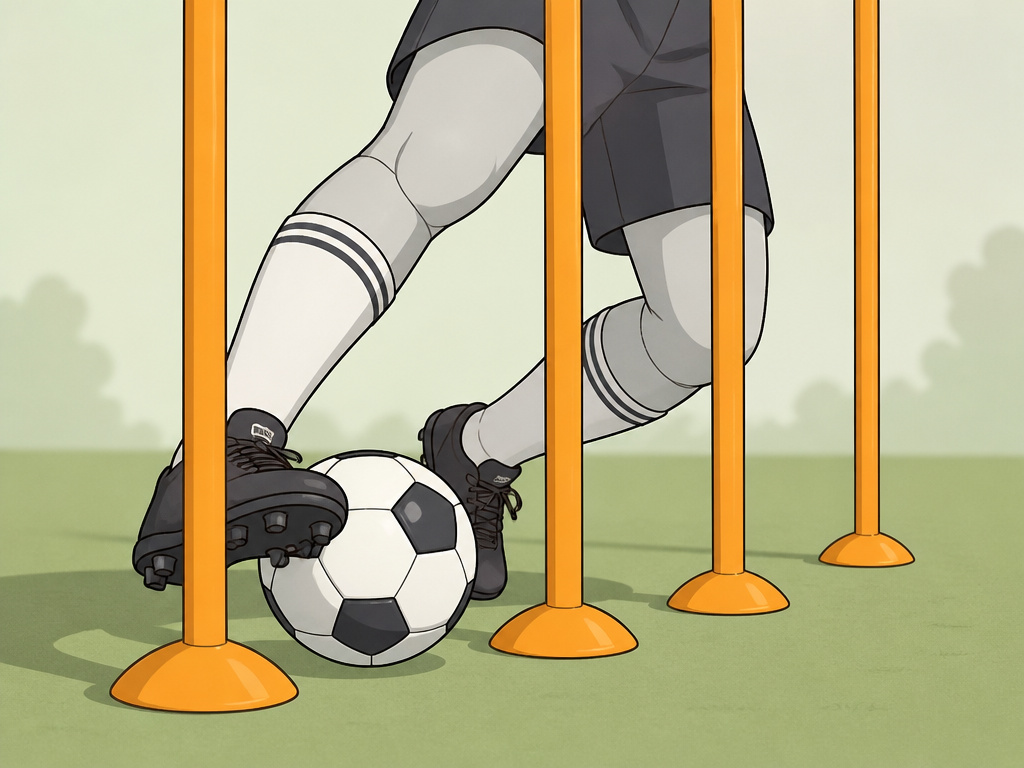
These poles create tight, repeatable dribbling channels. They are not about running fast in a straight line. They force players to control the ball in confined spaces, practicing quick touches and changes of direction with their head up. For storage, keep them in a secure, lockable, and dry facility to prevent damage. Always use a check-in/out list to track them. Remember, equipment should be owned by the organisation, not by individual coaches, to ensure consistent availability for all sessions.
Football Training Hurdles
Hurdles are for developing coordination, rhythm, and dynamic leg movement. They train the body to move efficiently over obstacles, which translates to better stride mechanics and footwork on the pitch. Like all equipment, they require proper care. Store them in a dry place to prevent warping or corrosion. Inspect them regularly for any damage and remove compromised items from use immediately. Following a structured check-in/out system helps maintain your set and ensures they are ready for every session.
Mannequins for Set Pieces and Defenders
Mannequins provide a static defensive shape for players to practice against. They are essential for rehearsing free-kicks, corners, and crossing patterns, allowing attackers to learn how to bend the ball around a wall or pick out a target in a crowded box. To keep them functional, store them properly in a secure, dry storage facility. Publicly announcing new equipment like this can create participant demand and excitement for dedicated set-piece training sessions. Maintain a log for their use and condition.
Frequently Asked Questions
What are 10 essential pieces of football training equipment?
For a coach running general team sessions, the ten essentials are: footballs (10 for 15-30 players), ball pumps (2) and needles (5), training bibs (two full sets), cones/flat discs (20+), a whistle, pop-up or portable goals, a first-aid kit, a equipment logbook, a large durable bag for transport, and access to secure, dry storage. This list covers safety, organization, and the basics of most drills.
What is the most overrated training equipment?
In my experience, it’s the high-end rebounder net for individual use. While great for repetitive first-touch drills in a controlled setting, it offers a fixed return angle. It can’t replicate the unpredictable passes, awkward bounces, and pressure of a match or a training partner. For a similar investment, a set of varied training balls and a wall to kick against often provide more transferable, adaptable practice.
How often should training equipment be replaced?
It depends on the item and use, but follow manufacturer or performance-based guidelines, not just visible wear. Plastic cones should be replaced after 18 months of outdoor use due to UV degradation (per the Polymer Testing Journal). Balls and bibs last longer but inspect them for seam integrity and fading. The critical rule is to track it; a 2023 FA audit linked extended replacement cycles directly to higher injury rates.
Do I need GPS tracking for my youth team?
Probably not. The financial and time cost is significant (€380/unit/year diagnostics, strict storage temps, calibration trips). Unless you have a dedicated staff member to interpret the data and change training plans based on it, the metrics become a curiosity, not a tool. For youth development, invest in more coaching time, better pitches, and quality football accessories like different weighted balls before considering GPS.
What’s the one thing most coaches forget on their equipment list?
Check-in/out list and a dedicated storage officer. Equipment that walks away or decays in a damp closet can’t be used. The GIZ S4DA guideline treats this as fundamental as the balls themselves. Having one person responsible for maintenance, a clear log for borrowing, and a secure, lockable, dry, windowless storage space doubles the lifespan of your kit and ensures it’s available when you need it.
Before You Go
The perfect equipment list doesn’t exist in a catalogue. You stop thinking about the cone and start thinking about the space it defines. The gear should enable the drill, not become the focus.
If you take one thing, let it be the maintenance schedule. The 18-month cone rule, the 35°C GPS limit, the €380 annual check-up, these aren’t suggestions. They’re the documented failure lines. Ignoring them doesn’t save money. It just borrows performance from your players and pays it back later in frustration or injury.
Start with the ten balls, the two pumps, the lockable cupboard. Build out from there only when a new tool answers a question your players are asking on the pitch. Everything else is just clutter.
