
Football Kit Components Explained: The Official Rules
This post contains affiliate links. As an Amazon Associate, we earn from qualifying purchases.
A football kit’s components are defined by Law 4 of the game: the compulsory Playing Equipment of shirt, shorts, and socks, plus mandatory shin guards and footwear. Every other element, from the size of a logo to the colour of sock tape, is governed by specific competition regulations from bodies like FIFA and the AFC, which dictate dimensions, materials, and prohibited messages.
That definition is the rulebook answer. It tells you what you must have on the pitch. What it doesn’t tell you is why two shirts made of the same material can feel completely different after ninety minutes, or why a tiny logo placement can get a kit rejected before a tournament. The difference between a kit that just meets the rules and one that performs is in the details nobody sees on a TV broadcast, which is why a clear football kit components explained is so important.
What follows is a breakdown of the official components, the hidden engineering that makes them work, and the practical choices that separate match-ready gear from the replica on your back, all part of an explanation of football kit components.
Key Takeaways
- The Playing Equipment is strictly defined as the shirt, shorts, and socks; shin guards and footwear are separate compulsory items.
- Branding is tightly controlled: the Sleeve Free Zone must be a clear space of at least 12cm by 8cm, and manufacturer bands on socks cannot exceed 5cm in width.
- Performance hinges on fabric structure, not just material; mesh panels are placed on the back of a shirt where the physiology requires them.
- Recycled polyester is now the standard for most kits, with no meaningful performance drop compared to virgin material if the knit quality is high.
The Compulsory Core: Shirt, Shorts, and Socks
The foundation is essential. FIFA’s Equipment Regulations define Playing Equipment as the collective components of shirt, shorts, and socks. This is the core uniform. Shin guards and suitable footwear are also mandatory for safety, but they are considered separate from the Playing Equipment itself. Get these five items wrong, and you don’t start the match.
The shirt must have sleeves. The shorts must be, well, shorts. For goalkeepers, FIFA’s rules allow tracksuit trousers as an alternative, while IFAB’s Laws of the Game list only ‘shorts’. Socks must completely cover the shin guards. Any tape applied to them must be the same colour as the sock beneath it. This isn’t about fashion; it’s about ensuring officials and opponents can instantly identify a player’s team without visual clutter or confusion.
The Sleeve Free Zone is a free surface of at least 12cm in length and 8cm in width, centred along the outer seam of each sleeve. This zone is reserved exclusively for specific competition badges provided by governing bodies like FIFA.
This rule, a key part of any football kit components explained, exists to stop kit manufacturers from turning the sleeve into a billboard. That clear space is sacred. It’s also a perfect example of how precise the regulations are. They don’t just say “leave some room on the sleeve.” They give you the exact centimetres.
What You Can (and Cannot) Put On Them
Once you have the basic garments, the next layer is what gets printed, stitched, or attached. The rules here are less about sport and more about maintaining the game’s integrity and preventing ambush marketing.
Allowed elements are surprisingly broad but carefully defined. You can have the player’s number and name, the team crest, and “initiative slogans or emblems promoting the game of football, respect and integrity.” You can also have any advertising permitted by the specific competition rules. That’s where sponsor logos come in.
The bans are absolute. Equipment must not have any political, religious or personal slogans, statements or images. This extends to undergarments; a player cannot reveal a base layer with a prohibited message. Also, no item can be worn if it is dangerous, offensive, indecent, confers an unfair sporting advantage, or “fundamentally alters an essential aspect of the game.” Reflective or colour-changing materials are also prohibited.
Even a Quality or Sustainability Seal tag can only contain one manufacturer mark no bigger than 5cm². The goal is uniformity and restraint, ensuring the team identity comes first.
| Kit Element | What’s Allowed | Key Restriction / Note |
|---|---|---|
| Shirt Sleeves | Competition badges (FIFA, UEFA, etc.) | Must fit within the 12cm x 8cm Sleeve Free Zone. |
| Manufacturer Branding | Logo or MI Band | MI Band max 8cm wide (5cm on socks). |
| Messages/Slogans | Only those promoting football, respect, integrity | All political, religious, personal messages banned. |
| Player Identification | Number, Name, Team Crest | Governed by competition rules for font, size, placement. |
| Sponsor Logos | As per competition rules | Size and quantity are strictly regulated by the competition. |
The Hidden Engineering in the Fabric
Most people think a kit’s performance is about the material tag: “100% polyester.” That’s the starting line. What actually determines if you’re comfortable or a sweaty mess is how that polyester is knitted.
Good performance fabric exists in a narrow window. The knit needs to be tight enough to wick moisture away from your skin via capillary action, but open enough to breathe and let that moisture evaporate. Too tight, and sweat pools. Too loose, and the fabric loses contact with your skin, which is where the wicking process begins. A completely flat, textureless fabric is usually a bad sign, it likely hasn’t been engineered for this balance.
This is why panel placement matters. Visible mesh panels on the back of a shirt aren’t a style choice. They are placed where physiology demands them: across the upper back and under the arms, where the body generates and needs to shed the most heat. A front panel might be a denser knit for durability and a more structured look. When you look at a proper sizing guide for football shirts, it should account for how these different panels stretch and fit across the body.
Common mistake: Choosing a kit based only on the material description. Two shirts can both say “100% recycled polyester” and perform worlds apart. The knit structure and panel layout are what you’re actually buying.
The industry has largely shifted to recycled polyester. The honest take? A well-made recycled kit performs essentially like a well-made virgin one. The potential downside is batch variation in the recycled yarn, not an inherent performance gap. What you should check remains the same: the texture of the knit, the consistency of the stitching, and how the badge is applied.
Goalkeepers and the “Wild West” Exception
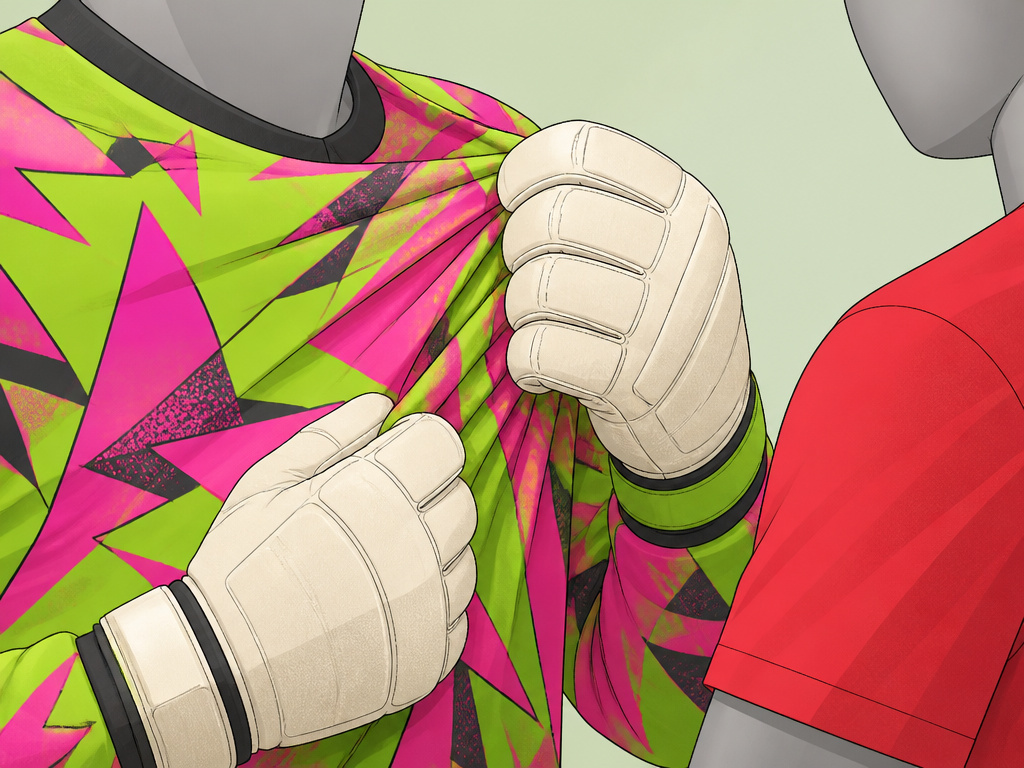
If outfield kits are governed by sober regulation, goalkeeper kits have traditionally been the outlet for a designer’s unhinged creativity. While they follow the same core rules, sleeves, no dangerous elements, the colour and pattern restrictions are looser. The keeper’s kit must clearly distinguish them from the outfield players and the match officials, but within that, almost anything goes.
This tradition continues, with keepers often wearing the most visually striking, sometimes jarring, kits on the pitch.
Authentic vs. Replica: The Fit and Feel Divide

This is where the “components” split into two different products for two different users. Understanding this division saves you money and disappointment.
Care and Maintenance: Making Your Kit Last
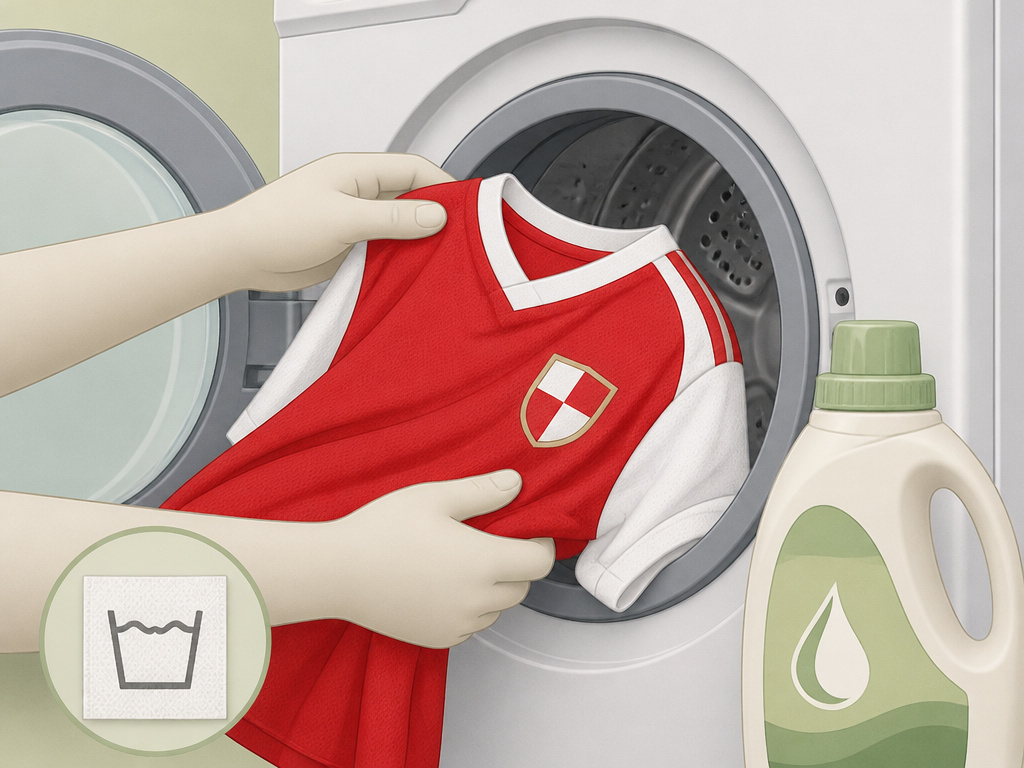
The components are only as good as your ability to maintain them. A £150 technical shirt can be ruined in one laundry cycle.
Following these steps preserves the fabric’s technical properties and the kit’s appearance. It’s the difference between a shirt that lasts a season and one that lasts for years.
Frequently Asked Questions
What does a football kit consist of?
At its most basic, a football kit consists of the compulsory Playing Equipment: a shirt with sleeves, shorts, and socks. To be allowed to play, a player must also wear shin guards (covered entirely by the socks) and appropriate footwear. Everything else, base layers, gloves, headbands, is optional and subject to specific rules.
What are the parts of a football uniform called?
The main parts are the shirt (or jersey), shorts, and socks, collectively termed the “Playing Equipment.” Individual components within that include the collar, sleeve, main body panels, mesh panels, the team crest, player number, manufacturer logo, and sponsor advertising. Off the pitch, “kit” can also refer to training wear and off-field apparel.
Is number 69 allowed in football?
There is no universal IFAB or FIFA law banning the number 69. However, individual competitions or national associations may prohibit it if they deem it potentially offensive or inappropriate. Its allowance is at the discretion of the competition organiser, not the kit manufacturer.
What is the difference between match and replica kits?
Match kits (authentic) are made with lighter, more technical fabrics, have a tighter athletic cut, and use heat-applied graphics for reduced weight. Replica kits use more durable, heavier fabric, have a relaxed “fan” fit, and feature stitched logos for longevity. They are designed for different purposes: performance versus casual wear.
Can you wear any colour kit?
No. The two teams must wear colours that distinguish them from each other and from the match officials. The home team typically has priority, and the away team must change if there is a colour clash. Goalkeepers must wear a colour distinguishable from both outfield teams and the referees. Competition rules often specify primary and away kit colours.
Before You Go
The next time you watch a match, look beyond the colours. Notice the lack of clutter on the sleeves, that’s the Sleeve Free Zone in action. See the mesh panels on a player’s back as they walk off, soaked. That’s engineered heat management. Spot the goalkeeper’s neon shirt, a functional high-vis tool from the sport’s most unregulated design space.
