
10 Best Soccer Balls in 2026
This post contains affiliate links. As an Amazon Associate, we earn from qualifying purchases.
The adidas Trionda Competition World Cup Ball is our best overall pick. It pairs FIFA Quality Pro certification with a thermally bonded surface that takes on less water, which suits regular games and training. For a licensed league look, the PUMA Orbita Pro Premier League Ball is the Best Premier League Match Ball. The Nike Academy Soccer Ball is the Best Shape Retention pick.
Most soccer balls look alike on a shelf, but they behave very differently. Size, certification, panel construction and the bladder inside decide whether a ball flies true, stays pumped up and survives a season of practice. A match-style ball and a rugged training ball are not the same purchase.
This guide is built from specifications, manufacturer documentation, expert round-ups and patterns in owner feedback. You get 10 picks sorted by what each does best, plus the trade-offs that matter before you buy.
Top 10 Soccer Balls in the Market
Certain content that appears on this site comes from Amazon. This content is provided "as is" and is subject to change or removal at any time.
The Best Soccer Balls, Reviewed
adidas Trionda Competition World Cup Ball
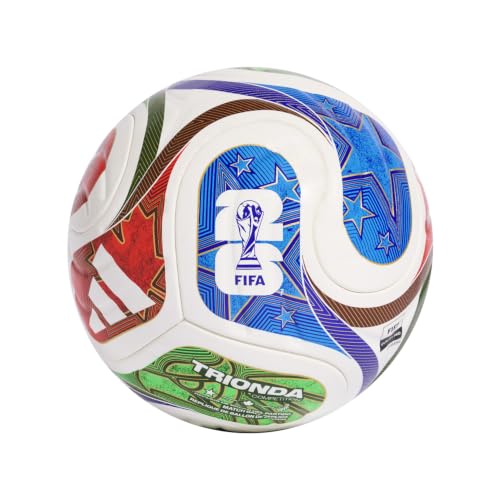
What We Like
- FIFA Quality Pro, the highest FIFA rating
- Thermal bonded surface lowers water uptake
- Textured surface for flight stability
- Four-panel wave design with host-nation graphics
Trade-offs
- Graphics only mimic the official match ball's look
- At 0.9 pounds, heavier than Nike Academy's 0.8
The FIFA Quality Pro rating is the headline here, because it means the ball passed tests on weight, water uptake, shape and size retention. In practice, the ball you hit in the last minute should behave like the one from kickoff. The thermal bonded surface keeps water uptake low, so a damp pitch is less likely to turn it heavy and sluggish. The textured finish is there for steadier flight, which helps when you’re trying to land a long pass on a teammate’s chest. For serious amateurs and club sides who want match-grade quality, research points to this as the smarter pick over the Trionda Pro.
The wave graphics only mimic the look of the tournament’s official match ball rather than being the match ball itself, so anyone who wants the exact ball used on the biggest stage should look at the Trionda Pro instead. For most players, though, that is a fair trade. Reviewers describe the Competition version as the smarter pick for match-quality performance at a more accessible entry point. Against the Nike Academy, which lists 0.8 pounds to this ball’s 0.9, the difference is small enough that you would likely only notice it in a side-by-side comparison. What you get here is the highest FIFA rating, meaning the ball passed tests on weight, water uptake, shape and size retention. It also has a thermally bonded shell built for real matches.
Product photos
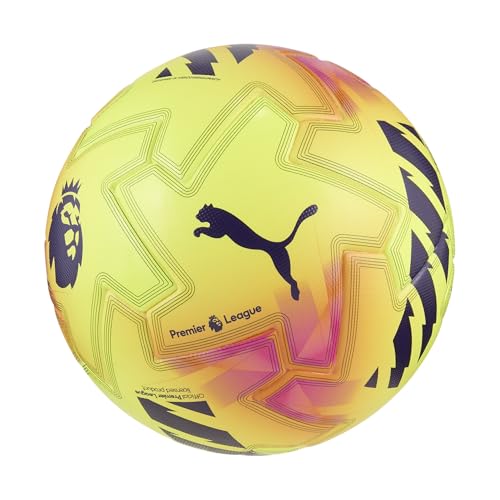
PUMA Orbita Pro Premier League Ball
What We Like
- Licensed 25/26 Premier League design
- Fusion build with no visible seams
- Equal-surface-area panels for true flight
- Foam layer with soft touch
Trade-offs
- At 1.0 pounds, heavier than adidas Trionda's 0.9
- Season-specific 25/26 graphic will date next year
Licensed for the 25/26 Premier League season, this ball carries a high-visibility graphic inspired by nights under the lights, which makes it an easy pick for fans who want the league’s branding on the pitch. FIFA Quality Pro backs up the performance claims. With no visible seams, the construction is meant to hold its shape and absorb less water, so the ball should stay consistent on damp days. Equal-sized panels keep it round, which supports steady rebound and a more accurate flight. A foam layer adds lively striking force while keeping the touch soft, and the rubber bladder with the PUMA Air Lock valve is designed to preserve air so the bounce stays even between pump-ups.
The trade-off is weight and shelf life. At 1.0 pounds, it sits a little above the adidas Trionda Competition World Cup Ball at 0.9 pounds, a small gap that only matters if you chase the lightest possible feel. The graphic is also tied to the 25/26 season, so it will look dated beside a plain training ball once the next campaign arrives. If a World Cup theme appeals more than the Premier League look, the Trionda is the better pick. For league colours and a match-style build, this is the one.
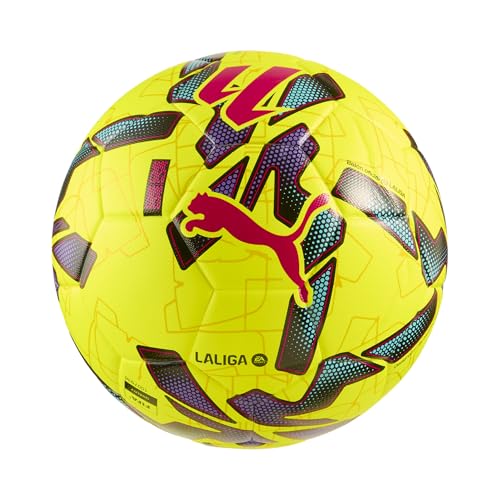
PUMA Orbita LaLiga 1 Soccer Ball
What We Like
- PUMA Air Lock valve holds pressure steady
- Rubber bladder keeps feel consistent session after session
- Thermally bonded build limits water uptake
- 32-panel design gives straighter flight
Trade-offs
- FIFA Quality rating sits below Orbita Pro's FIFA Quality Pro
- Thermal bonding limits water uptake, not eliminates it in heavy rain
- At 0.9 pounds, no lighter than Select Numero 10
A rubber bladder paired with the PUMA Air Lock valve means the pressure stays steady, so the ball rolls and rebounds the same way on Saturday as it did on Tuesday. That matters more than most buyers expect. You spend less time reaching for the pump between drills, and passes keep the same pace from one session to the next. The thermally bonded build helps in the same direction by holding its shape and limiting water uptake, so a damp pitch is less likely to turn it into a heavy lump late in a match. This suits club players, youth coaches and anyone who trains several times a week and wants a ball that behaves predictably without constant fuss.
The main trade-off is the quality tier. This ball carries the standard FIFA Quality mark rather than the FIFA Quality Pro marking found on the PUMA Orbita Pro Premier League Ball, so it suits training and match-day use more than top-spec play. Its thermally bonded build limits water uptake, but that is not the same as ignoring a downpour, so expect some change in feel during a soaking session. Next to the Nike Academy Soccer Ball, which weighs 0.8 pounds, this one comes in slightly heavier at 0.9 pounds. Its 32-panel design and textured outer are meant to give straighter flight and a confident touch, while the cushioning is built to return energy on shots.
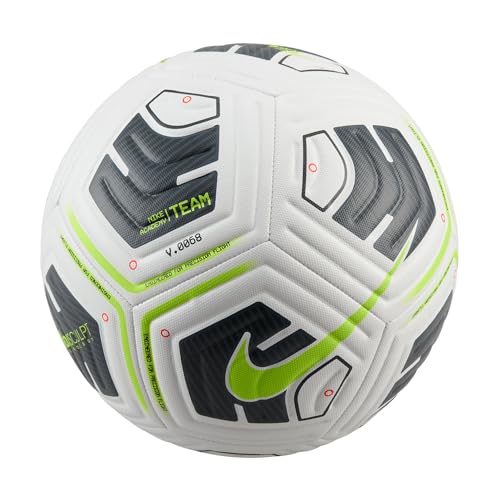
Nike Academy Soccer Ball
What We Like
- 32 panels with same surface
- 0.8 mm PU outer for soft feel
- Multi-foam backing supports power and flight
- Light 0.8-pound build
Trade-offs
- 32 panels mean more seams than Trionda's wave-design surface
- Lighter at 0.8 pounds than the 0.9-pound Trionda
Thirty-two panels sharing the same surface is the detail that matters most here. Nike says that uniform construction supports shape retention. That is the quality a club coach, a parent buying for a youth squad, or a player who trains often should care about more than a flashy graphic. The 0.8 mm PU outer over multi-foam backing is described as giving the ball a soft feel, along with power and good flight characteristics, so the cover is doing more than just looking the part.
A 32-panel ball has more seams than something like the adidas Trionda Competition, which is built around a wave-design surface aimed at precision and stability. If you want that flagship-style surface, Trionda is the more specialized choice. The Nike’s soft-feeling cover is a different character from a rigid one, so players who prefer a harder strike may want to look elsewhere. At 0.8 pounds it is a touch lighter than the 0.9-pound Trionda, and its overall profile is that of a dependable everyday ball rather than a showpiece.
Product photos
Select Numero 10 Soccer Ball
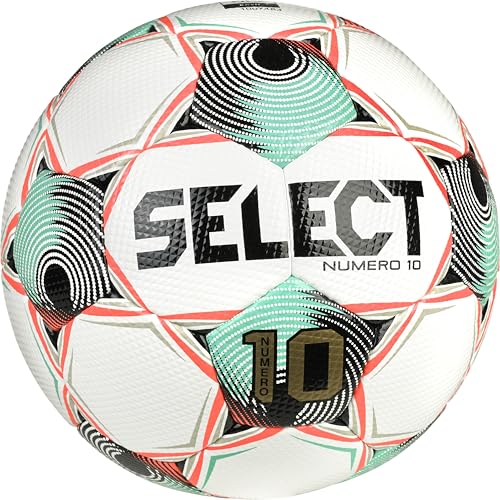
What We Like
- 32 hand-stitched panels for straight flight
- Diamond-textured cover adds friction and control
- Neoprene foam lamination softens the touch
- Latex bladder gives lively bounce
Trade-offs
- Ships deflated, so you must pump it up first
- Needs topping off with air every few days
- Same 0.9 pounds as adidas Trionda, no weight edge
Thirty-two hand-stitched panels give this ball its core appeal: high friction, good control and a straight flight, which is what you want when you are working on passing and first touch. The diamond-textured cover adds grip, so the ball holds against your boot instead of skidding away. Underneath, the PU cover is laminated with neoprene foam, which increases softness and gives the ball a gentler feel on the foot. A Zero-Wing latex bladder adds a livelier bounce with a light, soft touch. For players who like the traditional character of a stitched ball, this one comes with decades of use in both matches and training behind it.
Upkeep is where this ball asks for some effort. It arrives deflated, and like most premium stitched balls it wants topping off with air every few days, so a pump belongs in your kit bag. Stitching also means a different character from the smooth surface of the adidas Trionda Competition, which is the better pick if you want a smooth, modern, glued-style look. Both weigh 0.9 pounds, so the real choice is feel and construction. The two-year stitching and roundness guarantee adds some reassurance for clubs and keen players who put in hard weekly hours.
adidas Tiro Match Soccer Ball

What We Like
- Meets international match ball testing criteria
- Hand-stitched construction for a high-end feel
- Latex bladder gives lively rebound
- Polyurethane cover feels leather-like and light
Trade-offs
- Ships flat, so you must supply a pump
- Size 5 only suits ages 12 and up
The Tiro Match meets international match ball standards for circumference, roundness, rebound and weight, which means the ball you train with behaves the way a proper game ball should. That matters for clubs and serious players who want practice touches to carry over to Saturday kickoff. The hand-stitched build gives it a premium, custom feel underfoot, and the polyurethane cover has a leather-like touch without feeling heavy. Paired with a latex bladder built for strong rebound, passes and shots come back off the foot with life. It is a sensible pick for older teens and adults who want match-grade credentials without stepping up to a top-tier World Cup ball.
Inflation gear is the first thing to budget for, since this ball ships flat and no pump is included. It is also a size 5, the official size suggested for ages 12 and up, so younger players need a smaller ball. If you want the newest World Cup-inspired tech, look to the Trionda. If you want a dependable, match-standard stitched ball for regular games and training, this one fits.
Product photos
Select Thor Dual-Bonded Soccer Ball
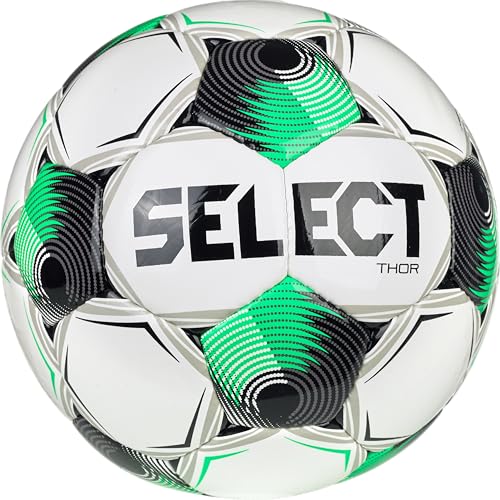
What We Like
- Dual-bonded panels, machine-stitched and seam-sealed
- Seam sealing reduces water uptake
- SR bladder for precise weight, air retention
Trade-offs
- Ships deflated, so you need a pump
- Needs air topped off every few days
Dual-bonded panels that are machine-stitched and seam-sealed with glue are the headline feature here, and they mean the ball takes up less water than a basic stitched design. That matters for anyone who trains outdoors and wants a ball that copes with damp conditions. Inside, an SR bladder keeps a precise weight and delivers optimal air retention, so the ball should hold its pressure longer between top-ups. At 0.8 pounds in size 4, the Thor is a light, practical option, and the maker pitches it as reliable, durable and great value. For anyone after a straightforward ball for regular sessions, it covers the basics well.
Upkeep is the catch with this one. It ships deflated, and the maker advises topping it up with air every few days, so a pump should be part of the kit bag from day one. It is also strictly a size 4. Players moving up to full-size matches will need something like the Select Numero 10, a size 5 that lists the same 0.9-pound class of weight for older age groups. Think of this as the right ball for the right age, not a ball to grow into. The 1-year stitching and roundness guarantee adds some reassurance for a ball that will see plenty of knocks.
Product photos
Champion Sports Viper Soccer Ball

What We Like
- 4-ply soft touch PU leather cover
- Air lock butyl bladder holds shape
- Indoor and outdoor use
- Standard size 5 for ages 12+
Trade-offs
- Ships deflated, so you must supply a pump
- Size 5 only suits ages 12 and up
- At 0.9 pounds, no lighter than Nike Academy's 0.8
A 4-ply soft touch PU synthetic leather cover gives this ball a gentler feel on the foot, which matters when you are drilling passes and first touches for an hour on a school field or a rec-center floor. Because it is listed for indoor and outdoor use, one ball can cover both the pitch and the gym. The air lock butyl bladder is meant to hold air and shape through regular play, so you should spend less time topping it up between sessions. For a team, a club parent or a teenager building skills, that makes it a practical practice ball. Keep in mind that it arrives deflated, so you will need your own pump before the first session.
Setup is the catch. No pump is included and the ball arrives flat, so you need your own before the first kick. It is also sized for ages 12 and up, which rules out younger players. Against the adidas Trionda Competition, the weight is the same at 0.9 pounds, but the Trionda is the one to pick if you want a FIFA Quality Pro ball for serious competition. The Viper is the practical training companion, while the Trionda is the showpiece.
Product photos
Nike NFHS Club Elite Team Soccer Ball
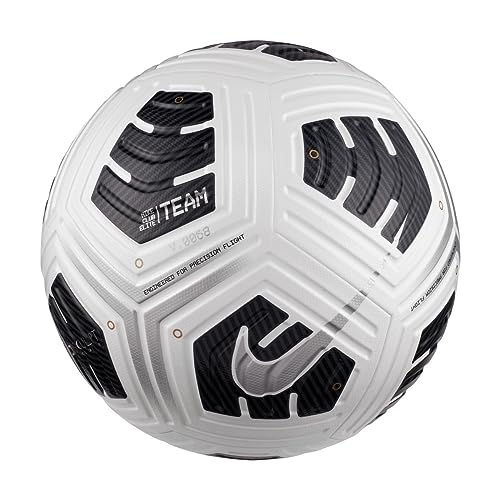
What We Like
- Rubber bladder helps maintain air pressure
- Bladder also helps keep shape over time
- Size 5 format for full-size play
- Classic white and black colourway
Trade-offs
- Size 5 only; Select Thor comes in Size 4
- White and black only; PUMA Orbita Pro offers Fluo Yellow
A rubber bladder that helps maintain air pressure and shape over time is the main thing to know about this ball. For coaches and club players who haul a bag of balls to training, that points to a ball built to hold its form through regular use. Nike’s Club Elite Team build, with the NFHS name on it, points toward team play rather than casual kickabouts. The white and black colorway keeps the look classic and familiar for club settings.
This ball has a more focused design. The Amazon listing highlights the bladder as its feature, so anyone chasing a headline surface design may prefer the adidas Trionda Competition, which pairs a wave-inspired look with FIFA Quality Pro. Colour is another difference: the PUMA Orbita Pro arrives in Fluo Yellow-Multicolor, while this Nike stays in plain white and black. Younger squads should also note this is a Size 5, whereas the Select Thor is a Size 4. For a team that values a ball holding its shape and pressure, though, that focused approach is a sensible fit.
Champion Sports Retro Soccer Ball Size 5

What We Like
- Classic black-and-white vintage club look
- Soft TPU cushion cover for control
- 2-ply butyl bladder holds air and shape
- Suited to indoor and outdoor fields
Trade-offs
- Black and white only; Viper adds blue
- Size 5 targets ages 12 and up only
A soft TPU cushion cover on a traditional black-and-white ball gives you a forgiving touch when you trap, pass and strike, all wrapped in the look of a vintage club ball. That is the real charm here. The 2-ply butyl bladder is built to keep air in and hold its shape, so the ball keeps rolling true through frequent kickabouts. Size 5 suits players aged 12 and up, and it is designed for indoor and outdoor surfaces, so one ball covers the park and the sports hall. It is a lovely pick for anyone who misses the old-school look.
The look is the whole story here: plain black and white, with no colour accents to help you spot it across a busy pitch. Champion Sports’ own Viper shares the soft TPU cover but brings blue into the palette, and it weighs 0.9 pounds against this ball’s 0.7 pounds. If you want a bolder design, the Viper is the livelier choice. If nostalgia wins, this retro ball is the one to grab for training sessions and casual weekend games.
Product photos
How We Evaluated Soccer Balls
This list draws on manufacturer specifications, certification details, expert buying round-ups and recurring themes in owner feedback. From there, we narrowed the field to the top soccer balls for different players and budgets.
Four criteria carried the most weight. First, certification: FIFA Quality Pro and FIFA Quality marks signal that a ball has been checked for weight, water uptake, shape retention and rebound. Second, size and weight, since the wrong size hurts technique. Third, construction, meaning thermal bonding, hand stitching, panel count and bladder type. Fourth, how well the ball holds air, because a ball that goes soft every few days is a chore.
A research-led approach has limits. We cannot tell you how a specific ball feels off your own foot, and even quality soccer balls vary in touch from person to person. Treat the trade-offs listed for each pick as the deciding detail when two balls look close.
What To Look For In Soccer Balls
Four things separate a good buy from a frustrating one: certification, size, construction and air retention. Here is how to weigh each for your own use.
Start with the job: FIFA Quality Pro for serious match play, a durable training ball for daily sessions. Then confirm the size for the player’s age, and check construction details such as thermal bonding, panel count and bladder type, which decide how the ball holds air, resists water and flies.
Certification and intended use
FIFA Quality Pro balls carry the highest mark, assessed for weight, water uptake, shape retention and bounce rebound. FIFA Quality is the step below, aimed at competitive club and amateur play. A ball with no FIFA marking has not been checked to either standard.
Be clear on the match ball vs training ball question before you spend. A match-style ball such as the adidas Trionda Competition World Cup Ball gives predictable flight on game day. Rougher use is often better served by a tougher training ball, and a quality training ball typically lasts one to two seasons of regular play.
Size and age
The gap between the smallest and largest balls is large: more than 10 centimeters in circumference and over 100 grams in weight, according to Select. Using the wrong one makes ball control harder to learn. The soccer ball sizes run from 3 to 5.
Size 5 is the full-size standard and suits players aged 12 and up, which covers most picks here. The Select Thor Dual-Bonded Soccer Ball is our Size 4 option. If you are shopping for younger players, browse soccer balls for kids before settling on a size 5.
Construction and air retention
Thermally bonded balls, like the PUMA Orbita LaLiga 1 Soccer Ball, limit water uptake so weight stays steady in wet games, though they do not eliminate it in heavy rain. Hand-stitched balls such as the Select Numero 10 Soccer Ball offer a softer, more traditional feel but usually need topping off with air every few days. Cheap PVC balls often lose shape or seam integrity within a few months of regular training.
For daily sessions, look at practice soccer balls with a butyl or rubber bladder and a thick cover. Brand also shapes the options: Adidas soccer balls lead on World Cup-style match designs, while Nike soccer balls such as the Academy favor a soft 0.8 mm PU feel.
- Check whether the ball ships inflated or needs a pump.
- Confirm the size matches the player’s age.
- Look for a FIFA Quality or Quality Pro mark if you play competitive matches.
- Choose a bladder type (latex for bounce, butyl or rubber for air retention).
- Store it inflated to the right pressure and out of extreme heat.
Rule of thumb: buy certification for match days, durability for training days, and always match the size to the player.
Soccer Balls Compared
The table below lines up all 10 balls by size, weight, build and best use, so you can see how the trade-offs stack up before you choose.
| Product | Size | Weight | Bladder |
|---|---|---|---|
| adidas Trionda Competition World Cup Ball | 5 | 0.9 pounds | N/A |
| PUMA Orbita Pro Premier League Ball | 5 | 1.0 pounds | Rubber |
| PUMA Orbita LaLiga 1 Soccer Ball | 5 | 0.9 pounds | Rubber |
| Nike Academy Soccer Ball | N/A | 0.8 pounds | N/A |
| Select Numero 10 Soccer Ball | 5 | 0.9 pounds | Zero-Wing latex |
| adidas Tiro Match Soccer Ball | 5 | 1.0 pound | Latex |
| Select Thor Dual-Bonded Soccer Ball | 4 | 0.8 pounds | SR bladder |
| Champion Sports Viper Soccer Ball | 5 | 0.9 pounds | Air lock butyl |
| Nike NFHS Club Elite Team Soccer Ball | 5 | N/A | Rubber |
| Champion Sports Retro Soccer Ball Size 5 | 5 | 0.7 pounds | 2-ply butyl |
Frequently Asked Questions
Which soccer ball brand is best?
No single brand wins every category. In this guide, adidas leads with the Trionda Competition for FIFA Quality Pro match-style play. PUMA stands out for air retention and league designs, Nike for a soft-touch club ball, and Select for hand-stitched training and size 4 options. Pick the brand whose strengths fit your level and surface.
What soccer ball do the professionals use?
Professional and international matches require a FIFA Quality Pro ball, the highest certification. The adidas Trionda Pro is the official World Cup match ball, built with a thermally bonded four-panel shell. Most players do not need that exact ball. A match-style option like the adidas Trionda Competition gives similar performance for club play.
Which Select soccer ball is the best?
It depends on what you need. The Select Numero 10 Soccer Ball suits players who want a hand-stitched, soft-touch ball with 32 panels for straight flight. The Select Thor Dual-Bonded Soccer Ball is the better choice for a durable size 4 with seam sealing. Both ship deflated and need topping off every few days.
How long does a soccer ball last?
A quality training ball should last one to two seasons of regular use. Pro match balls can last several years if used only for matches and stored properly, inflated to the correct pressure and kept away from extreme heat. Cheap PVC balls often lose shape or seam integrity within a few months of regular training.
What is the difference between FIFA Quality and FIFA Quality Pro?
FIFA Quality Pro is the top mark, required for professional and international matches, with stricter checks on water uptake, shape retention, weight consistency and rebound. FIFA Quality is the standard for competitive club and amateur play. Both mean the ball was independently checked, while unmarked balls have not been held to any standard.
The Bottom Line
The adidas Trionda Competition World Cup Ball is the best overall choice for club players and serious amateurs who want a FIFA Quality Pro match-style ball for games and training. Keep in mind its graphics only mimic the official match ball’s look, so collectors after the exact tournament ball should look elsewhere.
If you want something more specific, the PUMA Orbita Pro Premier League Ball is the Best Premier League Match Ball. The PUMA Orbita LaLiga 1 Soccer Ball is the Best Air Retention pick for frequent trainers. Buyers watching their spend should look at the Champion Sports Viper Soccer Ball, our Best Budget Pick, while players needing a smaller ball should choose the Select Thor Dual-Bonded Soccer Ball.
Whatever you choose, get the size right first, then match certification to how you actually play. A ball built for your age group and surface will do more for your touch than a flashy design.
