
10 Best Soccer Balls For 3 Year Old in 2026
This post contains affiliate links. As an Amazon Associate, we earn from qualifying purchases.
The best soccer ball for a 3-year-old is the Capelli Sport Disney Pixar Cars Soccer Ball, which wins for its durable, ready-to-play construction and fun character appeal. Other excellent choices include the Champion Sports Viper Soccer Ball for its soft touch cover and the Daball Toddler Soccer Ball for its ultra-light, safe design.
Choosing the right ball for a toddler means prioritizing safety, manageability, and fun over strict performance. A ball that’s too large or heavy can be frustrating and potentially unsafe for little feet.
Top 10 Soccer Balls For 3 Year Olds in the Market
Certain content that appears on this site comes from Amazon. This content is provided "as is" and is subject to change or removal at any time.
The Best Soccer Balls For 3 Year Olds, Reviewed
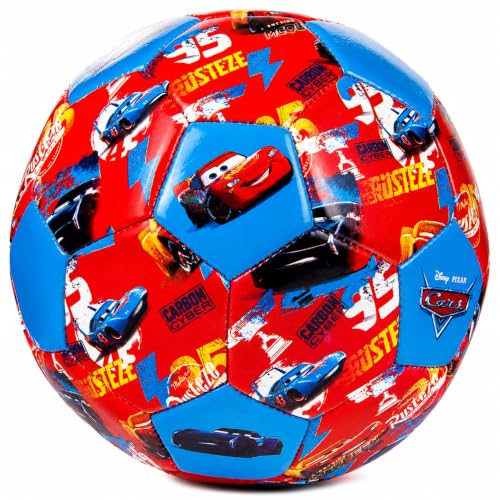
Capelli Sport Disney Pixar Cars Soccer Ball
What We Like
- Durable PVC shell with water-repellent finish
- Rubber bladder maintains consistent bounce
- Pre-inflated and ready for immediate play
- Officially licensed Disney Pixar Cars graphics
Trade-offs
- May require air top-off after transit due to temperature changes
- Graphics may wear with heavy outdoor use on rough surfaces
This ball has a 7-inch diameter and weighs 0.6 pounds, which gives it a proper feel for developing foot skills. Its durable PVC construction and machine stitching mean it can handle enthusiastic play in the backyard or at the park. The Lightning McQueen graphics instantly capture a young fan’s imagination, turning practice into play. It arrives pre-inflated and its rubber bladder is designed to hold air well, so you can focus on the game instead of the pump. For a three-year-old’s first real soccer ball, this blend of kid-friendly appeal and legitimate sports equipment construction is a standout choice.
The trade-off for that durable, stitched construction is a bit more heft compared to pure foam options like the Nerf Proshot. That weight helps with skill development, teaching proper kicking mechanics, but a child used to ultra-light toys might need a moment to adjust. Compared to the softer, lighter Franklin Sports Probrite Foam Soccer Ball, this Capelli ball offers a more authentic roll and bounce, better preparing a youngster for future team play. It’s a ball built for growth, transitioning smoothly from toddler kicks to more structured youth games.
Product photos
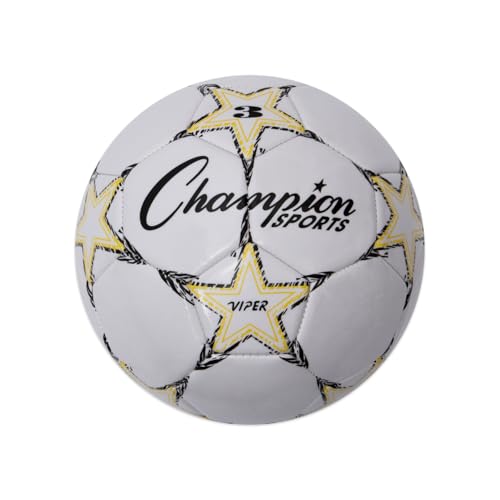
Champion Sports Viper Soccer Ball
What We Like
- Soft touch cover is gentle for young feet
- Butyl bladder holds air well for regular play
- Machine stitching adds durability for outdoor use
Trade-offs
- Ships deflated and requires a separate pump
A 4-ply soft touch PU cover gives this ball a softer feel than a traditional match ball, which can reduce sting for a young player during practice. Machine-stitched panels and an air lock butyl bladder are built for regular play, helping the ball retain its shape and pressure over time. This combination suits a parent looking for a durable, authentic-feeling ball that still prioritizes comfort for players under age eight.
At 0.4 pounds, the Viper is lighter than several other size 3 balls, including the 0.6-pound Capelli Sport options, making it easier for small players to kick. It ships deflated, so a separate pump is needed before first use. The soft touch cover and air-retaining bladder create a ball that behaves predictably for training, recommended for both indoor and outdoor play.
Product photos
Daball Toddler Soccer Ball

What We Like
- Soft, bouncy, and non-toxic for safe play
- Lightweight Size 1 design aids toddler control
- Colorful unicorn pattern encourages engagement
- Durable TPU cover resists abrasion
Trade-offs
- Pump contains a small pin, unsafe for under 3
Designed specifically for toddlers, this Size 1 soccer ball weighs only 0.4 pounds, making it uniquely easy for small children to kick and chase. Its soft, bouncy, and non-toxic construction is certified safe for indoor play, while the bright unicorn design captures a young child’s imagination. One parent noted their son liked that he could control it better than a standard ball, which helps build coordination and confidence for a first soccer experience.
The trade-off is that its toddler-specific design means it won’t grow with your child for long. It’s a dedicated starter ball, built to make those first kicks successful and fun before graduating to something heftier.
Product photos
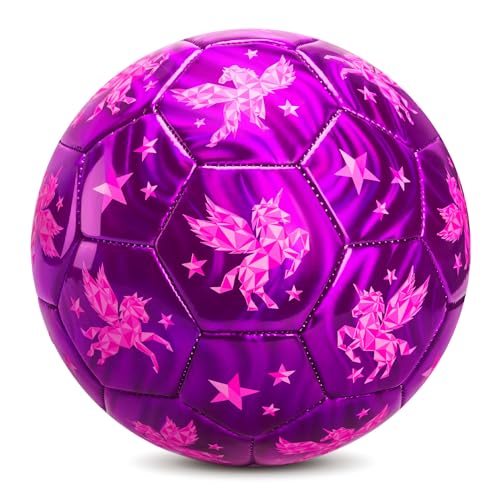
EVERICH TOY Unicorn Soccer Ball Set
What We Like
- Comes as a complete set with pump and bag
- Fun unicorn design to engage young children
- Durable machine-sewn construction for daily play
- Size 3 is appropriate for beginner motor skills
Trade-offs
- At 0.9 lb, it is heavier than most foam or soft-touch balls
- Requires inflation, unlike ready-to-play foam balls
The complete soccer ball set includes a size 3 ball, a pump, and a mesh carry bag, so a child can start playing immediately without needing any other gear. This bundle is exceptionally convenient for a first introduction to the sport. Its playful purple unicorn cartoon design is intended to capture a child’s attention and spark imagination, which may help encourage active play and reduce screen time. The ball is made with PVC and a rubber bladder for safety, and its machine-sewn construction is described as offering durability for daily play.
The set’s weight is 0.9 pounds, which is heavier than some other size 3 options like the 0.3-pound Nerf Proshot foam ball. This could be a consideration for younger children developing leg strength. The materials provide a more traditional soccer ball feel compared to dedicated foam models.
Product photos
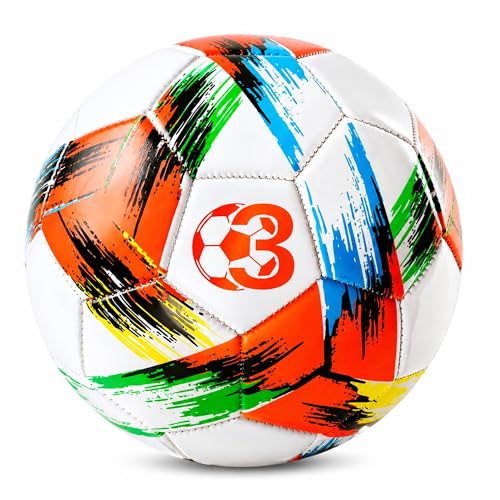
Innotoys Tri-Color Training Soccer Ball
What We Like
- Vibrant tri-color design is easy to spot
- Includes a pump for convenient inflation
- Cushioned PVC cover provides a comfortable touch
- Right size for young beginners to control
Trade-offs
- Arrives deflated, requiring initial setup
Including a hand pump means the ball can be inflated immediately upon arrival, so a child can start playing right away. Designed for ages 3-8, the Size 3 ball is smaller and easier for young beginners to kick and control. Its bright, graffiti-inspired graphics make it highly visible during practice, helping kids track it more easily on the field or in a room.
The durable PVC cover is cushioned for comfort during play, suitable for both indoor courts and outdoor surfaces like grass. Unlike foam options such as the Franklin Sports Probrite, this ball uses a traditional inflated construction. For parents, the included pump provides complete convenience, creating a ready-to-play kit that eliminates the need for a separate accessory purchase.
Product photos
Franklin Sports Probrite Foam Soccer Ball
What We Like
- Soft foam construction for safe play
- Low bounce absorbs impact for control
- High-visibility fluorescent color for tracking
- Suitable for both indoor and outdoor use
Trade-offs
- Foam material lacks the feel of a stitched soccer ball
- At 0.5 lbs, it is heavier than the 0.3 lb Nerf Proshot
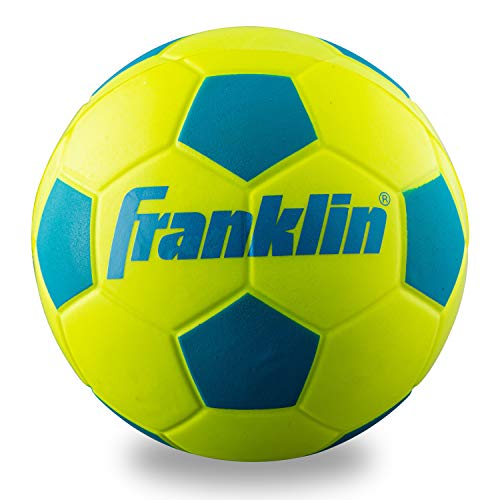
Its soft foam construction and low-bounce design make this ball a fundamentally safe choice for a toddler’s first kicks. The material absorbs impact from errant shots and keeps the ball from bouncing wildly, which helps a three-year-old build confidence while learning to control the ball. The bright fluorescent color is easy for little eyes to track, whether playing in the living room or the backyard. This combination of safety and simplicity is precisely what makes it a standout for introducing the game.
Franklin Sports designed this ball with soft foam, which absorbs impact for safe indoor or backyard play. Its low-bounce behavior helps young children focus on kicking and passing without constant chasing. Compared to the 7-inch Nerf Proshot foam ball, this 6.5-inch version is slightly smaller and half a pound heavier, offering a denser feel for little feet.
Product photos
Lemmeko Silent Indoor Soccer Ball
What We Like
- Gentle foam core prevents furniture damage
- Soft fabric outer layer is safe for beginners
- Lightweight and quiet for indoor home training
- Vibrant patterns are high-visibility for tracking
Trade-offs
- Fabric outer layer lacks durability for outdoor surfaces
- Soft foam construction limits power for advanced drills
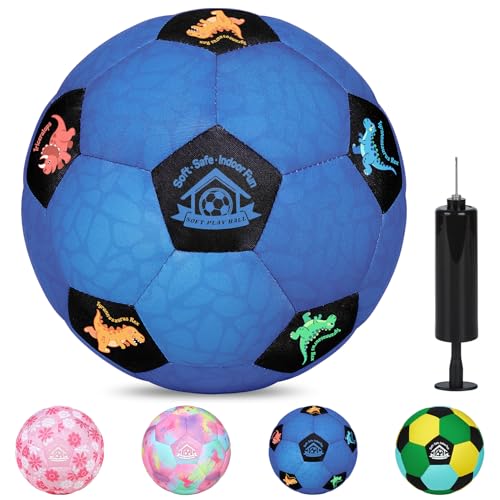
A soft foam core and fabric outer layer make this ball exceptionally quiet and safe for kicking around the living room, which is exactly what you need for indoor practice with a young child. It’s designed to absorb impact, protecting both your toddler and your walls from marks, and the included pump lets you adjust the firmness. This makes it a solid pick for parents wanting to introduce soccer fundamentals at home, especially when bad weather keeps play inside. The focus is squarely on creating a risk-free environment for those first touches.
This ball is built for gentle indoor safety, not for the backyard or park. Its fabric cover won’t hold up to rough surfaces like concrete or asphalt, and the soft construction lacks the rebound and feel of a traditional TPU ball for developing a powerful strike. Compared to a ball like the Champion Sports Viper, which has a soft-touch TPU cover for indoor-outdoor versatility, the Lemmeko is specialized for one job: being the quietest, safest option for your floors and furniture.
Product photos
Nerf Proshot Foam Mini Soccer Ball

What We Like
- Soft foam safe for indoor play
- Textured surface provides superior grip
- Lightweight at 0.3 pounds for small feet
- Durable for lawn and beach games
Trade-offs
- Weighs only 0.3 pounds
- 7-inch diameter is a mini size
A 7-inch diameter and soft foam construction prioritize safety for indoor spaces and small children just starting to kick. The textured surface provides superior grip, which helps toddlers and kids achieve more control over their early kicks. This forgiving, grippy design focuses on building confidence, as the foam won’t hurt when it bounces off furniture or a child’s leg.
This ball’s safety and grip mean it behaves differently from standard options. At 0.3 pounds, it is lighter than many other mini soccer balls, including the 0.6-pound Capelli Sport Disney ball. This makes it a dedicated trainer for building fundamental coordination and love for the game in a risk-free environment.
Capelli Sport PAW Patrol Soccer Ball
What We Like
- Officially licensed PAW Patrol character design
- Durable, water-repellent PVC construction
- Ready to use, arrives pre-inflated
- Machine-stitched for reliable play
Trade-offs
- PVC shell is less soft than a foam training ball
- May lose some air in transit, requiring a pump
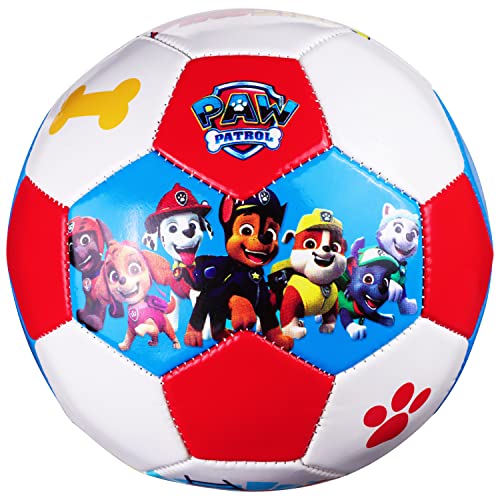
Officially licensed PAW Patrol graphics featuring Marshall, Skye, Everest, and Chase make this a soccer ball designed to appeal directly to young fans. Its size 3 designation is appropriate for youth players aged eight and under, providing a correctly scaled ball for skill development. Durable construction comes from a machine-stitched, water-repellent PVC shell and a rubber bladder, built for movement on grass fields. The ball arrives pre-inflated and ready for play, though owners note it may need a quick top-off with air due to normal changes during shipping.
When compared to a dedicated foam trainer like the Franklin Sports Probrite, the Capelli ball’s PVC construction offers a firmer, more traditional soccer feel. This makes it a practical bridge between imaginative licensed play and practicing genuine soccer fundamentals like dribbling and ball handling. Its durable build is intended to withstand enthusiastic play during practice or games in the backyard.
Product photos
Richball Kids Soccer Ball
What We Like
- Correct Size 3 for young children
- Lighter weight and soft surface for safety
- Promotes active, screen-free family play
- Comes in nice gift-ready packaging
Trade-offs
- Its real soccer ball construction may be firmer than a foam ball.
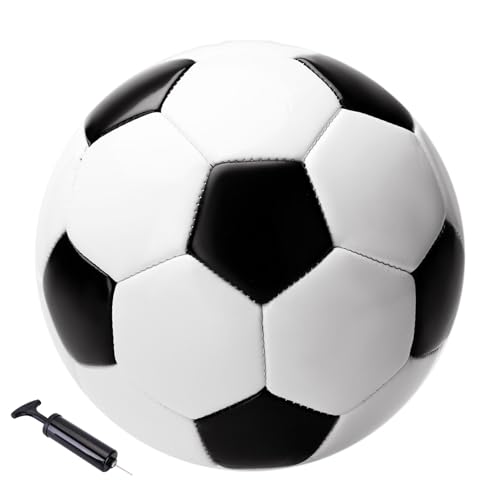
A proper Size 3 soccer ball is the core of this pick, scaled down from adult gear to fit a preschooler’s world. This smaller diameter and lighter weight mean a three-year-old can actually kick it and chase it without frustration. The soft surface adds a layer of safety for indoor hallways or living room matches. It’s built for families looking to turn playtime into active, shared moments that strengthen bonds and get everyone moving away from screens.
The trade-off is that as a real soccer ball, it lacks the ultra-soft, silent quality of a dedicated foam indoor ball like the Franklin Sports Probrite. For roughhousing in a space with breakables, a foam ball might be the wiser choice. But if your goal is to introduce the feel and fun of an authentic game in the backyard or park, the Richball provides that foundation. It’s a straightforward tool for creating those first memories of passing and celebrating together.
Product photos
How We Evaluated Soccer Balls For 3 Year Olds
Our evaluation is based on thorough research of product specifications, manufacturer data, expert recommendations for youth soccer gear, and patterns in owner feedback. We focused on criteria that matter most for toddlers: size and weight for easy handling, material softness for safety, and overall durability for mixed indoor and outdoor use. We also considered setup convenience, like whether a ball arrives inflated, and engaging designs to spark a child’s interest.
We prioritized balls that are appropriately sized and lightweight to match a three-year-old’s motor skills, reducing frustration and risk. We looked for soft-touch covers, foam constructions, or cushioned PVC shells that are gentle on feet and furniture. Construction quality, from stitching to bladder type, was assessed for how well a ball holds up to enthusiastic toddler play.
A key limit of our research-led approach is that we cannot replicate long-term wear testing in varied conditions. We rely on aggregated owner experiences to gauge durability and performance over time. For a broader look at options as children grow, you can explore our guide to the best soccer balls for kids.
What To Look For In Soccer Balls For 3 Year Olds
The right ball for a toddler is less about official match specs and more about fostering a love for the game through safe, accessible play. Focus on a ball they can easily kick, stop, and chase without getting hurt or discouraged.
The most important factors are size and weight for control, material softness for safety, and durability for play anywhere. A size 3 ball is standard for young children, but smaller, lighter options like size 1 or foam balls are often better for true beginners.
Size and Weight
For a three-year-old, control is everything. While a regulation size 3 ball (23-24 inch circumference) is the official standard for youth leagues, it can still be large and heavy for a toddler. Many experts recommend starting with a smaller, lighter ball.
Mini size 1 or 2 balls, or lightweight foam balls, are easier for small feet to maneuver and kick with confidence, building fundamental skills without struggle. The goal is a ball that feels manageable, not intimidating. Our research on soccer ball sizes by age provides more detailed guidance for this age group.
Material and Softness
The ball’s cover material directly impacts safety and play environment. For indoor use or very gentle outdoor play, soft foam balls are ideal as they minimize bounce, are quiet, and won’t damage furniture. For more traditional outdoor play, look for PVC or synthetic leather covers described as “soft-touch” or “cushioned.” These provide a more authentic feel while still being gentler than a full-size match ball. Avoid balls with hard, glossy exteriors, as they can be painful to kick and are less controllable for beginners.
Durability and Setup
Consider where your child will play most. A ball for backyard grass needs a durable, machine-stitched cover and a reliable butyl rubber bladder to hold air. For street or concrete play, a tougher PVC shell is key. Many balls ship deflated, requiring a pump you may need to purchase separately, check the product details. Pre-inflated balls offer immediate play but may lose some air in transit. Balancing durability with the right softness for your child’s age is the final step.
- Check if the ball is labeled as machine-stitched for better seam durability.
- Verify the bladder material; butyl rubber holds air longer than latex.
- Look for water-resistant finishes if outdoor play is frequent.
- Note if a pump is included or required for setup.
- Consider a complete set with a pump and bag for easy gifting and storage.
For a three-year-old, a softer, lighter ball that boosts confidence is more valuable than a durable ball meant for league play.
Soccer Balls For 3 Year Olds Compared
The table below compares key features of our top picks to help you see the differences at a glance.
| Product | Size | Weight | Cover Material |
|---|---|---|---|
| Capelli Sport Disney Pixar Cars Soccer Ball | Size 3 | 0.6 pounds | PVC shell |
| Champion Sports Viper Soccer Ball | Size 3 | 0.4 Pounds | Soft touch PU synthetic leather |
| Daball Toddler Soccer Ball | Size 1 | 0.4 Pounds | TPU synthetic leather |
| EVERICH TOY Unicorn Soccer Ball Set | Size 3 | 0.9 pounds | PVC cover |
| Innotoys Tri-Color Training Soccer Ball | Size 3 | N/A | Cushioned PVC |
| Franklin Sports Probrite Foam Soccer Ball | N/A | 0.5 pounds | Soft foam |
| Lemmeko Silent Indoor Soccer Ball | Size 3 | N/A | Fabric |
| Nerf Proshot Foam Mini Soccer Ball | N/A | 0.3 pounds | Soft foam construction |
| Capelli Sport PAW Patrol Soccer Ball | Size 3 | 0.6 pounds | PVC shell |
| Richball Kids Soccer Ball | Size 3 | N/A | N/A |
Frequently Asked Questions
What is the best soccer ball for a 3-year-old?
The best overall soccer ball for a three-year-old is the Capelli Sport Disney Pixar Cars Soccer Ball. It offers a good balance of durable, ready-to-play construction with fun graphics that engage young fans. For toddlers needing the softest, safest option, the Daball Toddler Soccer Ball or the Nerf Proshot Foam Mini Soccer Ball are excellent choices for indoor play.
What size soccer balls do 3 year olds play with?
Three-year-olds who are not yet in organized play often do best with a mini size 1 or a very lightweight size 3 ball. The official size for U8 and younger leagues is size 3, but this can be too large for some toddlers. Prioritize a ball’s manageable weight and circumference over strict adherence to league size at this introductory stage.
Is 3 years old too early for soccer?
No, three years old is not too early to introduce soccer through casual, fun play. The focus should be on developing basic motor skills like kicking, stopping, and chasing a ball in a low-pressure environment. Using an age-appropriate, soft, and lightweight ball makes the experience enjoyable and safe, laying a positive foundation for more structured play later. Pairing it with the right gear, like the best toddler soccer cleats, can also enhance the experience.
What size ball for a 3 year old?
For a three-year-old, look for a ball with a circumference under 24 inches and a weight significantly less than a standard 11-12 ounce size 3 ball. Many great starter balls are around 7-9 inches in diameter (size 1) and weigh only a few ounces. This smaller, lighter profile helps with control and safety, making the game more fun and less frustrating for a young child.
What features make a soccer ball good for toddlers?
A good toddler soccer ball has a soft, forgiving material like foam or cushioned PVC to protect feet and indoor surfaces. It should be lightweight for easy kicking and have a vibrant, high-contrast color or fun character design to capture their attention. Durability for outdoor surfaces is a bonus, but softness and manageability are the primary goals for this age group.
The Bottom Line
For most three-year-olds ready for a traditionally constructed ball, the Capelli Sport Disney Pixar Cars Soccer Ball is the best overall choice, combining durability, immediate play, and engaging character appeal. If your priority is the softest, safest introduction to the game, choose the Daball Toddler Soccer Ball for its ultra-light foam design. For a complete starter kit that includes everything needed to play, the EVERICH TOY Unicorn Soccer Ball Set is a great all-in-one solution.
The single most important factor is matching the ball’s size, weight, and softness to your child’s current abilities to build confidence and joy in play. A ball that is fun and easy to control will do more for their development than one that meets official specs but is difficult to handle.
