
Ankle Braces for Football Pros and Cons: A Player’s Guide
This post contains affiliate links. As an Amazon Associate, we earn from qualifying purchases.
A lace-up ankle brace can reduce an acute ankle injury rate for football players from 1.12 to 0.48 per 1,000 exposures, a drop of about 64%. But that protection comes with a trade-off: the same brace can restrict the ankle’s range of motion in the sagittal plane, which is why studies show it can negatively affect vertical jump performance by a measurable margin.
That 64% figure is the headline, and it’s real, pulled from a study of high school football players. But football isn’t played on a spreadsheet. The real question is whether that statistical safety net is worth the potential cost in agility, comfort, and even the risk of shifting stress to other joints. The guide that follows isn’t about giving you a simple yes or no on ankle braces for football pros and cons. It’s about walking you through the match footage, so to speak, the biomechanical studies, the player surveys, and the clinical guidelines, so you can make the call that fits your position, your history, and your game.
What follows: a breakdown of the proven pros, the tangible cons, a position-by-position guide to choosing a brace, and the one rehab rule every player misses.
Key Takeaways
- Lace-up braces can cut ankle injury rates by roughly 64%, but research is mixed on their effect on the knee; one study found no significant difference in knee injury rates, while another in basketball players found a higher rate in braced athletes.
- For pure prevention, a lace-up brace like the McDavid 195 Ultralight is the evidence-backed choice, but for comfort during long sessions, players often prefer a compression sleeve.
- Braces restrict ankle range of motion, which can lead to a measurable drop in vertical jump performance, a real cost for receivers and defensive backs.
- If you’re returning from a sprain, clinical guidelines are clear: wear a prophylactic brace for a minimum of 6 months upon return to sport.
- The long-term financial play favors a reusable brace over athletic tape, saving an estimated $20-$40 per ankle per season.
The 64% Risk Reduction: What the Data Actually Says
The biggest pro isn’t an opinion; it’s a number from a study the NCAA cites. In research involving high school football players, those wearing lace-up braces saw their acute ankle injury rate drop to 0.48 per 1,000 exposures. The control group, wearing no braces, had a rate of 1.12. That’s a hazard ratio of 0.39 (p<0.001).
A meta-analysis of 3,581 subjects across multiple sports confirmed the trend, finding that ankle bracing reduced the overall risk of a sprain by 64% (Relative Risk=0.36, p=0.0037) compared to no intervention.
This isn’t just for players with a history of injury. The same high school football study found the braces worked for athletes both with and without prior ankle problems. The potential scale is staggering. The authors of that study extrapolated that providing braces to all 1.1 million high school football players in the U.S. Could prevent an estimated 39,000 ankle injuries.
The mechanism is straightforward. A brace physically restricts the ankle’s range of motion, particularly in the coronal plane (side-to-side movement), which is where inversion sprains happen. One biomechanical study put a number on it: a braced ankle had an absolute range of motion of 10.72 degrees in the coronal plane, compared to 13.64 degrees for an unbraced ankle. That restriction in coronal plane motion is the biomechanical mechanism that helps prevent inversion sprains.
Where this goes sideways: This protection might come at a cost elsewhere. That same meta-analysis noted that while bracing reduced ankle injury risk by 64%, the reduction in risk for any lower extremity injury was only 25.5%. One study reviewed in the meta-analysis found braced basketball players had an 85% higher rate of other lower extremity injuries, with 17.9% sustaining an acute knee injury compared to 8.8% of non-braced players. However, a different RCT in football found no significant difference in acute knee injury rates between braced and control groups. The theory is that restricting the ankle can alter force distribution up the chain.
The Performance Trade-Off: Speed, Jumps, and Fatigue
Now for the cons. You can feel them. A brace adds bulk, can create hotspots, and changes how your cleat interacts with the ground. But the measurable performance impacts are what coaches debate.
A clear study put athletes through a battery of tests. The result? Wearing an ankle brace did not significantly affect performance in speed or agility functional performance tests. Your straight-line speed and cutting agility are likely safe. The vertical jump and standing long jump, however, are a different story. The study found braces “negatively affected performance” in both jumps, with a statistical significance of p=0.01.
The reason is in the sagittal plane, the ankle’s front-to-back flexion crucial for launching upward. The braces restricted this motion. It’s a physical trade-off: the same limitation that stops a violent inversion also dampens your explosive push-off.
Common mistake: Assuming a brace that feels tightest is best. A semi-rigid brace might score a 4.2/5 for perceived stability in a volleyball survey, but if it’s grinding on your achilles tendon by the fourth quarter, you won’t wear it consistently. Protection you leave in your bag protects nothing.
Fatigue worsens the picture. Research on female athletes with chronic ankle instability found that after a fatigue protocol, using a lace-up brace negatively affected vertical time to stabilization during landing. It also reduced the time to peak vertical ground reaction force. In simpler terms, a tired leg in a brace takes longer to steady itself after a jump and hits the ground harder, faster. For a running back taking hits in the fourth quarter, that’s a real factor.
Brace vs. Tape: The 45-Minute Rule and the Budget
This is a classic pre-game choice. The research makes a strong case for the brace.
First, durability. A soccer simulation study found that the restrictive benefit of traditional athletic tape on ankle range of motion disappeared after just 15 minutes of activity. The tested ankle brace, however, maintained some protective effect for 45 minutes. For a football player, tape applied during pre-game loses most of its restrictive effect on range of motion well before halftime.
Then, there’s cost. The high school football study broke it down: athletic tape can cost $40 to $60 per ankle per season. A reusable lace-up brace costs $20 to $30 as a one-time purchase. For a program outfitting dozens of players, the math is compelling. The initial investment for a national rollout would be massive ($36-44 million for all high school players).
| Factor | Ankle Brace | Athletic Tape |
|---|---|---|
| Cost Per Season | ~$20-$30 (one-time) | ~$40-$60 (consumable) |
| Duration of Support | Maintains effect for ~45 min of activity | Loses most support after ~15 min |
| Best For | Long-term prevention, cost-saving | Short-term, custom feel (if re-taped at half) |
| Application | Self-applied, consistent | Requires a trainer, variable quality |
Tape has its place. It offers a custom, skin-tight feel that some professionals still prefer, and a fresh application at halftime can reset the clock. But for the average player seeking consistent, cost-effective protection, the evidence leans heavily toward the brace.
Which Brace is Best for Football? A Positional Guide
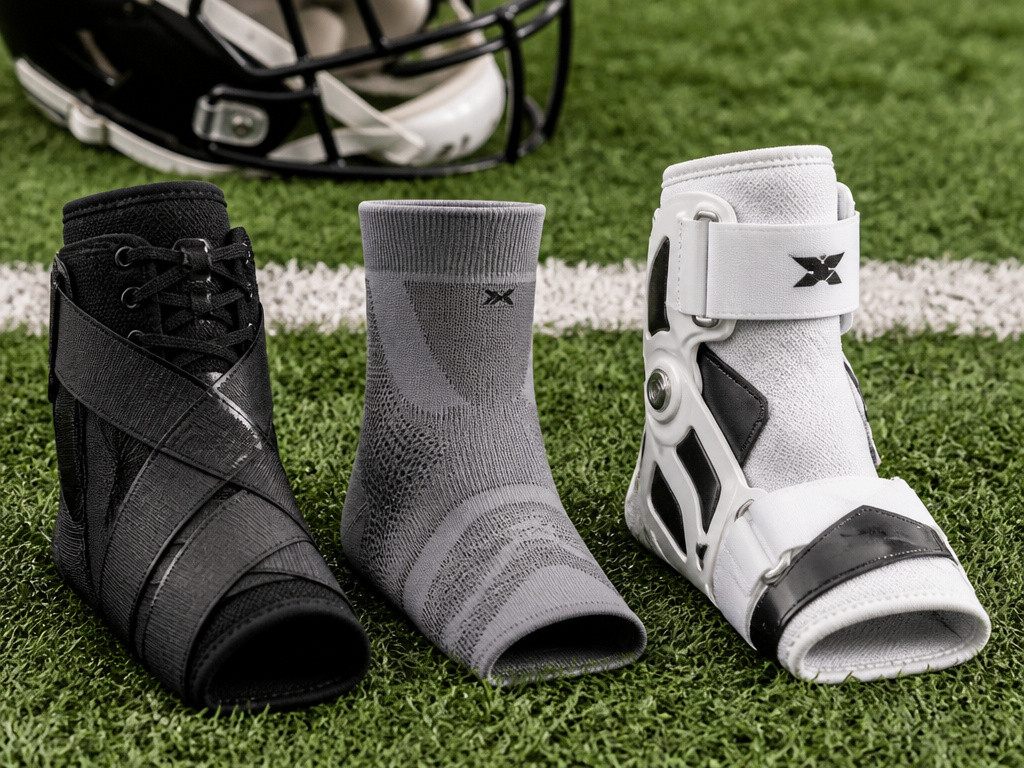
Not all braces are the same, and your position should guide your choice. A survey of soccer, volleyball, and running athletes asked athletes to rate three common types: compression braces, lace-up braces, and semi-rigid braces. The preferences split clearly by sport, and we can translate that to football positions.
- Lace-Up Braces (e.g., McDavid 195 Ultralight): Volleyball players, who need stability for lateral jumps and landings, rated these highest for perceived stability (4.2/5). This is your go-to for linebackers, linemen, and tight ends, players in the trench warfare where ankles get rolled in piles. The study showing the 64% risk reduction used lace-up braces.
- Compression Braces/Sleeves (e.g., Bauerfeind Malleotrain S): Soccer players, who prioritize comfort and agility over 90 minutes, rated these highest for comfort (4.0/5). Think wide receivers, running backs, and defensive backs. Soccer players, who prioritize comfort and agility, rated compression braces highest for comfort (4.0/5).
- Semi-Rigid Braces (e.g., Aircast A60): These often have plastic stays for more rigid support. They scored lower on comfort (2.8/5) in the survey. Reserve these for returning from a significant sprain where maximum stabilization is the priority, not everyday performance.
Biomechanical testing adds another layer. A cadaver study simulating an ankle sprain found models like the Aircast Air Stirrup “significantly reinforced the ankle,” while others provided “insufficient resistance.” This isn’t a consumer review; it’s a stress test. For a player with chronic instability, this level of reinforcement is the priority.
When To Use One: The 6-Month Mandate and the Game-Day Debate
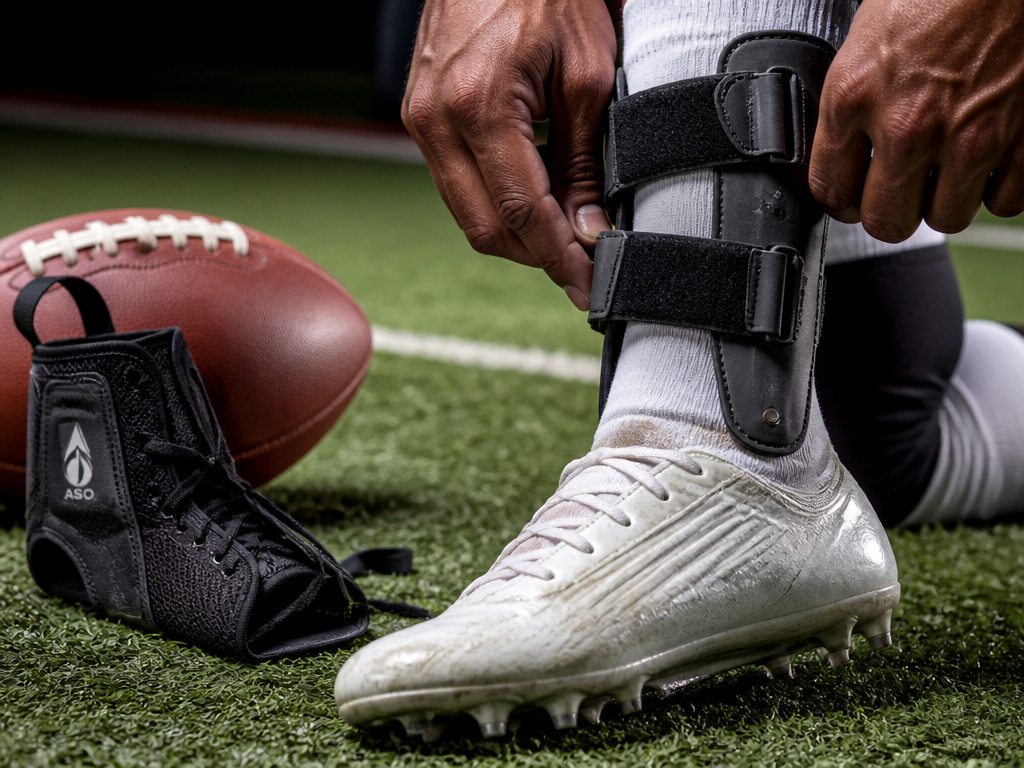
Clinical guidelines provide the rulebook, but even the experts disagree on some pages.
After an ankle sprain, the path is fairly clear. For Grade I and II sprains, functional rehabilitation is the gold standard (Evidence Category A), and a brace is part of that. For severe Grade III sprains, guidelines recommend immobilization for at least 10 days in a rigid stirrup brace or cast before starting controlled rehab.
Bottom line: If you’ve had a bad sprain, plan on wearing a brace for the rest of the season, at minimum. The 6-month guideline is the most conservative and safest bet for preventing a re-injury.
For injury-prone athletes without a current issue, guidelines disagree on practice use: five of six advise against using braces as a standard precaution during training, recommending them only for games, while one position statement recommends wearing supports for all practices and games. The logic is to let the ankle strengthen naturally in practice. However, one official position statement insists athletes with a history of ankle sprains should wear supports for all practices and games. If you’re constantly nursing a weak ankle, the “always-on” approach might be your reality.
How to Transition Out of a Brace Safely
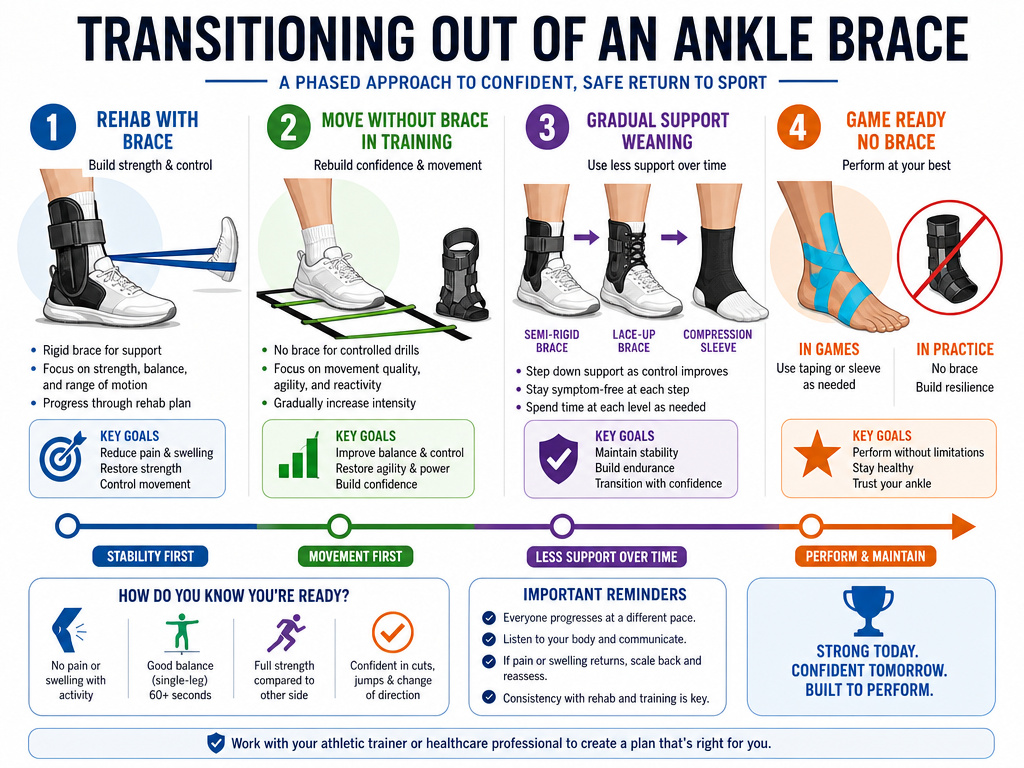
Reliance is a legitimate concern. The goal of rehabilitation is to restore the ankle’s own strength and proprioception, not to outsource it permanently to a brace. You can’t go from full brace to zero support overnight. Here’s a phased approach.
- Rehab Phase (Weeks 1-4): Brace use is mandatory during all rehab exercises and light activity. The focus here is on healing.
- Integrated Phase (Weeks 5-8): Start “brace holidays.” Wear the brace during competitive drills or scrimmages, but perform position-specific skill work (route running, ladder drills) without it. This re-engages the stabilizing muscles.
- Performance Phase (Weeks 9-12): Switch to a lighter support. Move from a semi-rigid brace to a lace-up, or from a lace-up to a compression sleeve. Use the heavier brace only for full-contact games.
- Weaning Phase (Week 13+): Use the light support (compression sleeve or kinesiology tape) for games only. All practices are done without any brace. The sleeve provides proprioceptive feedback without mechanical restriction.
How to Choose and Fit an Ankle Brace for Football
Choosing the right brace involves balancing support, comfort, and your specific needs.
Frequently Asked Questions
Do ankle braces weaken your ankles?
They don’t cause atrophy if used correctly. The risk is functional weakness, your ankle’s supportive muscles and neural pathways can become lazy if they’re never challenged. This is why a phased transition out of a brace is essential. Always pair bracing with a prescribed strength and balance rehab program.
Should a youth football player wear ankle braces?
The injury prevention data is compelling, but the long-term development concern is real. For a young player with no injury history, the priority should be building natural strength, balance, and proprioception through training. Braces should be introduced only after a significant sprain, following the same return-to-play guidelines. The goal is to protect the child, not to create a permanent dependency.
Can you wear an ankle brace with football cleats?
Yes, but fit is critical. You will likely need to go up a half-size in your cleats, especially with a bulkier lace-up or semi-rigid brace. Always try the brace on with your game cleats before using them in competition. The wrong fit can cause blisters, restrict circulation, or even compromise the brace’s effectiveness by forcing it out of position.
What is the difference between an ankle brace and an ankle protector?
This is a crucial distinction. An ankle brace is designed to restrict motion and prevent inversion sprains. An ankle protector (often built into shin guards) is a padded cup designed to absorb impact and prevent contusion injuries from kicks or tackles. One study explicitly stated ankle protectors “should only be used as a means to reduce risk of ankle contusion injuries and not implemented as a method to reduce the risk of ankle inversion injuries.”
How do you clean and maintain an ankle brace?
Football is tough on gear. After each use, hand-wash the brace in cool water with a mild detergent. Never machine wash or dry, as this can break down elastic and plastic components. Air dry it completely before storing it in a ventilated bag. Inspect it regularly for worn straps, torn stitching, or cracked plastic stays. A compromised brace won’t provide the support it’s rated for.
Before You Go
The evidence gives us two clear bookends. On one side, a lace-up brace is one of the most effective tools for preventing ankle sprains in football, backed by a 64% risk reduction in real-world studies. On the other, that same tool can hamper jump height.
The choice, then, when weighing ankle braces for football pros and cons, isn’t a simple “yes” or “no.” It’s a cost-benefit analysis based on your personal history and your position on the pitch. A defensive lineman with two prior sprains has a very different calculation than a freshman kick returner with healthy ankles. Start with the clinical guideline for your situation, especially that 6-month rule for returning from injury, then layer in the practicalities of comfort, position, and the long-term goal of standing on your own two feet. The best brace is the one that gets you safely to the point where you don’t need it anymore.
