
Libero Role in Football: The Forgotten Sweeper
This post contains affiliate links. As an Amazon Associate, we earn from qualifying purchases.
A libero, or ‘free man’, in football is a tactical role, not a position with special rules. It describes a defender who plays behind the main defensive line, acting as a sweeper and deep-lying playmaker. The term comes from the Italian phrase ‘libero da impegni di marcatura’ meaning ‘free from marking commitments’. Under the official IFAB Laws of the Game, a libero is simply another outfield player with no extra privileges regarding handball, offside, or substitutions. The classic libero role in football has largely faded from the modern game.
Now, the tactical freedom of the libero role in football, roaming behind a defense to mop up danger and start attacks, is where the magic and the misunderstanding lies. A player can be assigned that job by a coach, but the rulebook doesn’t see a ‘libero’, only a ‘defender’. This gap between tactical label and legal reality is why the role could flourish in one era and vanish in the next. The answer to why it’s mostly extinct isn’t in the laws; it’s in how the entire defensive structure of the game shifted underneath it.
What follows is a breakdown of the sweeper’s golden age, the precise tactical change that made it a liability, and where you can still find its DNA in current top defenders and goalkeepers.
Key Takeaways
- A libero has no special rules, it’s a tactical label for a defender playing deep, governed by the same IFAB laws as any other outfield player.
- The role peaked between the 1960s and 1990s in man-marking systems.
- The libero died out because of the rise of zonal marking; a player sitting deep breaks the offside trap and leaves the team exposed.
- Its core duties split into two modern roles: the creative aspects live in ball-playing centre-backs, while the sweeping function moved to the ‘sweeper-keeper’.
- Calling a player a libero does not grant goalkeeper rights or add an extra player to the team, it’s purely a coaching instruction.
The Classic Libero: A “Free Man” Behind the Line
You won’t find “libero” listed in the IFAB Laws of the Game 2025/26. That’s the first clue. The libero role in football was born from a tactical problem, not a rule change. In the 1930s, Austrian coach Karl Rappan used a system with a deep defender he called a Verouller. French for “bolt”. The idea was simple: in a rigid man-marking system, if an attacker beat his marker, someone needed to be there to clean up. That someone was the libero.
The Classic Libero, or ‘Free Man’, was a specialized defensive role that peaked between the 1960s and 1990s. Unlike standard defenders, the Libero was not assigned a specific opponent to mark. Instead, they sat behind the main defensive line to sweep up loose balls, intercept through-passes, and initiate counter-attacks with superior vision.
This freedom from a direct marking assignment is what gave the role its Italian name and its strategic value. The best liberos weren’t just safety nets. They were the first point of attack. From their deep view of the entire pitch, they could carry the ball into midfield or pick a long, diagonal pass to switch play. Their job was as much about starting attacks as stopping them.
The libero thrived specifically because of man-marking. In that system, four defenders would each follow a specific attacker. This created gaps the libero could patrol. It was a key part of defensive systems with a libero as a deep-lying playmaker. But this system had a shelf life.
Why Modern Football Killed the Libero
The decline wasn’t gradual. It was a direct result of a tactical revolution. In the late 1980s, Arrigo Sacchi’s AC Milan popularized zonal marking. Instead of defenders following men, they covered zones of space. This shift to a “flat back four” used the offside trap as a primary weapon.
And here lies the fatal flaw for the classic sweeper. In a zonal system, a libero sitting deep doesn’t help, it actively hurts.
Where this goes sideways: Using a traditional libero in a zonal marking system. The deep sweeper plays the entire opposing attack onside, rendering the offside trap useless and leaving a massive gap in front of the defense for midfield runners to exploit.
That single tactical change made the libero obsolete almost overnight. The role’s greatest strength, being the free, covering player, became its greatest weakness. Teams wanted compact, high defensive lines that squeezed the game. A player hanging back ten yards broke that compactness.
So, the libero didn’t just fade away; it was tactically euthanized. But its responsibilities didn’t disappear. They migrated.
The Libero’s Modern Legacy: Two Successors
The job of the libero split in two. One part went further back, and one part stepped forward.
First, the Sweeper-Keeper. As defensive lines pushed higher, the space behind them became vulnerable. Who was best positioned to deal with that? The goalkeeper. Modern keepers like Manuel Neuer and Ederson now perform the libero’s old sweeping duties, rushing out to clear through balls, often outside their penalty area. They are the first line of defense and the first point of distribution, acting as an 11th outfield player in build-up.
Second, the Ball-Playing Centre-Back. The creative, playmaking aspect of the libero didn’t vanish; it was democratized. In systems like Pep Guardiola’s, every central defender is expected to have the passing range and composure of a midfielder. Instead of one “free man,” teams use centre-backs who step into midfield during possession. Ball-playing centre-backs can move into the defensive midfielder role to create overloads. This achieves the libero’s goal of influencing play from deep without breaking the zonal defensive line.
| Classic Libero Trait | Modern Successor | Example Player |
|---|---|---|
| Sweeping up through balls | Sweeper-Keeper | Manuel Neuer (Bayern Munich) |
| Carrying the ball into midfield | Ball-Playing Centre-Back | John Stones (Manchester City) |
| Deep-lying playmaking | Regista / Deep-Lying Playmaker | Andrea Pirlo (historic) |
Deep-lying playmakers also carry the libero’s playmaking gene, but operate from midfield. The core idea of a free, creative player starting attacks from deep remains, but the position on the pitch has shifted.
Libero Rules: What You Think vs. What the Laws Say
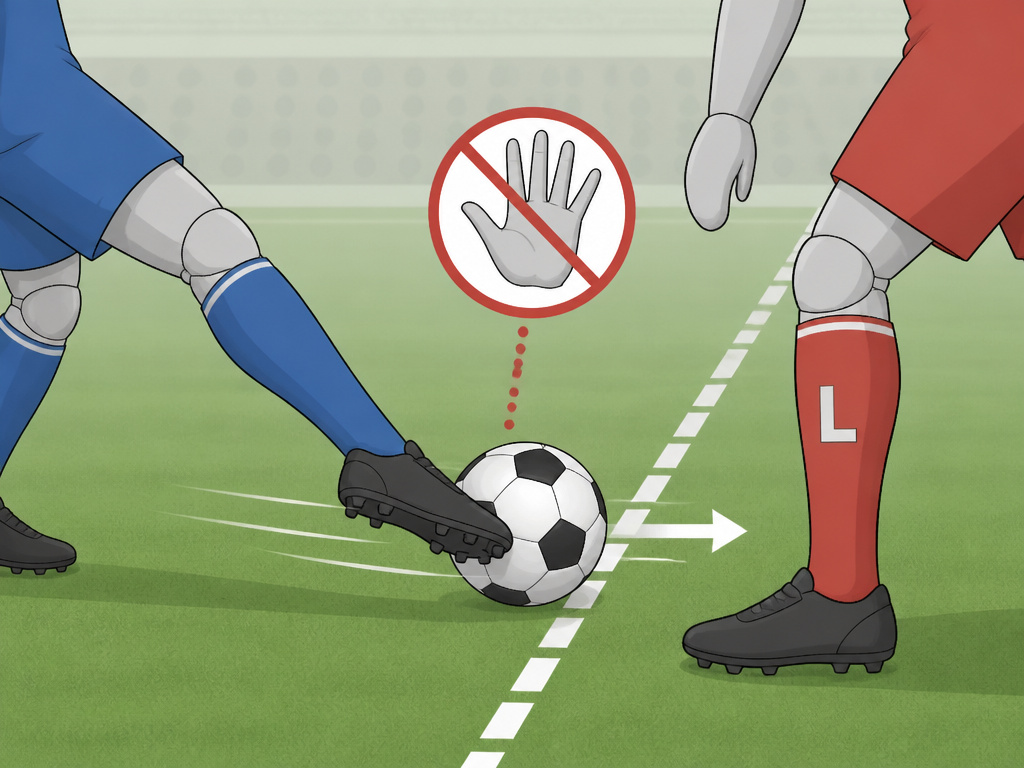
This is where confusion always sprouts. Because the role sounds special, people assume it comes with special rules. It does not.
- Handball: A libero cannot handle the ball. Playing deepest does not grant goalkeeper privileges.
- Offside: A libero is subject to the same offside rules as any outfield player. There is no exemption.
- Substitutions: A libero has no special substitution rights. They follow the normal procedure and competition limits.
- Team Count: Calling someone a libero does not add a 12th player to the team. You still have 11, one of whom is a goalkeeper.
A libero can cross halfway, join an attack, receive a pass, and attempt to score. The same offside and handball rules apply as they do to another outfield player.
The role is purely a tactical instruction from the coach: “You are free from marking a specific man; read the game and cover.” It is not a legal category. Every single one of these points is confirmed by a close reading of the official laws. The distinction matters because it stops us from mystifying the role. It was a brilliant solution to a specific tactical problem, not a magical cheat code.
Could the Libero Ever Make a Comeback?
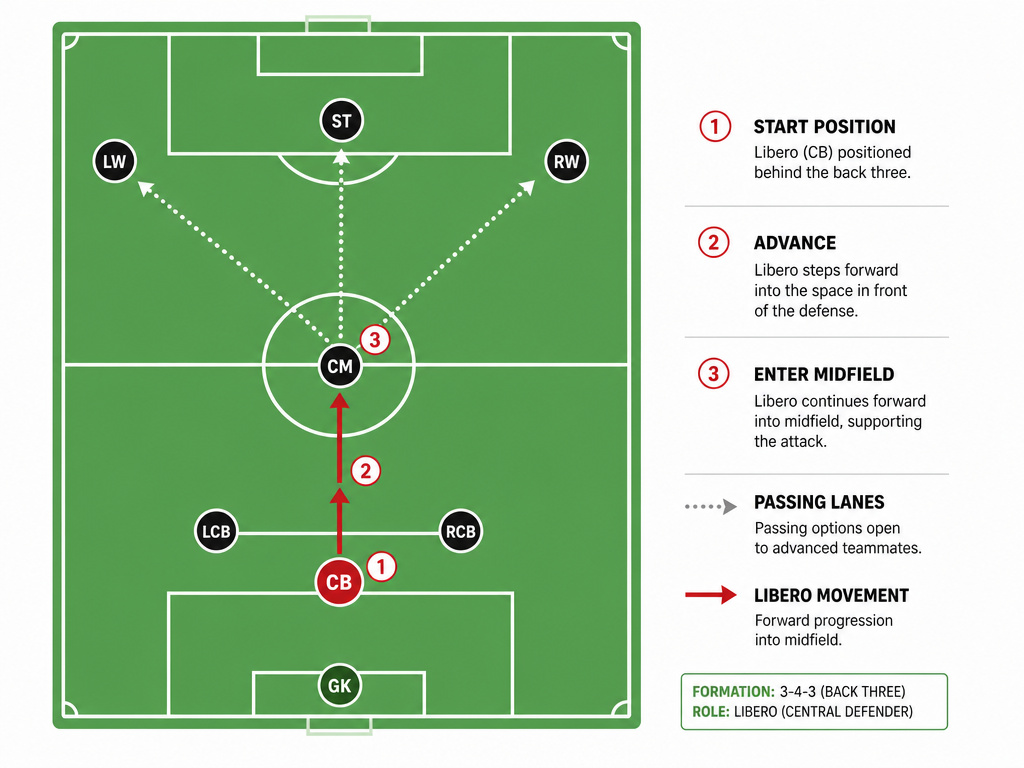
Sources disagree on the libero’s modern relevance: some argue the classic form is extinct due to zonal marking, while others claim its value and importance have increased. However, the spirit of the libero is alive and well.
We see it in the build-up play of teams who use a back three. The central defender in a 3-5-2 often has the libero’s freedom and vision, even if they don’t sit as deep. We saw a throwback in 2004 when Greece’s Otto Rehhagel used Traianos Dellas as a sweeper, conceding 4 goals in the group stages and none in the knockout stages.
The modern game demands multifunctional players. The positional play of top teams requires defenders who are also playmakers, and goalkeepers who are also sweepers. The libero didn’t die; it evolved. Its essence is now a required skill for several positions, not a standalone role.
Frequently Asked Questions
What is a libero not allowed to do?
Libero is not allowed to do anything any other outfield player cannot do. The most common misconception is that they can handle the ball like a goalkeeper, they cannot. They are bound by all the standard Laws of the Game: no handball, no offside exemption, no special substitution rules.
Why are liberos often shorter than other defenders?
This isn’t a rule, but a tactical preference from the era. Liberos needed exceptional agility, acceleration, and low centre of gravity to turn quickly and cover ground in behind. They relied more on reading the game and intercepting than on winning aerial duels, which were the primary job of the taller, man-marking centre-backs in front of them.
Can a libero score goals?
Absolutely. If a libero joins the attack and receives the ball in an onside position, they can score like any other player. Liberos have been known to score goals. The role does not restrict attacking movement; it only describes their primary defensive responsibility.
Is a sweeper the same as a libero?
In practical terms, yes. “Sweeper” is the English term, “libero” the Italian. They describe the same tactical role: the deepest defender, free from direct marking, who sweeps up behind the defensive line.
What’s the difference between a libero and a defensive midfielder?
Libero operates from a position between the central defenders and the goalkeeper. A defensive midfielder, like a holding midfielder, plays in front of the defensive line. The libero is the last line of outfield defense; the defensive midfielder is a shield in front of it. A defensive midfielder is a shield in front of the defensive line, not a sweeper.
The Bottom Line
The libero is a ghost in modern football, a role whose shape has dissolved but whose spirit infuses the game. It’s a powerful reminder that positions are not defined by numbers on a shirt, but by the problems they solve within a specific system. When the system changed from man-marking to zonal, the libero’s problem-solving value vanished.
Today, you watch a ball-playing centre-back stride into midfield or a sweeper-keeper claim a through-ball 30 yards from goal, you’re seeing the libero’s legacy. The “free man” is gone, but the need for players who can defend with their brains and attack with their feet is greater than ever. The next time a pundit laments the death of the sweeper, point them to the centre-circle and the edge of the penalty area. The libero didn’t die; it just learned to share.
