
Sweeper Role in Football: The Free Man’s Last Stand
This post contains affiliate links. As an Amazon Associate, we earn from qualifying purchases.
The sweeper, or libero, is a central defender who plays behind the main defensive line as a free safety net, responsible for sweeping up loose balls and launching counterattacks. The sweeper role in football was developed in the 1930s, peaked in catenaccio systems, and while some sources state it has faded from elite football with its functions absorbed by other roles, others argue it remains alive and well, though evolved.
That lineage is the easy part. The real question today is whether the sweeper is extinct, evolved, or merely hiding in plain sight. The debate gets loud because two credible sources look at the same game and see different things.
The answer isn’t a simple yes or no. It’s a split. On one side, analysis shows the traditional sweeper role in football is now rare in elite soccer, having faded since the 1990s. On the other, another credible tactical source argues the sweeper is still alive and well in modern football, though evolved, and remains essential for kickstarting build-up patterns. What follows is a walk through both arguments, the skills that defined the role, and where you might still see its ghost on the pitch this weekend.
Key Takeaways
- Sources disagree on the current status: JobsInFootball states the traditional sweeper role is now rare in elite football, while TheMastermindSite argues it is still alive and well, though evolved.
- The role demands a unique blend of elite game-reading and technical passing skill, more so than any other defender.
- In modern back-three systems, the central defender often performs a sweeper-like function, dropping deep to cover wing-backs and start attacks.
- A sweeper-keeper does not replace a sweeper; one races away from goal to clear danger, the other drops toward it.
- Understanding the stoppers vs. Sweeper partnership is key to seeing how defensive roles have condensed into modern centre-backs.
The Sweeper’s Toolkit: More Than Just a Safety Net
A sweeper wasn’t just a defender who couldn’t mark. The role demanded a complete, almost contradictory skill set. You needed the defensive instincts of a traditional centre-back combined with the vision and passing range of a midfielder. According to coaching guides, the list is extensive: excellent on-the-ball fundamentals like first touch, ball control, passing, and dribbling, plus refined defensive techniques like tackling, blocking, marking, intercepting, and heading.
But the real differentiator was mental. Elite reading of the game was essential. A sweeper had to anticipate not just where the striker would run, but where the through-pass would be played three passes before it happened. This positional sense, paired with quick thinking and decision-making, turned a reactive defender into a proactive play-breaker.
Common mistake: Assuming a sweeper was just a slow defender parked at the back. The best, like Franz Beckenbauer, had the speed and stamina to cover ground laterally and the timing to step into midfield without leaving a fatal gap. A misjudgment on a forward run could leave the goal exposed.
Communication was the final piece. From their vantage point behind the defensive line, the sweeper acted as an on-field coach, directing the back four and organising the offside trap. Their voice had to be clear, concise, and constant.
Sweeper vs. Stopper: A Crucial Distinction
To understand the sweeper, you have to understand its counterpart: the stopper. They were two halves of a classic central defensive partnership, but their jobs were opposites.
| Role | Primary Duty | Typical Positioning | Modern Equivalent |
|---|---|---|---|
| Sweeper (Libero) | “Sweep up” loose balls, cover defensive gaps, start counterattacks | Behind the main defensive line | Ball-playing centre-back who drops off |
| Stopper | Directly confront and mark the opposition’s main attacker | In front of the defensive line, engaging high | Aggressive, front-foot centre-back |
| Key Trait | Anticipation, reading of the game, passing range | Strength, aggression, tackling | Physical duels, proactive interventions |
The sweeper operated as a free safety net behind the main defensive line. The stopper was the aggressive frontman, tasked with physically engaging the opponent’s best striker. This partnership was the heart of the catenaccio system. The stopper’s high, physical engagement could get beaten, and when it happened, the sweeper was there to mop up the danger. When it happened, the sweeper was there, mopping up the danger before it reached the goalkeeper. It was a beautiful, balanced dance of aggression and insurance.
That specific partnership is now a relic. As the mastermindsite analysis notes, clear-cut partnerships built around the sweeper role in football are rare today, typically existing more in back-three systems. The modern centre-back is now expected to perform both roles simultaneously: step out to engage when needed, but also have the pace and intelligence to drop and cover. This fusion of roles is one reason the pure sweeper is less common.
Famous Liberos: The Players Who Defined the Role
The sweeper’s legacy is written by its legends. These were not just great defenders; they were artists who redefined what a defender could be.
Franz Beckenbauer stands above all. “Der Kaiser” didn’t just play sweeper; he completely changed it. For Bayern Munich and West Germany, he combined imperious defensive authority with the grace and passing of a playmaker, often striding into midfield to dictate the game. He is the player most often named as the greatest libero in football history.
He was preceded by Ivano Blason, regarded by many as the world’s first celebrated libero, moulded by manager Nereo Rocco at Triestina in the 1930s. Rocco’s long reign in Italian football is when the term catenaccio, “the chain”, was coined.
Other icons filled out the pantheon. England’s Bobby Moore captained his nation to World Cup glory in 1966 with peerless reading of the game and tackling. Italy’s Franco Baresi became the backbone of AC Milan’s legendary defence for over two decades with his anticipation and leadership. These players proved the sweeper wasn’t a position for the limited defender; it was a platform for the most intelligent and technically gifted players at the back.
Why the Traditional Sweeper Faded Away
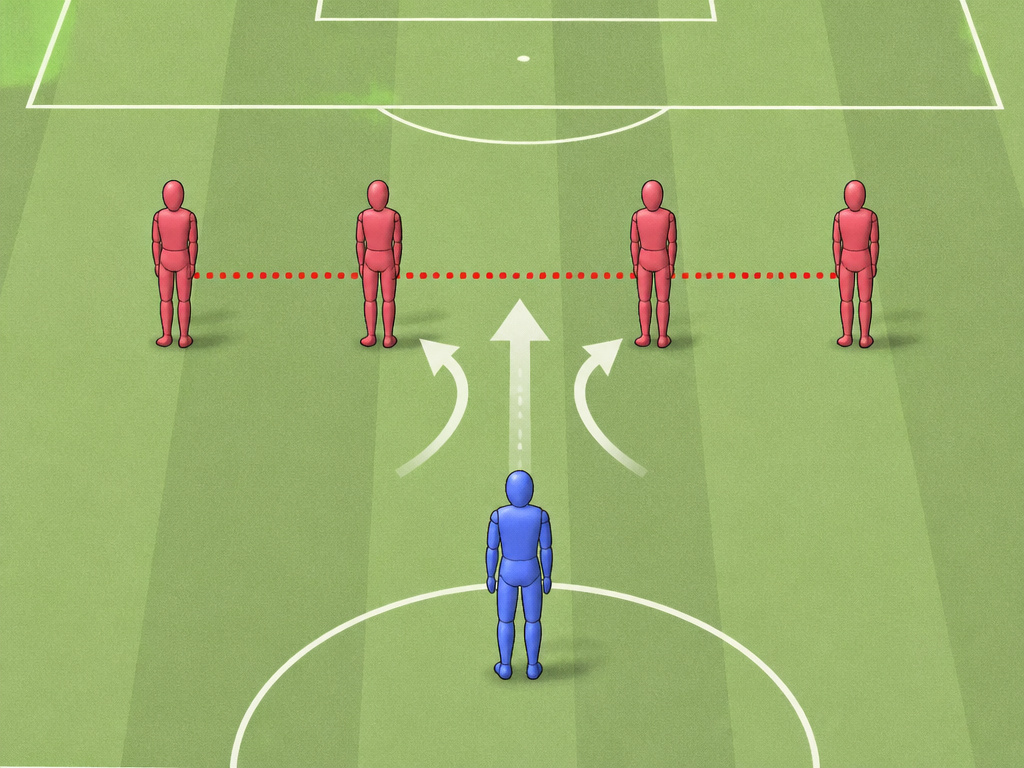
If the role was so effective and produced such legends, why did it disappear from the top of the game? The decline since the 1990s coincided with football’s tactical evolution.
First came the shift from man-marking to zonal marking. In a pure zonal system, every defender is responsible for a space, not a man. This requires a flat, coordinated defensive line to hold the offside trap effectively. A sweeper playing five yards behind that line destroys its integrity, playing opponents onside and creating huge gaps.
Where this goes sideways: Trying to implement a high offside trap with a traditional sweeper. The line gets broken almost every time, turning what should be an attacking advantage into a defensive liability.
Second, the rise of high-pressing, possession-based football compressed the game. Teams like those coached by Pep Guardiola and Jürgen Klopp defend from the front, pushing their defensive line high up the pitch. A sweeper, by definition, plays deep. In a high defensive line, there is less room for a deep-lying sweeper. The need to compress space for pressing teams made the deep-lying sweeper a tactical hindrance.
Finally, the players themselves evolved. The technical bar for defenders rose. Today, most top-level centre-backs are comfortable receiving the ball under pressure and picking a forward pass. The ball-playing centre-back, a Virgil van Dijk or a John Stones, now performs the sweeper’s playmaking duties from within the defensive line, not from behind it. The rise of the ball-playing centre-back, who can defend and distribute from within the defensive line, has absorbed many of the sweeper’s functions.
The Modern Ghosts of the Sweeper Role
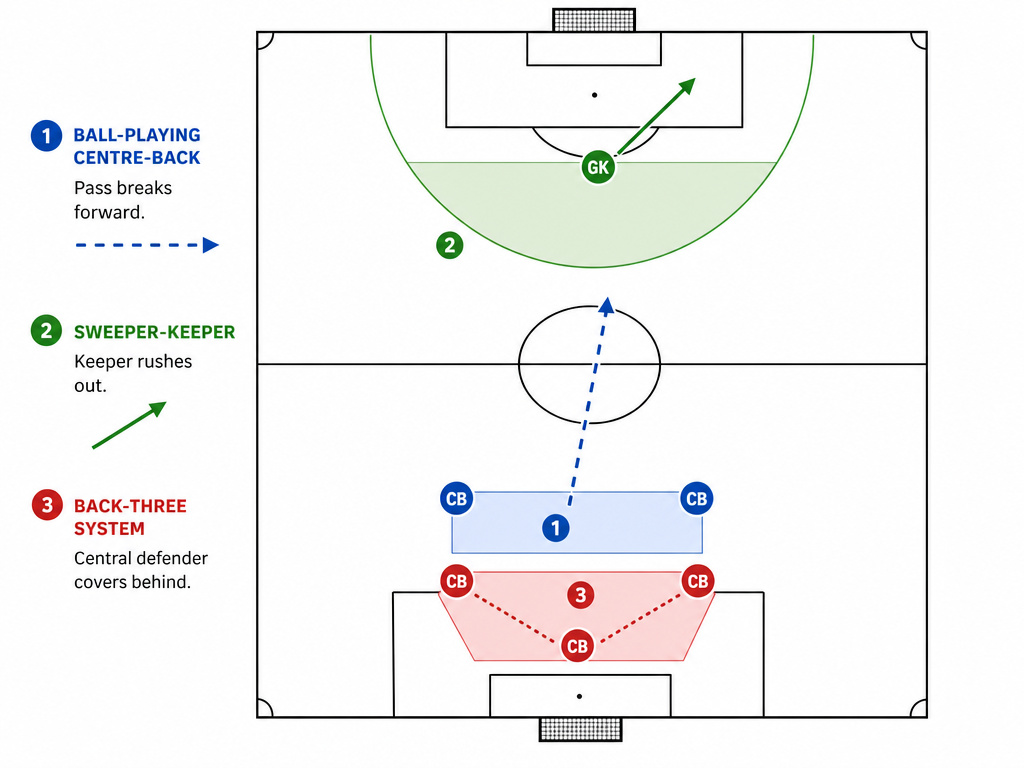
So, is the sweeper truly extinct? Not exactly. Its spirit lives on in three distinct ways, and you can spot them if you know where to look.
1. The Ball-Playing Centre-Back. This is the most direct descendant. When a centre-back like Stones drops between or beside the centre-backs to receive the ball from the goalkeeper, he is occupying the sweeper’s traditional starting position. His mandate, to break lines with a pass or carry the ball forward, is pure libero. The difference is he does it from within a back four, not from a dedicated deep-lying position.
2. The Sweeper-Keeper. According to the Poteau article, the introduction of the sweeper-keeper role has reduced the traditional need for a player in the sweeper position, while TheMastermindSite argues it does not take away the necessity for a sweeper, as they perform different functions. However, as the mastermindsite clarifies, they perform different functions and can co-exist. A sweeper-keeper like Manuel Neuer races away from his goal to clear through-balls. A centre-back sweeper runs toward his own goal to cover. The keeper handles the space behind the defensive line; the sweeper handled the space between and in front of it. One doesn’t replace the other, but the keeper’s evolution certainly reduced the sweeper’s unique territory.
3. The Back-Three System. Here, the sweeper finds its last natural home. In a 3-5-2 or 3-4-3, the central of the three centre-backs is often tasked with sweeping behind his two more aggressive partners. He provides cover for advancing wing-backs and acts as the primary distributor from the back. This is where you’ll find the clearest modern echo of the classic sweeper-stopper dynamic. It’s why the role is still considered relevant in teams that play with a back three.
Could You Still Use a Sweeper Today?
For a youth or amateur coach, the answer might be yes. At lower levels, where playing out from the back under pressure is riskier and individual defensive errors are more common, a sweeper provides valuable insurance. He can cover for less-experienced defenders and use his (hopefully) superior passing to launch attacks from a position of relative safety.
Using a sweeper involves tactical trade-offs, such as potentially limiting the ability to hold a high defensive line. But if you have a player with exceptional vision and passing who isn’t the quickest, the sweeper role could be a perfect way to maximize his strengths while hiding his weaknesses.
It comes down to the small details. Is your priority defensive solidity and direct counter-attacks? A sweeper system might work. Is your philosophy based on possession, pressing, and a high line? Then the sweeper is a square peg in a round hole. The game has largely moved on, but every pitch has a story, and sometimes that story includes a libero.
Historical origin and evolution
The sweeper role was first developed in the 1930s. The term ‘catenaccio’ was coined during Nereo Rocco’s reign in the Italian game, a system which famously featured a libero. Ivano Blason is regarded by many as the world’s first celebrated libero, operating as a defensive free man behind a line of markers. Franz Beckenbauer later became the player most often named as the greatest libero in football history, changing the role by adding significant offensive playmaking from deep. This evolution from a purely defensive cleaner to a regal orchestrator set the template for how the position would be interpreted for decades.
Frequently Asked Questions
Are centre-back and sweeper the same?
No. A centre-back is a general term for a central defender. A sweeper is a specific type of centre-back who plays behind the main defensive line as a free, covering player. All sweepers are centre-backs, but not all centre-backs are sweepers.
What is the hardest football position?
This is subjective, but the sweeper is a strong contender. It requires the defensive grit of a centre-back, the tactical brain of a midfield general, and the technical passing of a playmaker. The role requires elite reading of the game, quick thinking, and decision-making under pressure.
Why is the sweeper also called a libero?
“Libero” is Italian for “free.” It describes the player’s freedom from strict man-marking duties, allowing them to roam behind the defensive line and read the game. The terms are often used interchangeably, though “libero” sometimes carries a more attack-minded connotation.
Who is considered the best sweeper-keeper in football?
Germany’s Manuel Neuer is widely credited with redefining and perfecting the sweeper-keeper role in the modern era. His ability to read danger and act as an 11th outfield player has been central to Bayern Munich and Germany’s success.
Does a sweeper-keeper make a traditional sweeper obsolete?
Not necessarily. As analysis from TheMastermindSite argues, using a sweeper-keeper does not take away the necessity for a sweeper in the side, as they perform different functions. The keeper sweeps space behind the defence; the defender sweeps space in front of it. They can work in tandem, especially in a high defensive line.
The Bottom Line
Whether the traditional sweeper is endangered or still alive and well is debated; JobsInFootball states it is now rare in elite soccer, while TheMastermindSite argues it is still alive and well, though evolved. You won’t see a player listed as “SWP” on a team sheet in the Premier League or Champions League this weekend. Yet, the DNA of the role is everywhere: in the centre-back who drops deep to receive, in the goalkeeper who charges off his line, in the back-three system that needs a covering defender.
The debate about its current relevance is the proof of its enduring fascination. One side sees its functions successfully distributed among modern roles. The other sees those same functions as proof the sweeper’s core purpose is still essential, just worn by different players. Both are right.
The sweeper’s true legacy is that it expanded our idea of what a defender could be. It forced the game to recognise that defence wasn’t just about destruction; it could be the first, most intelligent, act of creation. That idea didn’t fade away. It just got absorbed into the very fabric of how we watch football now.
