
5 Best World Cup Footballs in 2026
This post contains affiliate links. As an Amazon Associate, we earn from qualifying purchases.
adidas Trionda Pro Match Ball is our best overall World Cup football. It pairs a thermal bonded, textured surface with the top FIFA rating for serious play. The adidas World Cup 26 Training Ball is the best officially licensed design for everyday practice, and the Capelli Sport World Cup 26 Ball is the pick for collectors.
The tricky part is that “World Cup football” can mean three different things: the real match ball, a licensed training version, or a keepsake with tournament graphics. They look alike on a shelf but behave very differently on grass, especially in wet weather and over a full season of sessions.
This guide is built from specifications, manufacturer documentation, expert round-ups and patterns in owner feedback. You get five clear picks, each matched to a type of buyer, so you can choose by how you will actually use the ball.
Top 5 World Cup Footballs in the Market
Certain content that appears on this site comes from Amazon. This content is provided "as is" and is subject to change or removal at any time.
The Best World Cup Footballs, Reviewed
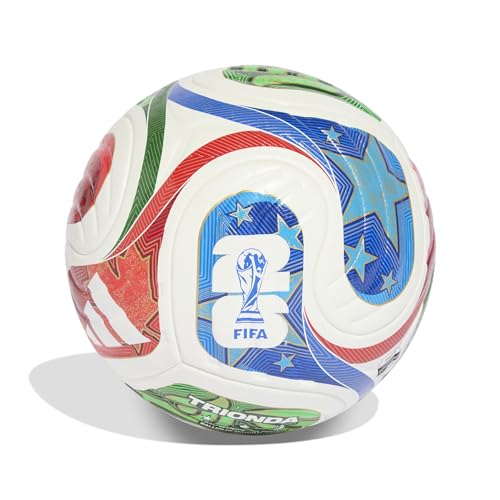
adidas Trionda Pro Match Ball
What We Like
- Thermal bonded surface for predictable trajectory
- Textured surface improves flight stability
- Highest FIFA rating for professional play
- Lower water uptake on wet pitches
Trade-offs
- At 1.3 pounds, it matches Capelli's weight, no lighter
- Pro-level match build is overkill for casual kickabouts
The highest FIFA quality rating means this ball has passed tests on weight, water uptake, shape and size retention, so you are getting the standard set for professional play. That matters because a ball that holds its shape and size stays true from one game to the next. Thermal bonding gives the surface a more predictable trajectory and a better touch on the foot, and it also lowers water uptake, which helps when the pitch is wet. The textured finish adds flight stability and precision, so a long pass or a shot at goal is more likely to hold its line. For anyone who wants the real tournament ball, this is the one.
The trade-off is that this is a match-grade ball, and you may not need that for a casual kickabout in the park. At 1.3 pounds, it matches the Capelli Sport World Cup 26 Ball, so there is no weight advantage there. The adidas World Cup 26 Training Ball is listed at 0.8 pounds and is the lighter pick if everyday drills are your main use. The Trionda also carries a four-panel wave design inspired by “la ola”, with bold national symbols for the three host countries, which makes it a pleasure to look at on the pitch. If you want the genuine article for serious games, it earns the spot. For rough training sessions, pick something simpler.
Product photos
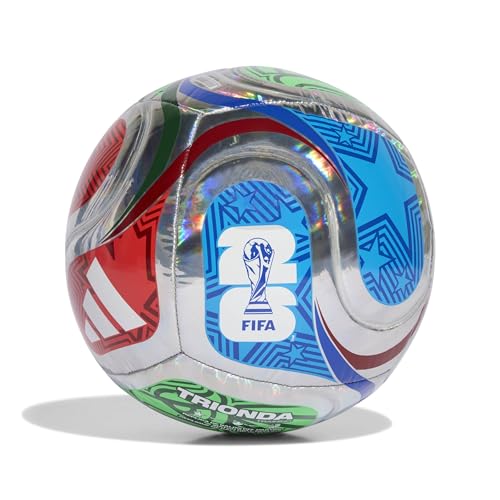
adidas World Cup 26 Training Ball
What We Like
- Officially licensed by FIFA
- Butyl bladder holds air well
- TSBE surface lowers water uptake
- Passed FIFA circumference and rebound tests
Trade-offs
- Ships flat, so you must buy a pump
- Training ball, not the 1.3-pound Trionda Pro match ball
The ball passed FIFA tests on circumference, weight, rebound and water absorption, which means you get officially licensed quality in a training-grade ball rather than a novelty replica. That matters if you want something that behaves like a proper size 5 when you kick it around the park or the backyard. The “la ola” wave graphic gives it a clear World Cup 26 identity, and the blue and white colorway looks sharp on the grass. A butyl bladder is built for air retention, so it should keep its shape between sessions without constant topping up.
The main catch is that it ships flat and no pump is included, so budget a few minutes and a needle pump before the first kickabout. It is also a training ball, so if you want the actual match-day ball, the adidas Trionda Pro Match Ball is the closer pick, with its thermal bonded surface and heavier 1.3-pound listed weight. The Capelli Sport World Cup 26 Ball also lists 1.3 pounds. This adidas model sits at 0.8 pounds on its listing, so it is the one for casual fans who care about licensed looks and everyday play over match-ball replication.
Product photos
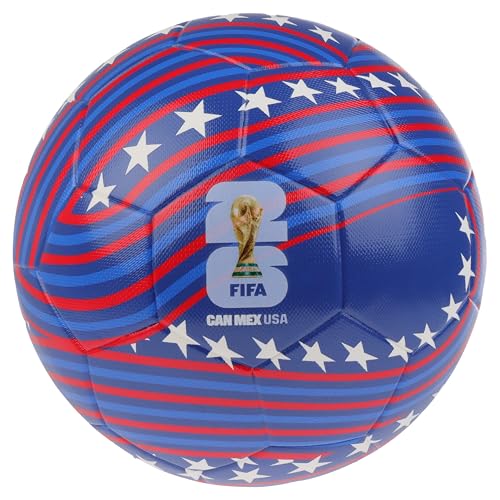
Capelli Sport World Cup 26 Ball
What We Like
- Official licensed FIFA World Cup 2026 product
- Metallic finish with tournament-inspired graphics
- Regulation Size 5 for training or matches
- Machine-stitched construction for durability
Trade-offs
- Machine-stitched, unlike the Trionda Pro's thermal bonded surface
- Not the official match ball like Trionda Pro
The official FIFA World Cup 2026 license is what makes this ball worth keeping: it is a genuine piece of the tournament, not a generic lookalike. Add the metallic finish and tournament-inspired graphics, and it catches the eye on a shelf or desk the way a souvenir should. Because it is a regulation Size 5, it is also a real ball you can take to the park, so a keepsake does not have to sit behind glass. Machine-stitched construction is built for long-lasting durability, which helps if you want to kick it about a bit and still have it look good afterwards.
This is a licensed fan ball first, and the official match ball from adidas is the better pick if on-pitch feel matters most. The Trionda Pro Match Ball uses a thermal bonded surface, while the Capelli is machine-stitched, a construction the listing credits with long-lasting durability, so it should hold up to regular knocking around. Both list the same 1.3 pounds, so the weight alone will not separate them. Still, the Capelli is a regulation Size 5 meant for training or match play, and its metallic finish and tournament graphics make it a nice keepsake from the World Cup. Anyone drilling hard every week might lean toward the adidas World Cup 26 Training Ball, which is listed at a lighter 0.8 pounds.
Product photos
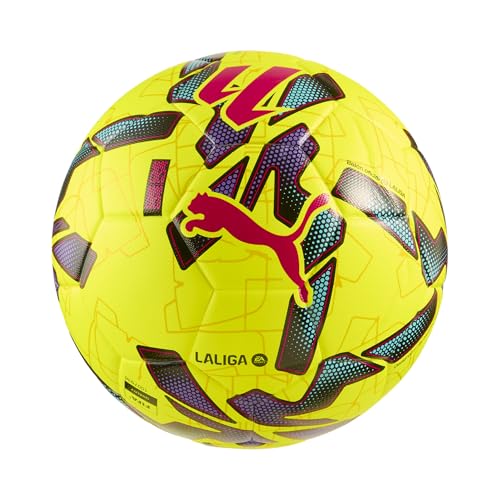
PUMA Orbita LaLiga 1 Soccer Ball
What We Like
- Thermally bonded build limits water uptake
- 32-panel design for straighter flight
- PUMA Air Lock valve holds pressure
- FIFA Quality certification
Trade-offs
- At 0.9 pounds, lighter than the Trionda Pro's 1.3
- Not the official World Cup 26 ball design
Because the thermally bonded build limits water uptake, this ball should hold its pace on a damp pitch instead of turning heavy and sluggish in the second half. That is a real advantage on wet days, when a ball that soaks up water slows down and gets harder to strike cleanly. The balanced 32-panel layout and textured outer are meant to give straighter flight and a confident touch when play speeds up. A rubber bladder and the PUMA Air Lock valve keep pressure steady, so the roll and rebound stay true from one session to the next. The FIFA Quality mark adds a guarantee of an excellent level of performance, which gives buyers a reassuring baseline.
This PUMA is not the top-tier match ball, and that shapes who it suits. The adidas Trionda Pro is the official ball of the World Cup and has a thermal bonded surface of its own. At 1.3 pounds it is listed noticeably heavier than this PUMA at 0.9. So if you want the real tournament ball in your hands, this is not it. What you get instead is a rubber bladder and an Air Lock valve designed to hold pressure session after session, which suits regular training and kickabouts far better than a ball you would be nervous to scuff.
PUMA Stellar Club Pro Soccer Ball
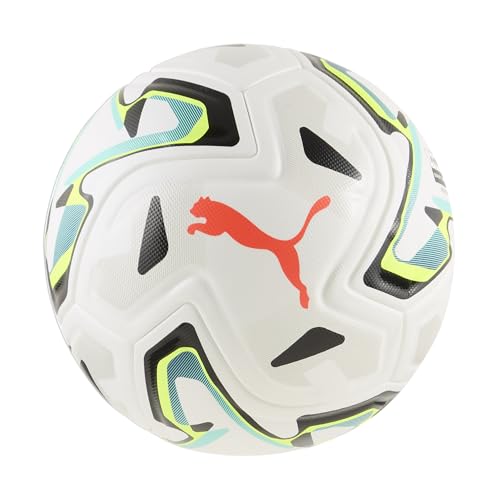
What We Like
- FIFA Quality Pro certified for match standards
- 8 symmetrical panels for uniform airflow
- Patched rubber bladder with PAL valve
- 3D textured PU cover with debossed lines
Trade-offs
- Plain club design lacks the adidas Trionda Pro's World Cup 26 branding
- 8-panel layout, not a thermally bonded surface like the Trionda Pro
FIFA Quality Pro certification is the headline here, since it is described as guaranteeing the highest level of quality and match-day standards for professional play. That means the ball is meant to behave consistently from one session to the next. That matters if your team trains regularly and wants a ball that feels the same every time out. The 8 larger, symmetrical panels create uniform airflow, which supports straighter flight and more accurate strikes. The 3D textured PU cover with debossed lines reduces drag and stabilizes flight, while the POE foam adds a firm touch and acceleration for dynamic play. For a club side or an ambitious player, that is a sensible package.
Air retention is the quiet strength here. The patched rubber bladder and the PAL valve are designed to hold pressure game after game, so you spend less time reaching for the pump before a session. The cover also limits water absorption, which is a real help when the pitch is damp and a ball can turn heavy. Keep in mind that this is a straightforward club-style ball, not a tournament souvenir. If you want the official look of the tournament, the adidas Trionda Pro Match Ball is the one that carries that identity, with its thermally bonded surface. For honest, certified performance on the training pitch, this PUMA makes more practical sense.
Product photos
How We Evaluated World Cup Footballs
This guide is based on research. We read product specifications and manufacturer documentation, compared expert round-ups of World Cup soccer balls, and looked for recurring themes in owner feedback. Background on the history of the World Cup match ball also helped explain why surface and panel design matter so much.
Four criteria carried the most weight. Surface construction came first, because thermal bonding and textured covers affect water uptake and flight. Certification came second, since a FIFA rating tells you what standard of play a ball is built for. Then came official licensing and design, which matters for fans and collectors, and finally fit for purpose: match, training or keepsake use.
A research-led approach has limits. We cannot judge how a ball feels off the boot or how it ages over months of use. Treat our picks as a well-informed shortlist, and check the details on each listing before you buy.
What To Look For In World Cup Footballs
Most of the price-to-quality gap between these balls comes down to how the surface is made and what standard the ball is certified to. Decide first whether you want a match ball, a practice ball or a display piece.
Choose by purpose. Thermal bonded surfaces and a FIFA Quality Pro rating suit serious matches. Licensed training balls suit casual practice. Machine-stitched keepsakes suit fans who want the tournament look and a playable Size 5. Check weight, valve and inflation before buying.
Surface construction
Stitched balls and thermal bonded balls behave differently. The adidas Trionda Pro Match Ball uses a thermal bonded, textured surface aimed at a predictable trajectory and lower water uptake on wet pitches. The PUMA Orbita LaLiga 1 Soccer Ball is also thermally bonded, with a 32-panel design for straighter flight.
By contrast, the Capelli Sport World Cup 26 Ball is machine-stitched, which suits durability and a keepsake role more than match-level performance. Past tournaments show why panels matter: the six-panel Brazuca-era approach used thermal bonding, while the eight-panel Jabulani drew loud complaints from players about unpredictable movement. If you want a ball to fly true, surface design is the first thing to check.
Certification and standards
The Quality Pro standard is the strongest signal of a ball built for competitive matches. The PUMA Stellar Club Pro Soccer Ball carries it, which is why it suits serious grassroots teams. The adidas Trionda Pro Match Ball holds the highest FIFA rating among our picks.
The adidas World Cup 26 Training Ball passed FIFA circumference and rebound tests, and the PUMA Orbita LaLiga 1 Soccer Ball has FIFA Quality certification. Browsing a wider selection of FIFA soccer balls is a handy way to compare how the different ratings line up. A licensed design is not the same as a certified match ball, so read the wording closely.
Weight, valve and everyday practicality
Weight and inflation hardware affect how a ball plays and how often you need to top it up. The adidas Trionda Pro Match Ball weighs 1.3 pounds, as does the Capelli Sport World Cup 26 Ball, while the PUMA Orbita LaLiga 1 Soccer Ball is lighter at 0.9 pounds. The PUMA Air Lock valve on the Orbita is built to hold pressure, and the Stellar Club Pro uses a patched rubber bladder with a PAL valve. The Training Ball has a butyl bladder that holds air well.
Fans of the brand can also browse the wider range of Adidas match balls, but keep your actual use in mind.
- Confirm the size is Size 5 if it will be used for full-size games.
- Check whether the ball ships flat, since the Training Ball needs a pump.
- Look for thermal bonding if you play on wet pitches.
- Match the certification to your level of play.
- Decide if official World Cup 26 branding matters to you.
Rule of thumb: pay for match-level construction only if you will play real matches with it.
World Cup Footballs Compared
The table below puts all five balls side by side so you can compare construction, certification and intended use at a glance. If you want a wider view beyond tournament designs, our roundup of the best footballs for every level is a good next step.
| Product | Size | Weight | FIFA Certification | Surface/Cover |
|---|---|---|---|---|
| adidas Trionda Pro Match Ball | N/A | 1.3 pounds | FIFA Quality Pro | Thermal bonded, textured |
| adidas World Cup 26 Training Ball | 5 | 0.8 pounds | FIFA Quality | TSBE seamless surface |
| Capelli Sport World Cup 26 Ball | Regulation Size 5 | 1.3 pounds | N/A | Metallic finish |
| PUMA Orbita LaLiga 1 Soccer Ball | 5 | 0.9 pounds | FIFA Quality | Textured outer |
| PUMA Stellar Club Pro Soccer Ball | 5 | N/A | FIFA Quality Pro | 3D textured PU |
Frequently Asked Questions
What is considered the best World Cup ball?
The adidas Trionda Pro Match Ball is our best overall pick. It combines a thermal bonded, textured surface with the highest FIFA rating among these five balls and lower water uptake on wet pitches. It is the closest option to the official tournament ball, so it suits players and fans who want that experience for serious matches.
What is the best World Cup ball for kids and casual practice?
The adidas World Cup 26 Training Ball is the best officially licensed design for everyday practice. It has a butyl bladder that holds air well and a surface that lowers water uptake. It passed FIFA circumference and rebound tests. Remember that it ships flat, so you will need a pump.
What is the best football for club matches?
For regular club games, the PUMA Orbita LaLiga 1 Soccer Ball and the PUMA Stellar Club Pro Soccer Ball are the strongest fits here. The Orbita is thermally bonded with a 32-panel design, while the Stellar Club Pro is FIFA Quality Pro certified. Both skip the official World Cup branding.
Which past World Cup balls were the most controversial?
The Jabulani from the South Africa tournament is the most criticized. Its eight-panel design and textured surface were meant to improve grip, but players complained that it changed direction in mid-air. The Tango Espana also drew criticism, because its rubberized seams struggled to keep out water and the ball had to be swapped during games.
Do World Cup footballs come inflated?
Not always. The adidas World Cup 26 Training Ball ships flat, so plan to buy a pump and needle. For any other ball, read the listing details before ordering. A ball with a good valve, such as the PUMA Air Lock, will hold pressure well once you have inflated it.
The Bottom Line
The adidas Trionda Pro Match Ball is the best overall choice for players and fans who want the official tournament ball with a top FIFA rating. It is built for serious matches, so it is overkill for rough everyday kickabouts.
If you want a licensed design for practice, the adidas World Cup 26 Training Ball is the best officially licensed design. Collectors should look at the Capelli Sport World Cup 26 Ball, the best collector’s keepsake. Club players have two good routes: the PUMA Orbita LaLiga 1 Soccer Ball as the best match-quality alternative, and the PUMA Stellar Club Pro Soccer Ball for FIFA Quality Pro certification.
Whichever you choose, the most important factor is matching the ball to how you will really use it. Surface construction and certification matter most for match play, while branding and design matter most for fans and keepsakes.
