
How to Buy Football Tickets Safely: The Official Guide
This post contains affiliate links. As an Amazon Associate, we earn from qualifying purchases.
To buy football tickets safely, you must purchase them through the event’s single authorized primary source or a verified, protected resale platform with a clear guarantee. For the 2026 World Cup, the primary source is FIFA.com/en/tickets, and tickets are also sold through official partners like Ticketmaster, with delivery managed in the official FIFA app. Tickets sold on unofficial websites, social media, or by third-party vendors carry a high risk of being fake, void, or sold to multiple buyers, leaving you stranded at the gate.
The official path is clear, but the secondary market is a maze of conflicting advice and buyer promises on how to buy football tickets safely. It comes down to the details. You need to know not just where to look, but how to verify what you’re seeing, because the cost of a mistake isn’t just missing the game, it’s losing hundreds, sometimes thousands, of pounds with no way back.
What follows is a breakdown of the only two safe routes, the specific scams that fill the space between them, and the one payment rule that decides whether you get your money back if it all goes wrong when learning how to buy football tickets safely.
Key Takeaways
- The only authorized primary source for 2026 World Cup tickets is FIFA.com/en/tickets. Any other site claiming to sell new tickets directly is a copycat or unofficial vendor.
- Sources disagree on the safety of third-party resellers. FIFA warns tickets sold on unofficial resale websites may be fake, while the FTC advises checking a reseller’s buyer protection policies, and platforms like StubHub and SeatGeek offer guarantees of valid entry or a refund.
- Never pay a stranger using peer-to-peer apps like Zelle, Venmo, or bank transfer. Credit card payments are protected under laws like the Fair Credit Billing Act, which allows you to dispute charges for purchases that were not delivered as agreed.
- Most official tickets are delivered electronically via the official FIFA app. A seller offering paper tickets or a screenshot is a confirmed red flag, per the FTC.
- Football ticket scams on social media increased by 36% during the 2025-26 Premier League season, with the average victim losing £215. Scammers consistently shift conversations to WhatsApp to push for bank transfers.
The Two Official Paths to a Real Ticket
You have exactly two verified channels. The first is the primary source. For a World Cup, that’s a single organization. For a club match, it’s the club itself or its league’s appointed partner. The second is a resale marketplace that is either officially sanctioned or carries a guarantee so robust it functions as a safety net.
The authorized primary market for 2026 World Cup tickets is FIFA.com/en/tickets. Full stop. The FTC, AARP (citing FBI advice), and GOV.UK all echo this. As the AARP notes, FIFA is the only authorized source, and the FBI has actively listed spoof domains like fifa-online.com to warn fans. The risk isn’t theoretical. Typing the URL directly into your browser, not clicking a search ad, is the first step in any guide, such as the FTC’s guide on how to make your World Cup experience scam-free.
The sole authorized primary market for 2026 World Cup tickets is FIFA.com/en/tickets. Tickets purchased through any other website claiming to be a primary seller are unofficial and carry a high risk of being fraudulent or invalid.
The secondary path is the resale market. Here, sources disagree on safety. FIFA itself warns tickets sold on unofficial resale sites “may be fake.” However, platforms like StubHub and SeatGeek counter with public guarantees. StubHub states less than 0.2% of orders have issues and offers “valid entry or your money back.” SeatGeek promises a refund, replacement tickets, or future credit if your tickets fail. The FTC’s stance is pragmatic: if you consider a third-party reseller, check their buyer protection policies before anything else.
| Platform | Official Stance | Key Buyer Protection |
|---|---|---|
| FIFA Primary | The only authorized source. | Direct from organizer, valid by definition. |
| FIFA Resale Marketplace | Official sanctioned resale. | FIFA-managed transfer, 15% fee on sale. |
| StubHub | Unofficial but major platform. | “Valid entry or your money back” guarantee. |
| SeatGeek | Unofficial but major platform. | Refund, replacement tickets, or future credit. |
The choice when learning how to buy football tickets safely isn’t between good and bad, but between a single source of truth and a protected gamble. Your guide for first-time attendees should start with this distinction.
How Scammers Operate: The Social Media Playbook
Scammers follow a predictable, high-pressure script. Understanding it is your best defense. Lloyds Bank data cited by GOV.UK shows most football ticket scams begin on social media, especially Facebook and Instagram, with a 36% increase in reports during the last Premier League season.
The playbook has three phases. First, the advert. A post in a fan group or a targeted ad shows a “spare ticket” for a sold-out match at a slightly-below-market price. The profile looks real, often with stolen photos. Second, the shift. The seller quickly moves the conversation to WhatsApp or Facebook Messenger, away from the platform’s monitoring. This is where urgency is applied: “Others are interested,” “I need to sell today.” Third, the payment push. They insist on payment via bank transfer, Zelle, Venmo, or Cash App. Once the money is sent, they block you.
Where this goes sideways: Moving the conversation to WhatsApp. Scammers do this to avoid the reporting features of the main social platform and to create a private, pressurized space to demand a bank transfer.
The emotional hook is FOMO, fear of missing out. It works because it targets passion. The average loss in the Lloyds data was £215 for football ticket scams during the 2025-26 Premier League season. The scammer’s goal is to get you to abandon the verification steps you’d normally take. It’s the opposite of the diligence you’d use researching the best seats for a view.
Your Pre-Purchase Verification Checklist
Before you enter any payment details, run through this list. Treat it like a manager’s team sheet before a big match, missing one item is a risk.
- Verify the Website URL. Is it the exact, official domain? For World Cup, it’s
fifa.com. Notfifa-tickets.comorfifa-online.com. Bookmark the official page. - Check the Delivery Method. For modern major events like the World Cup, official tickets are digital. The FTC confirms most will be delivered via the official FIFA app. A seller offering paper tickets or a screenshot is a scammer.
- Research the Seller’s Guarantee. If it’s a resale platform, find their buyer guarantee page. Does it say “valid entry or your money back” in clear terms? Print it or screenshot it.
- Be Wary of Too-Good Pricing. A ticket listed at a price drastically below the official starting prices (e.g., $11,750 for Miami games as of April 22) is not a bargain; it’s a statistical anomaly. Scammers use low prices to lure the desperate.
- Question Specifics Before Release. As Ticketmaster warns, a listing with a specific seat, row, and barcode before the official ticket delivery date is a major red flag. That data shouldn’t exist yet.
This checklist is your offside trap. It catches the scammer before they get a clean run on your wallet.
Payment Methods: The Rule That Decides Your Refund
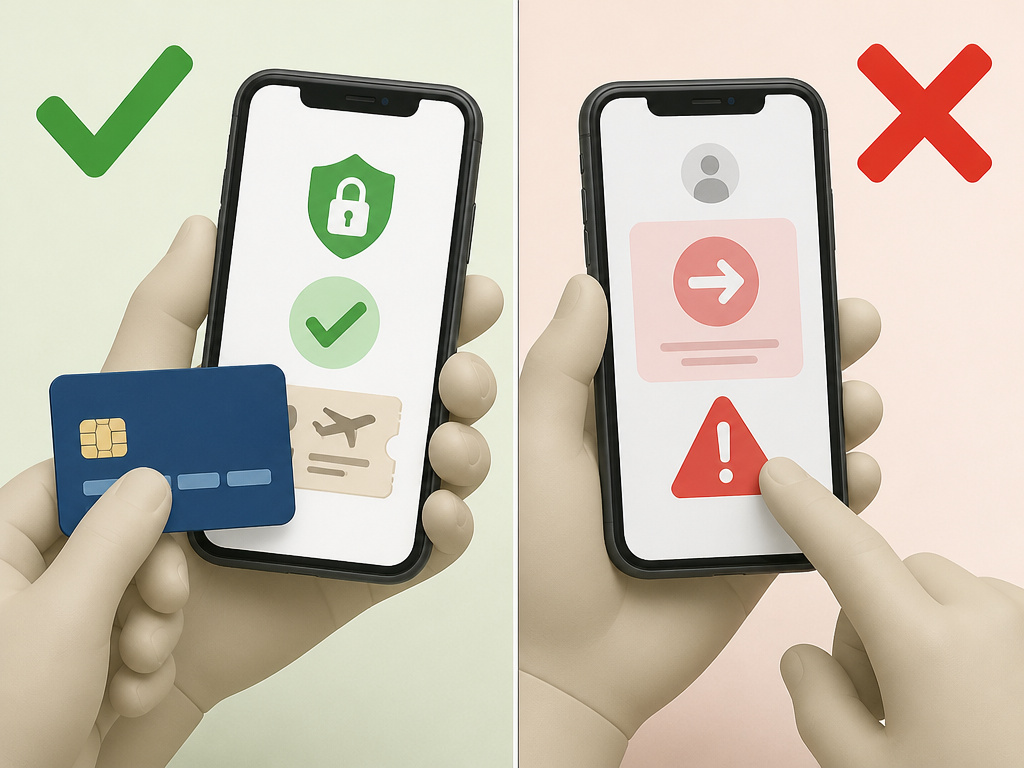
Your choice of payment is your last line of defense, and it’s fixed. The laws that protect you are entirely different depending on how you send the money.
Use a credit card. This is the gold standard. Under the Fair Credit Billing Act (FCBA), you have the right to dispute charges for services not delivered, like fake tickets, by sending a written notice to your card issuer within 60 days of the statement date. The issuer must investigate.
Avoid peer-to-peer (P2P) apps and bank transfers. The AARP, citing the FBI, is explicit: don’t use Zelle, Venmo, PayPal, or Cash App to pay strangers for tickets. These payments are like handing over cash. They are typically irreversible, and the platforms offer little to no purchase protection for transactions between individuals. A bank transfer offers similar, minimal recourse.
The difference is mechanical, not just advice. A credit card dispute triggers a legal process. A P2P app complaint is often a dead end. This single decision impacts your ability to recover funds more than any guarantee wording. It’s the financial equivalent of understanding the difference between authentic vs replica gear, one has enforceable standards, the other doesn’t.
What To Do If You’ve Already Been Scammed
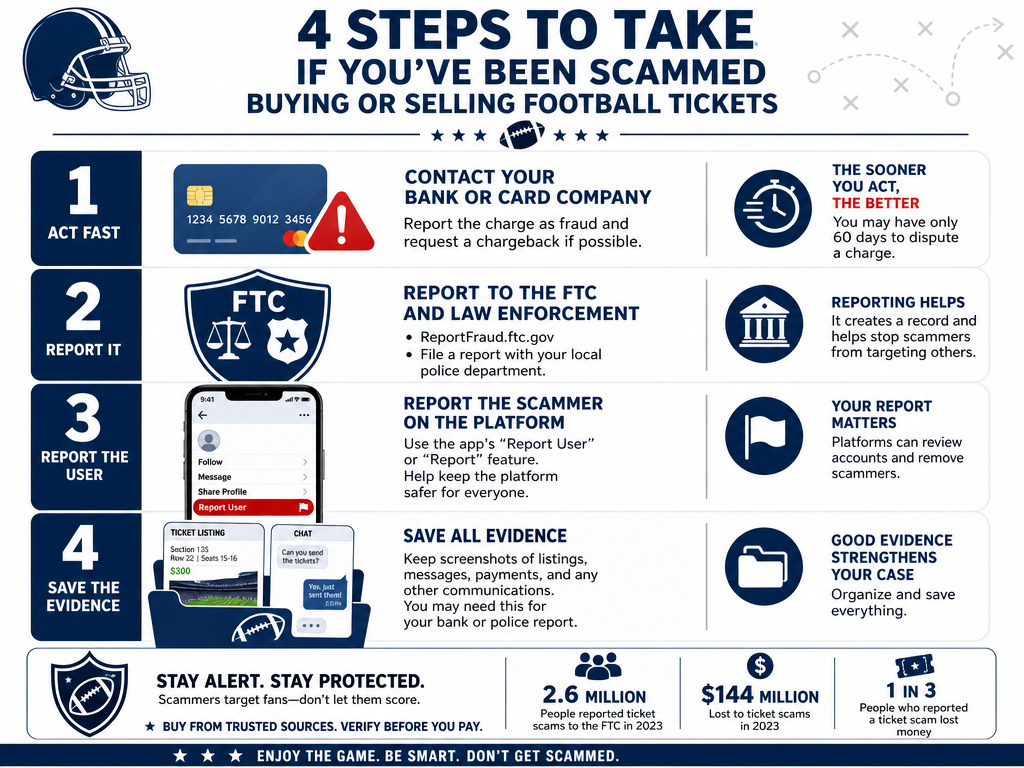
You realize the tickets are fake, or the seller has vanished. The moment you know, time becomes critical. Your actions here follow a strict sequence, like a set-piece drill.
- Contact Your Bank or Card Company Immediately. If you paid by credit card, cite the FCBA. You must send that written dispute letter within the 60-day window. For debit cards, report any unauthorized transfer to your bank immediately.
- Report the Fraud. File a report with the FTC at ReportFraud.ftc.gov. You can do this anonymously. Also report to your local law enforcement. This creates a paper trail and helps authorities track scam patterns.
- Report the Seller/Platform. If the transaction started on Facebook, Instagram, or a resale site, report the user and the listing to that platform. They may deactivate the account.
- Gather All Evidence. Screenshots of the ad, the conversation (especially the move to WhatsApp), payment confirmations, and the seller’s profile. This is your evidence pack for the bank and authorities.
The AARP FBI World Cup scam warning emphasizes that speed is everything. The longer you wait, the harder recovery becomes.
Buying as a tourist/international fan
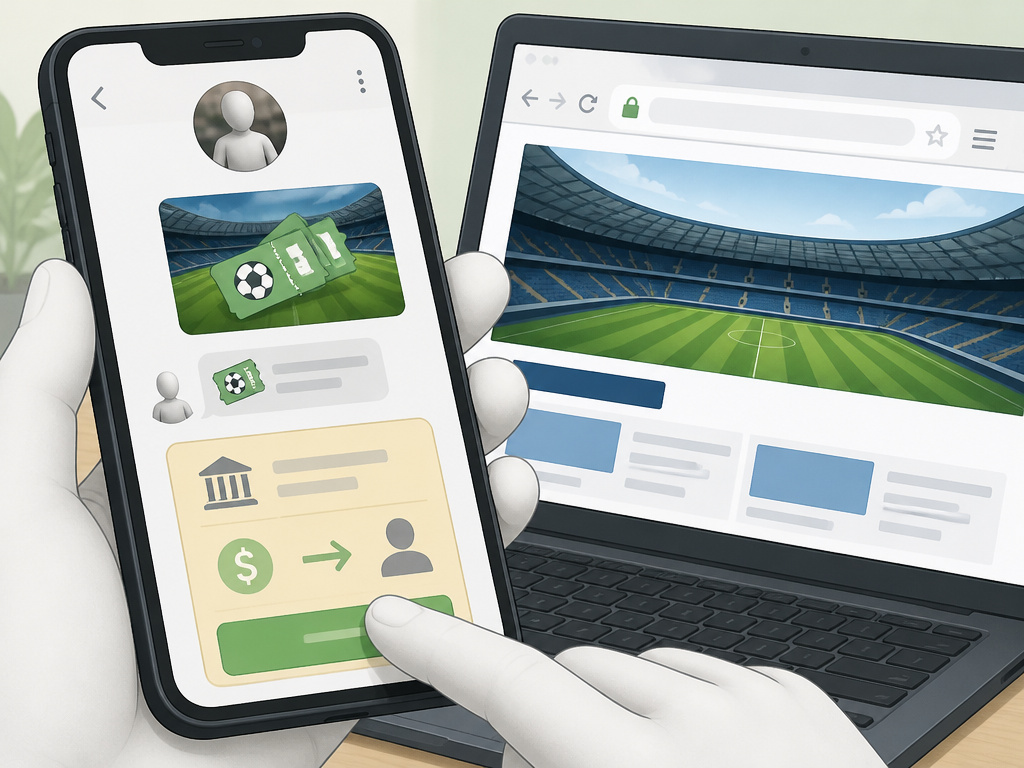
Buying tickets from abroad adds another layer of risk. Scammers often target international fans, knowing they may be unfamiliar with local practices and more desperate to secure seats. Most football ticket scams begin on social media platforms, where sellers may try to move the conversation to private messaging apps and insist on payment via bank transfer. Be extremely cautious of any seller offering paper tickets or a screenshot of a ticket, as this is a common sign of fraud. Official tickets for major tournaments are typically delivered electronically through the organizer’s official app. To protect yourself, always type the official website address directly into your browser rather than clicking on ads or search results, which can lead to copycat sites. Using a credit card for payment can offer stronger consumer protections than peer-to-peer payment apps if a transaction turns out to be fraudulent.
Membership requirements for club tickets
For major domestic league matches, securing tickets often requires planning ahead through a club’s official membership scheme. These systems are designed to prioritize loyal supporters and manage high demand, especially for popular fixtures. The process typically involves registering with the club well before tickets go on sale. Be aware that the secondary market for these tickets is rife with fraud. Data shows a significant increase in football ticket scams, with the average victim losing a substantial sum. Many of these scams originate on social media. A practical rule is to only purchase through the club’s official website or its designated, secure ticket exchange. If you are considering a third-party site, you must scrutinize their buyer protection guarantees. Ask specific questions about how and when you will receive your tickets, and what recourse you have if the tickets are not valid for entry.
Hospitality packages as a safe option
Official hospitality packages are promoted as a secure, albeit premium, route to event access. These packages are sold directly by the event organizer or through authorized partners, and they bundle a ticket with other amenities. Because they come from an official source, the risk of receiving a fraudulent ticket is virtually eliminated. When evaluating a hospitality offer, verify that the seller is listed as an authorized partner on the main event website. Be wary of websites that mimic the official site through paid search ads. A reliable method is to bookmark the official site and navigate from there. While these packages carry a higher price, they provide certainty. Payment should be made through secure channels, and using a credit card is advisable due to the stronger consumer protections it offers should any issues with the purchase arise.
Frequently Asked Questions
What is the safest website to buy football tickets?
For any match, the safest website is the official primary seller. For the 2026 World Cup, the only safe primary site is FIFA.com/en/tickets. This is the only channel endorsed by FIFA and recommended by global consumer protection agencies.
Which is safer, Ticketmaster or StubHub?
For officially sanctioned events where Ticketmaster is the primary seller, buying directly from Ticketmaster is safest. For resale, both platforms offer guarantees, but their roles differ. StubHub is a dedicated resale marketplace with a strong “valid entry or your money back” guarantee. Ticketmaster also has an official resale function for many events, which can be safer as it’s integrated with the primary ticketing system. Always verify the guarantee on the platform’s own website before purchasing.
Can you get scammed buying tickets on Ticketmaster?
It is highly unlikely if you are buying directly from Ticketmaster as the primary seller. The risk increases if you are buying from a reseller on Ticketmaster’s resale marketplace, though Ticketmaster facilitates and guarantees those transactions. The platform warns that listings with specific seat details before the official delivery date may be fake. Stick to official sales or the platform’s own resale hub, and you are within their protection umbrella.
How can I tell if a ticket website is fake?
Check the URL meticulously. Fake sites often use subtle misspellings (fifia.com), extra words (fifa-ticket-office.com), or different domains (.live, .net). An official site will have a secure “https://” connection and a padlock icon. Be extremely wary of sites you find through paid search ads rather than typing the address directly. When in doubt, navigate from the official event or club homepage.
Before You Go
The safest path is always the most direct one: through the organizer’s front door. The excitement of a big match can make the shortcut offered by a social media post seem tempting, but that’s exactly what the scammer is banking on.
Slow down for a second. If you remember one thing, let it be the payment rule. Your credit card isn’t just a way to pay; it’s a legally-backed recovery tool. A bank transfer or a peer-to-peer app is not. That distinction is more concrete than any guarantee a resale site can print on its homepage.
Everything here assumes you’re buying for a match that’s actually on sale. If you’re looking for a ticket to an event months away, and no official sale has started, anyone claiming to have tickets already is selling a fantasy. Wait for the official channels to open, use this guide, and you’ll secure your seat without funding a scammer’s season ticket elsewhere.
