
Travel Football vs Recreational Football: Key Differences
This post contains affiliate links. As an Amazon Associate, we earn from qualifying purchases.
Travel football is a selective, competitive program with tryouts, more training, regional travel, and higher costs. Recreational football is open to all, focused on fun and fundamentals, with a local schedule and low cost. The choice between travel football vs recreational football is important. For most young or new players, recreational football is the right starting point.
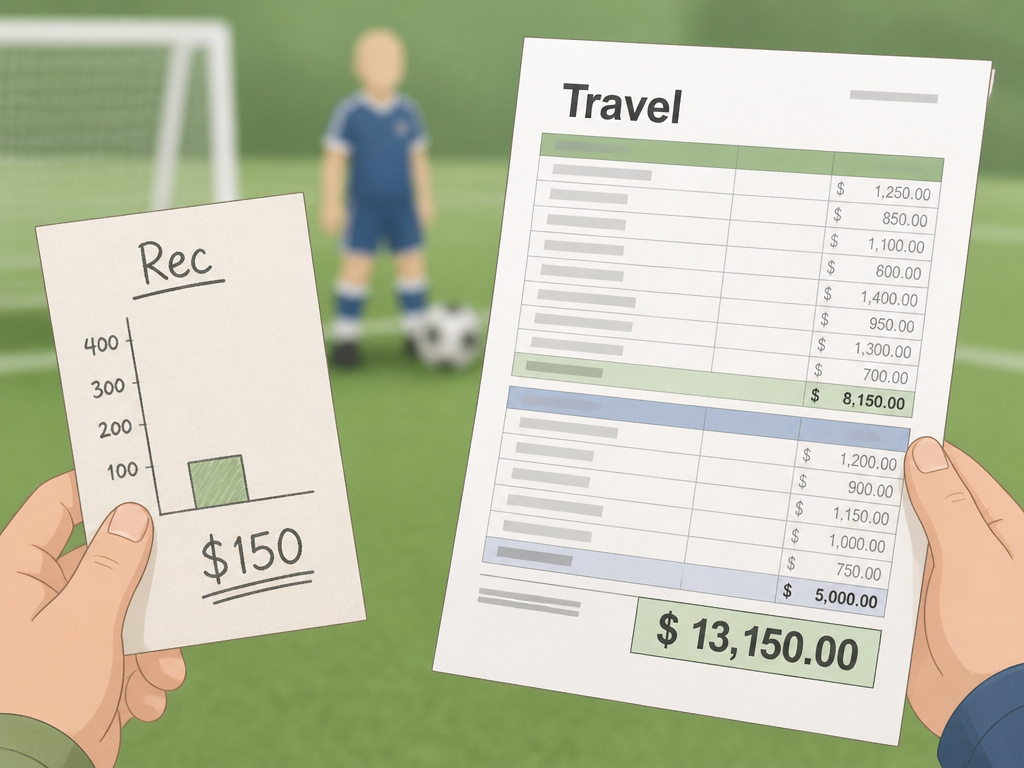
The financial step from one to the other is a significant change for a family budget. The median published dues jump from about $123 a season for rec to $900 a year for entry-level travel. That’s before uniforms, tournament fees, and the travel that becomes the biggest line item.
This guide explains the seven factors that actually differ, uses survey and club data, and provides a checklist to help you decide if your child wants more football or if you’re being sold a dream.
Key Takeaways
- The core difference is selection: recreational football is open registration; travel football requires a tryout and roster cuts.
- Soccer Untangled’s analysis of 608 clubs found median published dues for recreational soccer are $123 a season, while entry-level travel programs start around $900 a year.
- Fewer than 1.5% of US high school footballers get any college scholarship; choose a path for love of the game, not as an investment.
- Major health bodies like the American Academy of Pediatrics advise against early single-sport specialization, favoring multi-sport play for young athletes.
- The right time to move up is when your child asks for it repeatedly, not when a club says they’re falling behind.
The 7-Point Comparison Table (What Actually Changes)
We’ll start with the side-by-side view. This isn’t about which is better, but about which product you’re actually buying.
| Factor | Recreational Football | Travel / Club Football |
|---|---|---|
| Selection | Open registration. Everyone plays. | Tryout-based. Rosters are cut. |
| Primary Focus | Fun, participation, fundamental skills. | Competitive development and results. |
| Weekly Time | 1-2 sessions (practice + game). | 2-4+ training sessions plus weekend games/tournaments. |
| Season Length | Short season (often 8-10 weeks, fall or spring). | Long season (often 9-10 months, fall + spring). |
| Geography | Local venues, within your town. | Regional travel likely; 50-300+ miles for games. |
| Coaching | Volunteer parents (quality varies). | Licensed, paid coaches (quality varies). |
| Cost Per Year | Low ($75-$200 per season; median published dues $123). | High ($1,500-$4,000+; entry-level median $900/year). |
The part nobody mentions: That jump in cost isn’t just fees. The Aspen Institute Project Play reports that average annual spending on soccer is $1,188 per child, and travel costs contribute significantly to the higher costs of competitive soccer. A tournament weekend means petrol, hotels, and meals, additional costs beyond club dues.
The table shows the structures. Your decision on the travel football vs recreational football question comes down to which structure fits your child’s current enthusiasm and your family’s capacity.
Where the Numbers Come From (And Where They Disagree)
You’ll see a range for travel football costs and practice counts. That’s because sources disagree, or are measuring different things. Being honest about that is better than pretending we have a perfect figure.
When you compare a travel football vs recreational football program, the most reliable cost data comes from Soccer Untangled’s analysis of published club dues. They found a median of $123 a season across 608 recreational programs and a median of $900 a year across 127 entry-level competitive programs. These are published numbers, not estimates.
Where sources disagree: How many practices per week does travel football involve? Some guides state 3-4 as a standard fact. Soccer Untangled points out that no published source separates travel-team data from rec-team data. The best we have is an Aspen Institute survey average of 2.42 days of coach-led practice per week across all soccer players, a population that is 85% recreational. A travel team will sit above that average, but by an unpublished amount.
The same goes for the optimal transition age. One camp, backed by bodies like US Soccer, suggests rec through U9 (under-9) with travel at U10 or later. Another, voiced by experienced club directors, says the move should follow the child’s sustained enthusiasm, not the calendar. There’s rarely a reason to rush.
Recreational Football: The Foundation (And Often the Destination)

Recreational football is the community game. It’s the muddy Saturday morning pitches, the parent on the sideline with a coffee, and the guarantee that your child will get a run. According to a US Youth Soccer framework, it’s “primarily devoted to the enjoyment and development” of players.
Its strengths are its accessibility and its low-pressure environment. The focus is on touches, basic rules, and social enjoyment. A volunteer coach can make it brilliant; a less-experienced one can still deliver a positive experience if the priority is right.
This is where the vast majority of children should start. It’s also where many can happily stay. The idea that recreational football is merely a stepping stone is a corrosive bit of snobbery. A child who plays rec for years, enjoys it, and maybe plays another sport or two is on a perfectly healthy athletic path.
Common mistake: Pushing a capable child out of rec too early because “they’re too good for this level.” If the child is still challenged, learning, and, crucially, still asking to go to practice, they’re in the right place. Boredom from a lack of challenge is a valid reason to look up; parental ambition is not.
Travel Football: The Competitive Commitment
Travel football is a different product. The gatekeeper is the tryout. That single rule, some kids make it, some don’t, changes everything else about the program’s intensity and cost.
The environment is built for development through competition. Training is more frequent and structured. Games are against other selected teams, often requiring significant travel. The calendar becomes a central part of your family’s life.
What most people get wrong: They assume a “licensed coach” automatically means a better teacher. A license indicates a minimum standard of knowledge, not a guarantee of quality or philosophy. I’ve seen brilliant, engaged parent volunteers and licensed coaches who simply go through the motions. The person matters more than the credential.
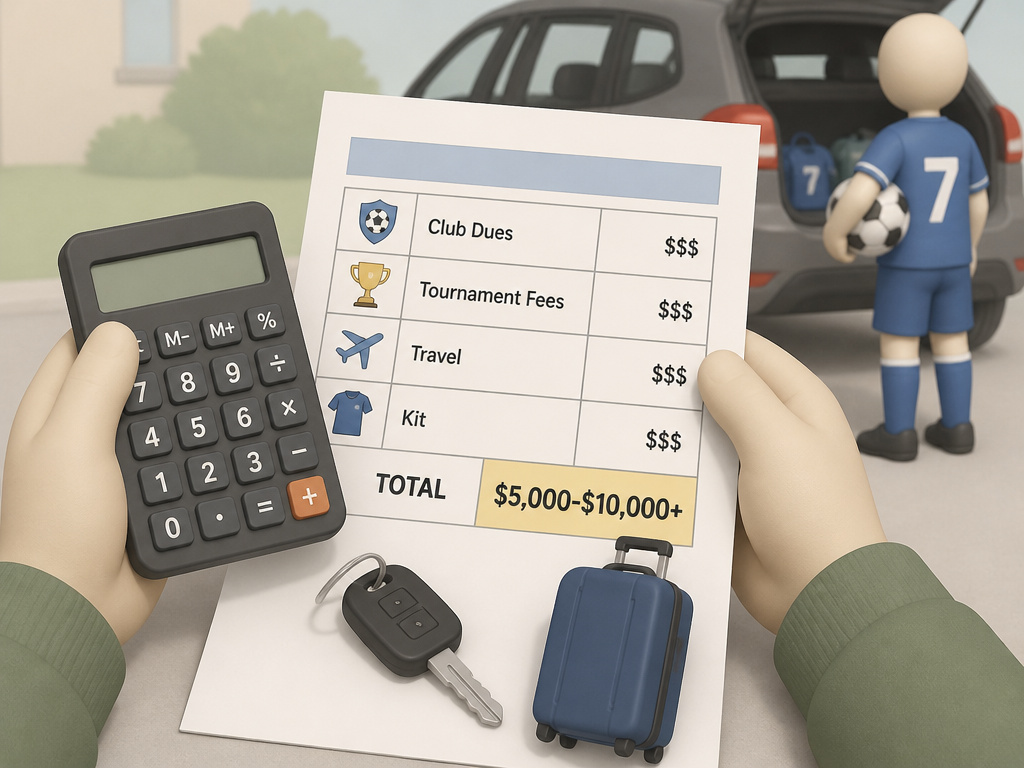
The financial reality is the biggest hurdle. Beyond the dues, families must budget for tournament entry fees (split across the team), travel, and a full kit. Elite pathways like MLS NEXT or ECNL can run $5,000-$10,000+ a year. MLS NEXT requires its member clubs to offer at least one full scholarship per season, which clearly indicates the typical cost barrier.
Is Your Child Ready? The Readiness Checklist
The decision shouldn’t be a guess. Look for signals from your child, not pressure from the sideline. Here are the concrete questions to ask.
1. Is it their idea?
Does your child talk about football unprompted? Do they ask to practice in the garden or watch matches? The motivation must be internal. A child doing it to please a parent will burn out.
2. Can they handle the schedule?
Sources disagree on the weekly practice count for travel soccer: some guides state 2-3 times a week, while others report 3-4 or more. Is your child generally good with structure? Does it leave room for homework, family time, and other interests?
3. What’s your family’s capacity?
Can you absorb the financial cost without strain? Can you commit to the driving and weekend logistics? A stressed family makes a poor support system.
4. Have they outgrown rec?
Has your child played two full seasons where the games no longer challenge them? Are they visibly frustrated by the pace or level of play? This is about their experience, not their stats.
If you can answer “yes” to most of these, and the desire is coming from your child, then exploring a youth football pathways might be the logical next step. If not, staying put is not a failure, it’s the right choice.
The Scholarship Myth and the Specialization Debate
We will address the two major issues: college scholarships and early specialization.
First, the numbers. Fewer than 1.5% of US high school soccer players receive any college soccer scholarship. College soccer scholarships are rare and often partial. Choosing travel football as a financial investment is a bad bet. Choose it because your child loves the game and wants more of it.
Second, the science. The American Academy of Pediatrics and the International Olympic Committee both advise against early single-sport specialization. The evidence links it to higher injury rates, burnout, and shorter athletic careers. Playing multiple sports develops a wider range of athleticism and often leads to better long-term performance.
A travel program that demands early, year-round, single-sport commitment is ignoring this consensus. A balanced approach that leaves room for other sports, or just free play, isn’t falling behind; it’s building a more resilient athlete.
How to Make the Transition (If You Do)
If you and your child decide to explore travel football, go in with your eyes open. Here’s how to navigate the process.
Research clubs. Don’t just pick the one with the flashiest kit or best win record. Look for a club that emphasizes long-term player development over winning at the U10 level. Ask about their philosophy on playing time and multi-sport participation.
Prepare for tryouts practically. Ensure your child has the right gear, is well-rested, and is hydrated. The focus should be on effort, coachability, and showing basic skills under pressure, not on performing one perfect trick.
Manage expectations. Not making a team is a “not yet,” not a “no.” Use it as feedback. A quality youth football coaching clinic can help bridge any skill gaps in a positive setting.
Throughout this, your role is to be a supportive football parent. That means focusing on effort and enjoyment, not outcome. The car ride home should be about the experience, not a tactical breakdown of their mistakes.
Is travel soccer or recreational soccer safer for my child?
Safety is more about the environment and structure than the level itself. Recreational soccer typically involves one or two sessions a week, a short local season, and volunteer parent coaches. This lower-intensity schedule naturally reduces the risk of overuse injuries and burnout. Travel and club soccer involve more training sessions and weekend tournaments, which increases physical demands. Major medical bodies advise against early single-sport specialization, a path more common in intensive travel programs. For safety, consider your child’s physical readiness for the increased workload and ensure any program prioritizes proper rest, skill development over winning, and has clear protocols for injuries.
Frequently Asked Questions
What is the main difference between travel and recreational football?
The defining difference is selection. Recreational football is open to all who register. Travel football requires a tryout, and players are selected onto a roster. Everything else, higher cost, more training, increased travel, follows from that competitive, selective model.
How much more expensive is travel football?
Substantially. Median published dues are about $123 per recreational season versus $900 per year for entry-level travel. The full annual cost for a travel player typically ranges from $1,500 to over $5,000 when you include club fees, uniforms, tournament entries, and travel expenses.
What age should a child start travel football?
There are two schools of thought. Some development experts recommend a recreational foundation through U9 (under-9), considering travel at U10 or later. Others argue the move should be driven by the child’s demonstrated passion and readiness, not a specific age. The consensus is there is no developmental benefit to starting travel before a child is genuinely eager for more.
Will my child fall behind if they stay in recreational football?
Not at young ages. Skill development comes from quality practice and enjoyment, not simply from being in a “travel” environment. A child who is engaged, practices fundamentals, and plays other sports is building a excellent athletic foundation. The doors to competitive football remain open at older ages.
Can a child play both rec and travel football?
It’s often logistically difficult and not recommended within the same sport. The schedules will conflict, and the cumulative physical load increases injury risk. Many travel clubs have policies requiring full commitment. It’s more feasible and beneficial to play travel football and a different recreational sport.
Is travel football required to play in high school or college?
No. Many high school players come from recreational backgrounds. For college, recruiters look for talent and game intelligence, which can be developed in multiple settings. The minuscule scholarship odds mean the primary reason to play travel should be a love for the game, not a pursuit of a scholarship.
The Bottom Line
The travel versus recreational football choice isn’t a verdict on your child’s talent. It’s a practical decision about which structure delivers the right experience for them right now.
Recreational football is a legitimate, complete experience for the majority of kids. It teaches the game, fosters friendship, and fits into a balanced childhood. If your child is happy there, you’ve already won.
Travel football is for the child who, after a few seasons, is visibly asking for more, more touches, more challenge, more football. It’s a major commitment that should only begin when that demand is coming from them, loud and clear.
Whichever path you choose, the goal is the same: to help them fall in love with the game in a way that leaves them wanting to come back next season. Everything else is just details.
