
How to Get Into Women’s Football: A Pathway for Every Age
This post contains affiliate links. As an Amazon Associate, we earn from qualifying purchases.
To get into women’s football, you match your age and current fitness to a structured pathway. For girls aged 5-11 in England, that’s the Wildcats programme. For teenagers, it’s youth club football progressing from 7v7 to 11v11. The FA Snickers Just Play programme offers women’s recreational football sessions like Soccercise and Walking Football. The pathways are clearly mapped by national bodies like The Football Association and Football Australia.
That structure is the whole game. It means your first session isn’t a guess, it’s a named programme with a defined age range, format, and weekly schedule. A common question is how to get into women’s football. Football is the biggest women’s team sport in England, so the entry points are designed to be clear.
What follows is the official map. We’ll walk through the starting point for every age, the competitive club pathway, the parallel system in Australia for comparison, and how to get involved without ever kicking a ball. By the end, you’ll know the name of the programme you should Google first.
Key Takeaways
- Start with the age-specific programme: Wildcats (5-11), youth club football (U7-U16), or FA Snickers Just Play for adults.
- The competitive pathway in England progresses through small-sided formats: 5v5 or 7v7 for U7-U10, moving to 7v7, 9v9, then 11v11.
- For adult beginners, recreational formats like Walking Football and Soccercise offer a non-intimidating, fitness-focused entry point.
- Over 1,250 Wildcats centres and 1,800 adult women’s teams operate weekly across England, making local access likely.
- Getting involved off the pitch is critical; The FA’s strategy aims for 55% of coaches in the women’s game to be female by 2024.
The First Touch: Starting Points for Every Age
The most common mistake is showing up at the wrong door. A forty-year-old looking for a casual kickabout shouldn’t ring a youth academy, and a six-year-old doesn’t belong in an adult league. The system works when you find your slot.
For girls aged 5 to 11 in England, the door is marked Wildcats, providing a clear answer for how to get into women’s football. This is The Football Association’s national entry programme. Sessions run weekly after school or on weekends at over 1,250 centres. The smell of fresh-cut grass and the sound of a plastic ball skidding across an astroturf pitch is the whole point here, it’s about making friends and having fun through football, not leagues or tables.
Common mistake: Taking a complete beginner straight to an 11-a-side trial. The pace and space are overwhelming. Start with the touch-and-play environment of a Wildcats or Just Play session where the pressure is off.
For teenagers already in the system, the pathway is built into the club structure. From under-7 to under-10, it’s Mini-Soccer, 5v5 or 7v7 games where the focus is touches on the ball. You’ll hear coaches shouting “find space!” more than “boot it!”. As girls progress in the club pathway, the game grows with the players: from 7v7, to 9v9, then finally the full 11v11 pitch. This progression isn’t arbitrary. It matches physical development to the tactical demands of the game, a principle echoed in pathways worldwide.
And for adult women? This is where the most hesitancy lives when considering how to get into women’s football, and the system has a specific answer. The FA Snickers Just Play programme offers women’s recreational football sessions. It includes three branches: Small Sided Football, Soccercise (a football-fitness hybrid), and Walking Football. The latter is a format that can help with weight loss, help prevent loneliness and positively affect mental and physical health.
| Age / Stage | Programme Name | Format & Focus | Where to Find It |
|---|---|---|---|
| 5–11 years | Wildcats | Weekly fun sessions, first touch | 1,250+ centres nationally |
| U7–U10 | Mini-Soccer | 5v5 or 7v7, skill development | Local grassroots clubs |
| 16+ (Adults) | FA Snickers Just Play | Soccercise, Walking Football, Small Sided | Community centres, clubs, parks |
| Adult Competitive | Club Football | 11v11 weekly league football | Over 1,800 adult women’s teams |
The visual cue is in the equipment. If you see a full-size pitch with regulation goals, you’re probably looking at the competitive club pathway, a great step after those first sessions.
Navigating the Competitive Club Pathway
So your daughter loves Wildcats, or you’ve found your feet in a Just Play session and want more. The next step is the club pathway. This is where weekly competitive football lives, from the youngest age groups right through to adulthood.
The structure is a ladder. At the foundation, for girls in club teams from U7–U10, it’s Mini-Soccer. They don’t play in formal leagues at this stage. It’s 5v5 or 7v7 small-sided football, with festivals and friendlies. The goal is maximum involvement. As girls progress in the club pathway, the framework shifts. Girls get the chance to play weekly competitive football in their local club, progressing from 7v7 to 9v9 and finally to 11v11. This progression is part of the national playing format designed to ensure appropriate development.
The FA and Nike have created a practical guide to help break down the barriers Muslim girls face in football. This kind of targeted resource is part of making the pathway genuinely open to all.
The feel of the game changes at each step. The transition points (like moving from 9v9 to 11v11) are where players often struggle or thrive. Coaches who understand this are gold.
And if the standard club pathway doesn’t fit? The system has branches. The Play On initiative is designed specifically to support the transition of girls from school football into community clubs, a known drop-off point. The FA’s strategy also includes clear targets for inclusion, aiming for 22% participation of girls with Special Educational Needs and disabilities in the ‘Shooting Stars’ programme and increasing disability-specific Wildcats sessions from 18 to 101.
A View from Down Under: Football Australia’s Pathway
How does this compare elsewhere? Looking at Football Australia’s structure is instructive because it highlights universal principles, age bands, progressive formats, and talent identification, while showing a different model.
Their pathway is similarly segmented by age, but with defined high-performance channels. For players aged 9-12, there are Skill Acquisition Programs (SAP). These can be full-time (2-3 sessions per week) or part-time (1-2 extra sessions on top of regular club training). Both types run for 40 weeks of the year. The full-time programmes often involve a selection process, which is the first formal filter.
The next tier is the National Training Centre (NTC), a centralised full-time football program for girls aged 14 to 17 in most capital cities. This is a serious commitment. Players here receive 4 training sessions per week during the school day. The sound of a dozen balls being struck cleanly in a synchronized drill at an NTC session is a specific one, it’s the sound of concentrated development.
For identified players in academic years 9 to 12, there’s the High Performance Football School (HPFS). Identified players receive four training sessions per week during the school day, At the apex is the Future Matildas Program for players aged 17 to 20 identified as having international potential.
| Programme (Australia) | Age Group | Commitment | Purpose |
|---|---|---|---|
| Skill Acquisition (SAP) | 9–12 years | 40 weeks/year, 1-3 sessions/week | Technical foundation |
| National Training Centre (NTC) | 14–17 years | 40 weeks/year, 4 sessions/week | High-performance development |
| High Performance Football School | Yr 9–12 (14–18) | 4 in-school sessions/week | Holistic player development |
| Future Matildas | 17–20 years | Full-time, invitation-only | Bridge to senior national team |
Their recruitment guide emphasises ensuring facilities have clean and appropriate changing rooms, enforcing equal access to pitches, and recruiting coaches who understand coaching women and girls.
Beyond Playing: Coaching, Volunteering and Building the Game
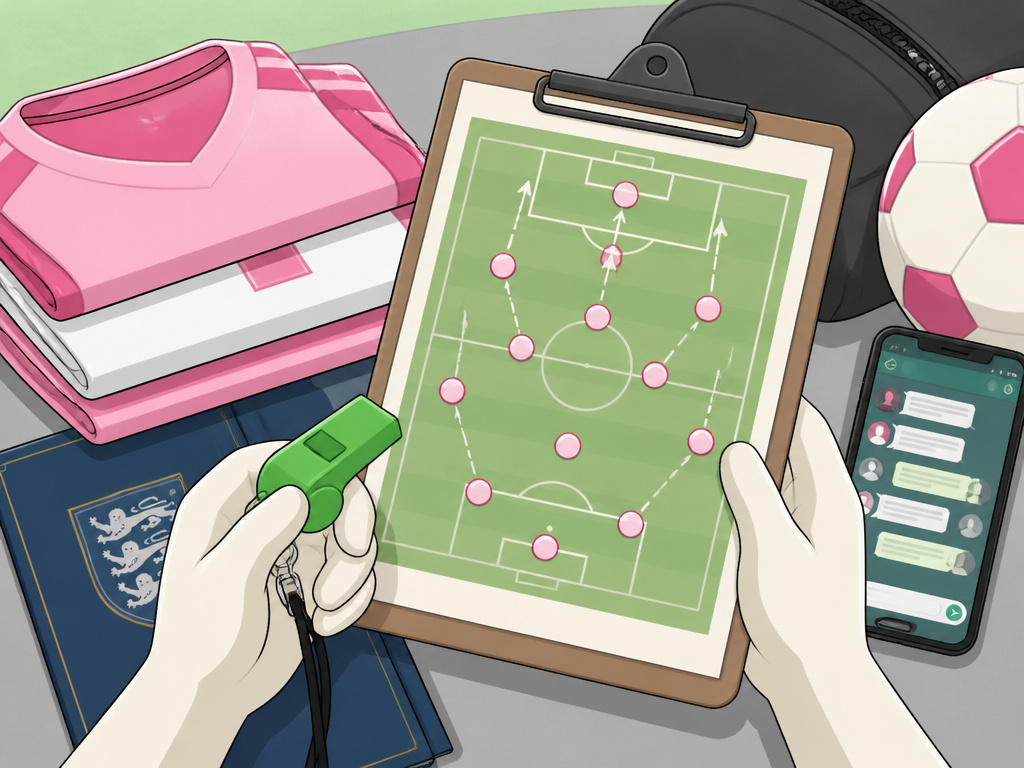
You don’t have to be a player to get into women’s football. In fact, the sport’s growth desperately needs people off the pitch. The administrative, coaching, and volunteer structures are where long-term sustainability is built.
A route in is through your local County FA. Each one has a designated lead officer on women’s football, Want to start a team? They have the Equal Game Toolkit. Need help connecting with a local school to find players? They can facilitate the Play On initiative. They are the absolute first phone call for any non-playing ambition.
Coaching is the most visible need. The FA’s 2020-24 strategy has explicit targets here: by 2024, they aim for 55% of coaches across the women’s and girls’ game who engage in learning to be female, and for 75% of high-performance coaches in manager/head coach roles to be female. The starting point can be The FA Playmaker supported by BT course. The strategy aims for 15% of females to take it.
I learned this the hard way watching a local girls’ team struggle. They had a passionate dad coaching, but he trained them exactly like his son’s team, long laps, repetitive drills, loud criticism. The atmosphere was joyless and the dropout rate was huge. A year later, a new coach, a former university player, took over. She used small-sided games, asked the players what they enjoyed, and focused on positive reinforcement. The same group of girls started laughing during drills, competing fiercely, and recruiting their friends. The coach’s understanding changed everything.
It covers everything from managing a team’s WhatsApp group and washing kits to sitting on a club committee. Football Australia’s retention strategy nails the approach: “Involve women and girls in all other aspects of your club, not limiting them to just being a participant.”
The final, critical role is in safeguarding and inclusion. Clubs are urged to instigate a zero-tolerance policy towards any prejudice risking the wellbeing of women and girls.
How to join a women’s football league or team

Finding a team starts with your local County FA, as each has a designated lead officer for women’s football who can connect you with clubs. For adults, there are over 1,800 women’s teams playing weekly competitive football in clubs, colleges, and universities. If you’re seeking a more recreational route, look for programmes offering social and non-competitive football. Clubs are encouraged to provide equal access to facilities and enforce zero-tolerance policies towards any prejudice, creating a safer environment. Your first step is to contact your local football association to ask about teams in your area and the specific opportunities they provide.
Frequently Asked Questions
Is women’s football the same as soccer?
Yes. In this context, “football” refers to soccer, the global sport governed by FIFA. This guide does not cover American football. The pathways, programmes, and structures described are for association football (soccer).
Can I start playing football as an adult with no experience?
Absolutely. The FA Snickers Just Play programme is designed for this. Options like Walking Football (no running) and Soccercise (football-themed fitness) are perfect for complete beginners. The focus is on fun and fitness, not high-level competition.
How do I find a local team or Wildcats centre?
Visit the website of your national governing body. In England, go to The Football Association’s ‘Get Involved’ pages. You can search for programmes by your postcode. Your local County FA office is also a direct line to all local opportunities.
What’s the difference between recreational and competitive pathways?
Recreational pathways (Just Play, Wildcats) are about participation, socialising, and fun. They have no mandatory matches or leagues. Competitive pathways (club football from U11 upwards) involve weekly league matches, formal training, and a focus on development and results. You can move from one to the other.
How can I get my daughter into a football academy?
The first step is never an academy. It’s a local club or Wildcats centre. Academies and advanced programmes like Skill Acquisition Programs (SAP) in Australia typically identify players from the club system. Focus on finding a local club with qualified coaches; visibility to scouts follows from consistent performance there. The process to join an academy often begins with excelling in this grassroots environment.
The Bottom Line
Your entry point is determined by your age and ambition. For a child, it’s Wildcats. For a teenage girl, it’s the youth club pathway. For an adult woman, it’s Just Play. Memorise those three names.
The one rule most guides skip: if you’re supporting a girl in the game, your most important job isn’t coaching. It’s finding a environment where she is seen, heard, and enjoys herself. That could be a Wildcats centre with a brilliant activator, or a club that enforces equal access to pitches and has a female coach. The technical learning accelerates wildly from that foundation.
And if you’re an adult looking in? Just show up. The Walking Football session at your local park on a Tuesday evening is waiting. You’ll be terrible for the first twenty minutes. Everyone is. Then you’ll make a pass that works, and the person you passed to will smile. That’s the hook. The rest, the fitness, the friends, the understanding of the growth of the game, follows from there.
The pathway is clear. The first step is always a named programme, not a vague search. Find yours and take it.
