
6 Best Soccer Performance Trackers in 2026
This post contains affiliate links. As an Amazon Associate, we earn from qualifying purchases.
Playermaker 2.0 Smart Soccer Tracker is the best overall soccer performance tracker. It reads touches, dribbling, agility and speed straight from the boot, with over 25 soccer-specific metrics. For running data, the Best GPS Vest is SOCCERBEE BEE PRO 2 GPS Vest. The Best For Youth Players is Playermaker CITYPLAY Soccer Performance Tracker.
The real problem is that “tracker” means very different things. Some devices measure running distance, top speed and sprints. Others sit on your feet or inside shin guards and count touches, passes and weak-foot use. Add app subscriptions, strap sizes and age limits, and it is easy to buy a device that answers the wrong question.
This guide is built from research: manufacturer documentation, specifications, expert round-ups and patterns in owner feedback. You get six picks, each matched to a type of player, plus a plain explanation of the trade-offs.
Top 6 Soccer Performance Trackers in the Market
Certain content that appears on this site comes from Amazon. This content is provided "as is" and is subject to change or removal at any time.
The Best Soccer Performance Trackers, Reviewed
Playermaker 2.0 Smart Soccer Tracker
What We Like
- Samples movement 1000 times per second
- Over 25 soccer-specific metrics
- Tracks dribbling, agility, speed, foot release zones
- FIFA Certified wearable AI sensor
Trade-offs
- Boot-mounted, so no running-distance focus like SOCCERBEE vest
- Dimensions of 5.9 x 5.1 x 3.1 inches are bulkier than a vest pod
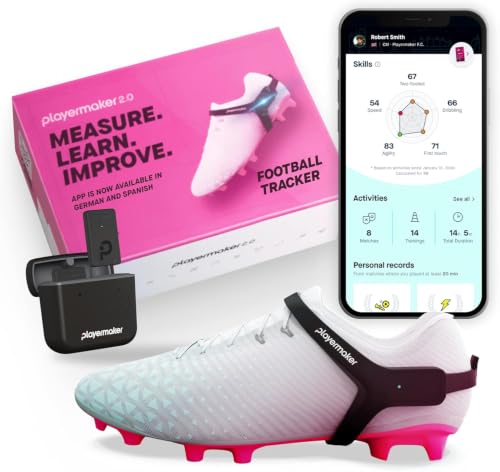
Sampling movement 1000 times per second means the sensor tracks every micro-movement in a match, which is what makes its footwork data detailed enough to be useful. Because it reads your feet rather than your torso, you get over 25 soccer-specific metrics, including dribbling, agility, speed and foot release zones. That suits players who want to get better with the ball, and coaches who care about technique as much as fitness. Soccer academies at various skill levels use it, and it carries FIFA certification. Research singles out boot-mounted trackers like this one as ideal for skill growth and technical improvement.
The trade-off is focus. Research describes boot-mounted trackers as ideal for technical improvement, while vest trackers lean toward sprint distance and workload. If your coach wants heavy physical load numbers, a vest like the SOCCERBEE BEE PRO 2 GPS Vest is the better match, and some teams pair both. Amazon lists the unit at 5.9 by 5.1 by 3.1 inches, so check how it sits with your footwear. This verdict comes from specifications, manufacturer information and owner feedback, and it holds up best for players chasing technical development.
SOCCERBEE BEE PRO 2 GPS Vest
What We Like
- FIFA-approved GPS tracker
- Match fitness score in one number
- Compare data with age-group players
- USB-C charging cable included
Trade-offs
- Full access requires a monthly or yearly subscription
- Vest tracking skips touches and pass foot distribution
- KST shin guards list no subscription at all
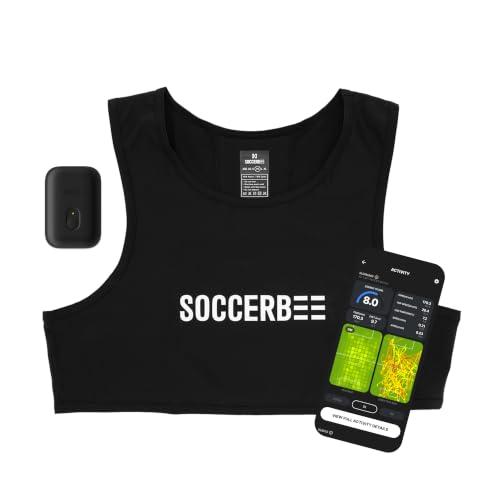
A FIFA-approved GPS tracker means the distance, top speed and sprint figures come from an approved device, not a rough phone estimate. The tracker lives in a vest, so there is nothing to strap to your boots or shins. Heatmaps show where you really spent the match, and a single match fitness score lets a player track progress without decoding a spreadsheet. You can also compare numbers with teammates and players in your age group, which suits grassroots squads and keen youth players nicely. Match and training data stay in one place across teams, seasons and the off-season, so a player’s story builds over time.
The subscription is the real cost here, because full access to your data requires a paid monthly or annual plan, and the free trial only lets you try it before you commit. Research also points out that vest systems like this one do not capture touches, pass foot distribution or ball contact patterns, so a player chasing technical detail will want something else. If you would rather avoid ongoing fees, the KST Sports Smart Shin Guard Trackers are listed with no subscription, though they are a different style of wearable. What you get in return for the recurring fee is a FIFA-approved tracker that covers distance, top speed and sprints.
PitcheroGPS Soccer GPS Tracker Vest
What We Like
- 18 metrics including sprint distance and heatmaps
- Works for rugby, field hockey, lacrosse and more
- Skin-grip elastic holds tracker between shoulders
- Vest, charging cable and 60 days app included
Trade-offs
- Annual subscription required once the 60 days end
- Listed at 0.8 pounds, against SOCCERBEE BEE PRO 2's 0.1
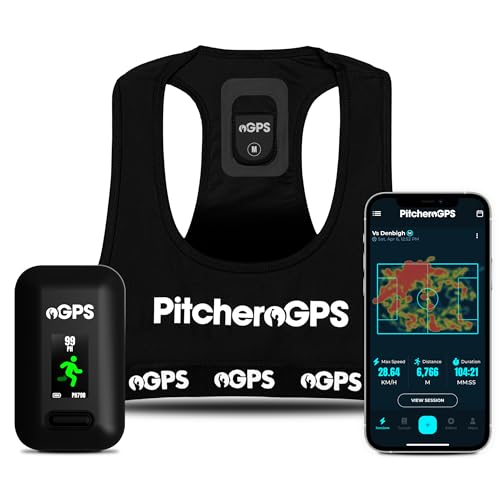
One tracker that works for soccer, rugby, field hockey, lacrosse and any other outdoor sport means a single purchase covers every pitch a multi-sport player steps onto. The vest holds the unit between the shoulders with skin-grip elastic, so it stays put under a shirt instead of bouncing around during sprints. You get 18 metrics, including sprint distance, accelerations, decelerations and heatmaps, which is plenty to see how a session really went. Pitchero is a familiar name in UK grassroots sport, and this system is positioned as an affordable, accessible entry point for amateur players who want pro-style data without a complicated setup.
The catch is the app: only a limited period of access comes in the box, and after that an annual subscription is required, so treat this as an ongoing commitment rather than a one-off purchase. Weight is the other point to watch. Next to the SOCCERBEE vest, another vest-style pick, this listing shows 0.8 pounds where SOCCERBEE shows 0.1, so players who hate carrying anything extra may notice the difference. The vest does hold the tracker between the shoulders with a heat-sealed pocket and skin-grip elastic, which is meant to keep it in place under a shirt during training and matches.
Playermaker CITYPLAY Soccer Performance Tracker
What We Like
- 25+ metrics cover touches, speed, agility
- Manchester City training tips for practice
- JPL Leaderboards let kids rank against peers
- Medium or Large straps for fit
Trade-offs
- Only Medium or Large straps, no other sizes
- Cleat-mounted: no vest-style whole-body GPS data
- Leaderboards tied to Junior Premium League partnership
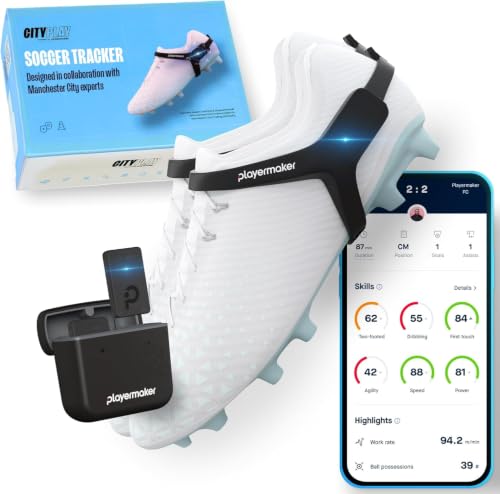
Access to more than 25 soccer-specific metrics means a young player gets far more than a distance-and-speed readout. The sensor mounts on the cleat, so it tracks what the feet actually do: first touch, two-footed play, dribbling and kicking velocity. That is the stuff a developing player can work on at Tuesday practice. Manchester City’s expert training tips turn those numbers into drills, and the Junior Premium League leaderboards add a bit of friendly competition against players of similar age and level. Medium and Large straps help it sit comfortably through a full session.
The main trade-off is scope. A cleat-mounted sensor reads what the feet do, so it will not give the whole-body view that a vest like the SOCCERBEE BEE PRO 2 GPS Vest is built around. Buyers choose between Medium and Large straps, so checking which size suits a young player’s cleats matters before ordering. The leaderboard side is tied to the Junior Premium League partnership, which shapes where a player can see how they rank. Still, for skill growth and technical feedback on things like first touch and two-footed play, this is a sensible, kid-friendly pick. At 0.1 pound, the sensor stays out of the way during play.
Product photos
KST Sports Smart Shin Guard Trackers
What We Like
- 16 metrics including speed, distance, power
- No subscription for full app features
- Global leaderboards by age group
- Light 0.1-pound set with included case
Trade-offs
- Only S and M sizes limit fit choices
- Leaderboards need the INSAIT JOY app synced
- Built around kids' shin guards, not adult sizing
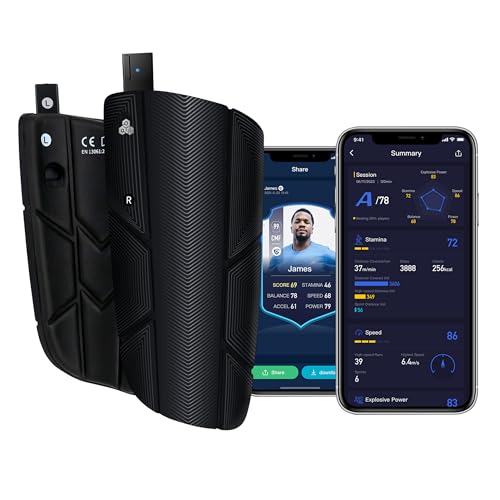
No subscription fees means every feature in the INSAIT JOY app, from performance trends to player ratings, comes without hidden fees or monthly costs. That matters for families who dislike paying monthly just to see their own numbers. The 16 tracked metrics, including speed, distance, power, acceleration and balance, give a kid plenty to chase. Sync over Bluetooth and the leaderboards let them compare against teammates or other players in their age group, which turns an ordinary training session into a small competition. Slot the trackers into the shin guards and setup stays simple.
The trade-off is fit. The set comes in just two sizes, S and M, and it is built around kids’ shin guards, so older or larger players have little room to choose. Against the Football Flick Smart Shin Guard Tracker, which weighs 0.3 pounds, this set comes in at 0.1 pounds, so there is less to feel on the leg during a match. Flick, though, is sold as one size fits all, which is easier if you are unsure what to pick. Check your child’s leg size before ordering, and keep the app handy for syncing after sessions.
Product photos
Football Flick Smart Shin Guard Tracker
What We Like
- Free app analytics, no subscription required
- Stat Caps slip inside the shin guards
- Over 100 data points per second
- Water-resistant for indoor and outdoor use
Trade-offs
- Guards stand 7 in high, shorter than KST's 8.8 in
- Wider than KST's guard? No: 3.3 in wide fit only
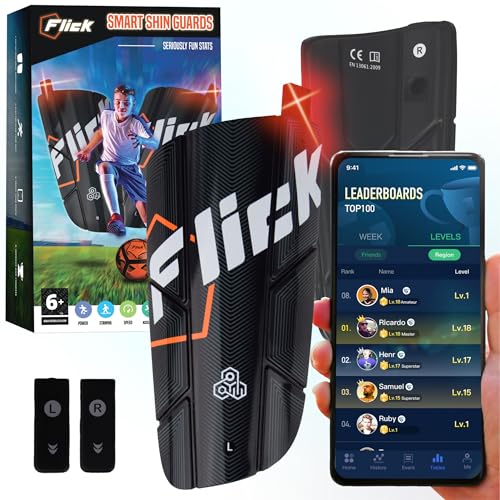
Over 100 data points per second, with no subscription fee, means you get a steady stream of speed, acceleration, stamina, power and balance numbers without a monthly bill hanging over your season. The sensors, called Stat Caps, slide right inside the shin guards, so there is no vest to strap on and no boot clip to fiddle with. You pull on guards you would wear anyway. That makes it a natural pick for parents of keen kids from age 6 and for grassroots players who want honest feedback on training and matches without extra commitments.
Coverage is the main trade-off here. At 7 inches long, these guards are shorter than the KST Sports Smart Shin Guard Trackers at 8.8 inches, so taller players who want more length over the shin may prefer that option. The Stat Caps slip inside the guards themselves, which differs from the Playermaker CITYPLAY, a tracker made for cleats. That setup suits players who would rather not clip extra gadgets onto their boots. With a free app and no subscription, it also works well for casual tracking across training and matches.
Product photos
How We Evaluated Soccer Performance Trackers
We worked from research, not from wearing the devices ourselves. That meant reading manufacturer documentation and specifications, comparing expert round-ups of football trackers, and looking at recurring themes in owner feedback. Trackers are one corner of the wider world of soccer gadgets, so we kept the focus on devices that report on the player’s own performance.
Four criteria mattered most. First, what the device actually measures: the biggest split is between boot or shin-guard sensors that capture technique and GPS vests that capture distance, sprints and workload. Second, who it fits, including strap sizes, guard sizes and age range. Third, the ongoing cost of the app, since some trackers need a subscription and others do not. Fourth, how useful the app is for comparing yourself with other players.
A research-led evaluation has limits. We cannot verify accuracy claims ourselves, and we rely on what manufacturers and owners report. Apps, bundles and subscription terms also change, so check the current listing details before you buy.
What To Look For In Soccer Performance Trackers
A good tracker answers one clear question for you, whether that is “how well do I use my feet?” or “how hard did I run?” These are the three decisions that matter most.
Choose by what you want to learn. Boot and shin-guard sensors report touches, passing and foot use. GPS vests report distance, speed, sprints and heat maps. Then check the strap or guard sizes, the age range, and whether the app needs a subscription before you buy.
Where the sensor sits
Boot-mounted trackers like Playermaker 2.0 Smart Soccer Tracker capture every touch, turn and kick, plus step-level movement. Vest trackers like SOCCERBEE BEE PRO 2 GPS Vest and PitcheroGPS Soccer GPS Tracker Vest focus on total distance, top speed, sprints and positional heat maps. They skip touch detail and pass foot distribution.
Shin-guard trackers, such as KST Sports Smart Shin Guard Trackers and Football Flick Smart Shin Guard Tracker, tuck the sensor inside gear players already wear. If the ball itself is what you want to measure, smart soccer balls are a separate category that tracks the ball rather than the player.
Metrics and age fit
Count the metrics, but read what they are. Playermaker 2.0 Smart Soccer Tracker and Playermaker CITYPLAY Soccer Performance Tracker list 25+ metrics that mix technical and physical data. KST lists 16, including speed, distance and power. PitcheroGPS lists 18, including sprint distance and heatmaps.
Fit matters just as much for younger players. CITYPLAY comes in Medium or Large straps only, and KST comes in S and M sizes. Football Flick’s guards stand 7 in high, shorter than KST’s 8.8 in, so taller players should check that before ordering. If you just want heart rate and pace on the wrist, a sports watch is another route, though it will not show you touches.
Subscription and everyday practicality
App access is where costs hide. SOCCERBEE BEE PRO 2 GPS Vest needs a monthly or yearly subscription for full access. PitcheroGPS Soccer GPS Tracker Vest includes 60 days of app access, then requires an annual subscription. KST Sports Smart Shin Guard Trackers and Football Flick Smart Shin Guard Tracker both offer their app features without a subscription.
Weight and bulk also count. PitcheroGPS is listed at 0.8 pounds, against 0.1 for SOCCERBEE BEE PRO 2 GPS Vest, so a lighter pod may feel better under a kit.
- Check whether full app features need a monthly or yearly subscription.
- Confirm strap or guard sizes against the player’s age and boot or shin size.
- Look for water resistance if you train in wet or indoor conditions.
- Make sure the metrics match your goal: technique, running load or both.
- Check whether leaderboards or age-group comparisons need a specific app.
Rule of thumb: pick the sensor location first, then the metrics, and only then compare subscription terms.
Soccer Performance Trackers Compared
The table below puts all six trackers side by side so you can compare where each sensor sits, what it measures and who it suits.
| Product | Type | Weight | Dimensions | Metrics / sampling |
|---|---|---|---|---|
| Playermaker 2.0 Smart Soccer Tracker | Wearable sensor | N/A | 5.9 x 5.1 x 3.1 inches | 25+ metrics |
| SOCCERBEE BEE PRO 2 GPS Vest | GPS tracker vest | 0.1 pounds | 1.6 x 0.7 x 2.4 inches | N/A |
| PitcheroGPS Soccer GPS Tracker Vest | GPS tracker vest | 0.8 pounds | N/A | 18 metrics |
| Playermaker CITYPLAY Soccer Performance Tracker | Cleat tracker | 0.1 pounds | 6.5 x 4.1 x 3.1 inches | 25+ metrics |
| KST Sports Smart Shin Guard Trackers | Smart shin guards | 0.1 pounds | 8.8 x 5.0 x 0.1 inches | 16 metrics |
| Football Flick Smart Shin Guard Tracker | Smart shin guards | 0.3 pounds | 7.0 x 3.1 x 0.0 inches | 100+ data points/second |
Frequently Asked Questions
What is a good soccer player performance tracker?
A good tracker measures what you want to improve and fits the player wearing it. For technique, a boot or shin-guard sensor that logs touches, passing and foot use works best. For fitness, a GPS vest that reports distance, sprints and speed is the better choice. Age fit, app quality and subscription terms then decide between close options.
Should I choose a GPS vest or a boot-mounted tracker?
Choose a GPS vest if you care about running distance, top speed, sprints and match fitness. Choose a boot-mounted tracker if you want touches, dribbling, agility and foot-use data. Vests like SOCCERBEE BEE PRO 2 GPS Vest skip ball-touch detail, while boot sensors like Playermaker 2.0 Smart Soccer Tracker focus on technique.
What are the best fitness trackers for soccer players?
For running-based fitness data, vest trackers fit best. SOCCERBEE BEE PRO 2 GPS Vest gives a match fitness score in one number and age-group comparisons. PitcheroGPS Soccer GPS Tracker Vest adds 18 metrics, including sprint distance and heatmaps, and works across other field sports. Boot trackers add technical data on top of physical metrics.
What is the best app for tracking soccer stats?
It depends on the tracker, because each device has its own app. Playermaker’s app lets you review sessions and benchmark against players of your age and level. SOCCERBEE compares you with age-group players. KST’s leaderboards need the INSAIT JOY app, and Football Flick offers free app analytics.
Do soccer trackers require a subscription?
Some do and some do not. SOCCERBEE BEE PRO 2 GPS Vest requires a monthly or yearly subscription for full access, and PitcheroGPS requires an annual one after its 60 days. KST Sports Smart Shin Guard Trackers and Football Flick Smart Shin Guard Tracker both offer their app features without one.
The Bottom Line
Playermaker 2.0 Smart Soccer Tracker is the best overall pick for skill-focused players, academy coaches and parents who want detailed touch and technique data from the boots. It tracks over 25 soccer-specific metrics and is a FIFA Certified wearable. It is not the right tool if you mainly want GPS-style running numbers.
If running data matters most, the Best GPS Vest, SOCCERBEE BEE PRO 2 GPS Vest, gives FIFA-approved match data and age-group comparisons. Players who also play rugby or hockey should look at the Best For Multi-Sport Use, PitcheroGPS Soccer GPS Tracker Vest. Young players who want training tips will like the Best For Youth Players, Playermaker CITYPLAY Soccer Performance Tracker. To avoid a recurring fee, choose the Best No-Subscription Leaderboards, KST Sports Smart Shin Guard Trackers, or the Best Subscription-Free Shin Guards, Football Flick Smart Shin Guard Tracker.
Whichever you choose, the most important factor is matching the sensor to the question you want answered. Decide between technique and running load first, and the rest of the choice gets much easier.
