
10 Best Insoles For Soccer Cleats in 2026
This post contains affiliate links. As an Amazon Associate, we earn from qualifying purchases.
The Currex CleatPro Thin Arch Support Insoles are the best overall pick because they pair arch support with a deep heel cup that locks a narrow cleat in place. The Superfeet Cleat Playmaker Insoles are the best trim-to-fit cushioning, and the VKTRY Gold Carbon Fiber Cleat Insoles are the best carbon fiber plate.
Soccer cleats are low-volume by design, so there is very little room for an insole. The stock insert is usually thin and generic, which leaves arch, heel and forefoot with little support over 90 minutes of sprints and cuts. The goal is more support without crowding the boot or ruining ball feel.
This guide ranks 10 insoles using a research-based review of specifications, manufacturer details and owner feedback patterns. You get a clear pick for each need, from thin carbon plates to 3/4 length orthotics, plus the trade-offs to check before you buy.
Top 10 Insoles For Soccer Cleats in the Market
Certain content that appears on this site comes from Amazon. This content is provided "as is" and is subject to change or removal at any time.
The Best Insoles For Soccer Cleats, Reviewed
Currex CleatPro Thin Arch Support Insoles
What We Like
- Deep decoupled heel cup locks narrow cleats
- SuperGrip surface keeps foot connected to shoe
- Low, medium and high arch options
- Bamboo midlayer helps manage moisture and odor
Trade-offs
- Replace after 500+ miles or visible top-layer wear
- Thicker 2.0-inch listed height than VKTRY's 0.4 inches
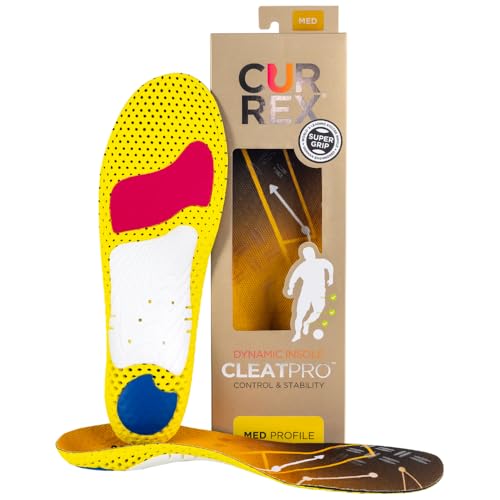
A deep decoupled heel cup keeps your heel wrapped and locked in, even in narrow cleats where the foot tends to slide. That matters on quick turns and hard accelerations, when a loose heel costs you control and tires your feet faster. Add the SuperGrip anti-slip surface and the foot stays connected to the shoe on any field. Arch support comes in low, medium and high profiles, so players with different foot shapes can pick a better match rather than settle. For anyone wanting one all-round insole for soccer, this is a strong place to start.
Cushioning runs from heel to toe, with shock absorbing forefoot padding meant to take the sting out of hard, repeated strides. The bamboo midlayer and odor absorbing foam help keep cleats fresher through long sessions. If the fit feels a bit off, the insole can be trimmed, which lets you dial it in to your cleat. The top layer does wear, so plan on replacing the insoles after 500+ miles or sooner if that layer shows significant wear. The VKTRY Gold Carbon Fiber insoles list a height of just 0.4 inches against this one’s 2.0 inches. That makes the Currex the bulkier option, and a player who wants the slimmest possible feel might prefer the VKTRY.
Superfeet Cleat Playmaker Insoles
What We Like
- Trim-to-fit design matches your cleat
- Aerospring foam absorbs shock each stride
- Flexible heel cradle limits foot slip
- Low-profile shape suits tight cleats
Trade-offs
- No carbon plate; Elite version targets explosive speed
- Trimming is permanent; cutting errors can't be undone
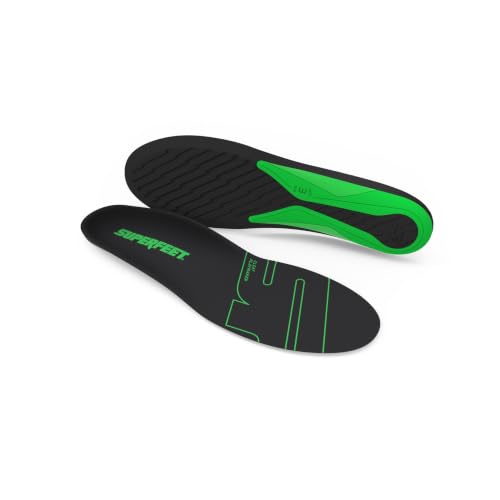
A trim-to-fit shape means you can cut the insole to match your exact cleat instead of hoping a stock size lines up. The low-profile, biomechanically shaped design is meant to fit inside soccer, football, baseball, and lacrosse cleats without added bulk, so tight shoes keep their original room. Underneath sits Aerospring comfort foam, which absorbs shock and cushions each stride, helping you play harder for longer. A flexible heel cradle adds to that by holding the foot in place and reducing excess movement and friction during quick cuts and sprints. The result is a sensible upgrade for players who want more comfort without changing how the cleat is built.
The trade-off is that trimming cannot be undone, so take your time, trace the factory insole, and cut small. Cushioning is the focus here, not a stiff plate, which means players chasing a firm, propulsive feel may look elsewhere. Superfeet’s own Cleat Playmaker Elite adds a Carbitex carbon fiber plate designed to boost explosive speed, and that is the better direction if snap matters more than comfort. For cleated-sport players who mainly want cushioning and a secure heel in a cleat they can customize, this model fits that brief.
Product photos
VKTRY Gold Carbon Fiber Cleat Insoles
What We Like
- 100% aerospace-grade carbon fiber baseplate
- Sized by sport and weight
- Built for energy return on sprints
- Maker cites 2% faster 10-yard sprints
Trade-offs
- Listing warns against very tight-fitting soccer cleats
- 0.4-inch thickness can crowd snug, low-volume cleats
- Must never be cut, so no trimming to fit
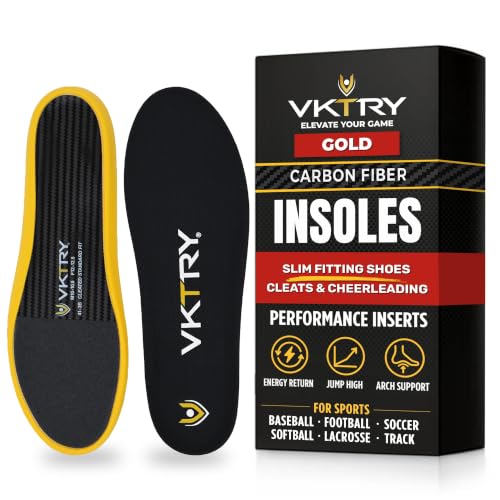
Energy return on takeoff is the main promise here, and it comes from a baseplate made of 100% aerospace-grade carbon fiber. That makes these a fit for athletes whose sport is built on sprints, cuts and jumps, since the plate is meant to support powerful push-offs and controlled landings. Sizing is tailored by sport and weight, so the arch support and stability are matched to the athlete instead of being a generic shape. The maker cites SCSU testing of 34 NCAA athletes that found 2% faster 10-yard sprints than with foam insoles, though individual results vary. Treat that as the maker’s claim, not a guarantee.
The catch is fit. The manufacturer says these are not for very tight-fitting cleats and names soccer shoes in that warning, so a slim, snug boot may leave no room for a 0.4-inch insole. They also should never be cut, which means you can’t trim your way to a fit. For a carbon plate pitched directly at soccer, the OUPOWER Pro Carbon Fiber Insoles list soccer cleats and an ultra-thin design, making them the safer first look for a snug boot. Choose this one for roomier cleats and players chasing jump and sprint response.
Currex ActivePro Sport Insoles

What We Like
- Three arch profiles: low, medium, high
- Deep decoupled heel cup locks foot
- Heel and toe cushioning absorbs shock
- Foam designed for moisture management and breathability
Trade-offs
- Not cleat-specific; CleatPro is the soccer-made Currex
- Needs replacing after 500+ miles or 12 months
Three arch profiles, low, medium and high, mean you can match the insole to your foot instead of settling for one shape. That matters when the same pair has to work across several pairs of shoes. This is the Currex for people who play a bit of everything: five-a-side on Tuesday, a jog on Thursday, a long walk or some standing around on the weekend. The deep heel cup wraps the back of the foot and holds it in place, so your heel stays put when you change direction. Cushioning under the heel and toe softens impact, which helps when your feet get tired late in a session.
A general sport insole rather than a soccer-specific one, the ActivePro suits people who want one pair that moves between trainers, work shoes and casual footwear. Anyone whose main goal is a cleat-specific fit should look at the Currex CleatPro instead, since it is built for cleats, soccer and football. Upkeep matters too: Currex says to replace these after 500+ miles or 12 months, whichever comes first, so heavy walkers and runners will be buying a new pair sooner than they might expect.
FORM Premium Insoles UB-SIZED Insoles

What We Like
- Ultra-thin profile suits slim-fitting shoes
- Heel cup stabilizes and positions heel
- High-density foam absorbs impact
- Optional molding feature for snugger fit
Trade-offs
- Listed size covers only Men's 6-6.5, Women's 7.5-8
- Not cleat-specific; covers many shoe types
The ultra-thin build is the main draw here, since it adds support without the bulk of a thick orthotic, which suits slim-fitting dress shoes, casual shoes and cleats alike. A heel cup is designed to stabilize and position the heel, which helps the foot sit in a consistent spot. The high-density foam is meant to absorb impact underfoot, and the comfort-shaped arch is designed to reduce stress on feet and knees. For anyone who wants a slim layer rather than a bulky insert, this is a sensible choice.
This is a general-purpose thin insole rather than a cleat specialist, and that shapes who it suits. The listing spans slim dress shoes, cowboy boots, ski boots, hockey skates and cleats, so cleats are just one use among many. Compared with the Currex CleatPro, which is built around cleats and promotes grip and stability in them, this is a broader all-round insert. The optional molding feature is meant to improve fit, which helps a snug pair feel more comfortable. If you want a low-profile arch upgrade for varied shoes, it fits. If you need cleat-focused control, look elsewhere.
OUPOWER Gen3 Slim Soccer Cleat Insoles

What We Like
- Anti-slip 3D embossing helps hold your foot
- Forefoot breathable holes let air circulate
- Toe-carved fit suits tight cleat interiors
- Slim profile leaves room inside the boot
Trade-offs
- Sized US 10.5-11 only in this listing
- Breathable holes sit in the forefoot, not the heel
Anti-slip 3D embossing on the top surface means your foot has something to grip when you plant, cut and turn, which matters most when sweat and wet grass make a cleat feel loose. That is the real draw here. The insole is built specifically for soccer, with a carved toe area for a tidier fit and a slim thickness that leaves space in a boot already cut close to the foot. If you like a snug, low-profile feel and want the foot to stay put without a bulky layer under it, this is a sensible match for boots you wear every weekend on the pitch.
Slim usually means less cushioning underfoot, and that is the main compromise here. If you want firm structure and arch support, Currex CleatPro is a thin insole that is built around arch support, and it speaks to a different need. Ventilation holes in the forefoot help keep air moving and moisture down, but they sit only at the front, so heel sweat is not addressed the same way. This listing also shows a single size, US 10.5-11, so check your fit before choosing it. Treat it as a grip and fit upgrade, not a cushioning overhaul.
OUPOWER Pro Carbon Fiber Insoles
What We Like
- 0.5mm profile fits tight cleats
- Carbon fiber core for energy return
- Non-slip base resists shifting during cuts
- 3D shock absorption for landings and tackles
Trade-offs
- 0.5mm layer leaves little depth for plush cushioning
- Listed in US 9.5-10, so fit needs checking
- Energy return and 30% joint-stress claims are maker statements
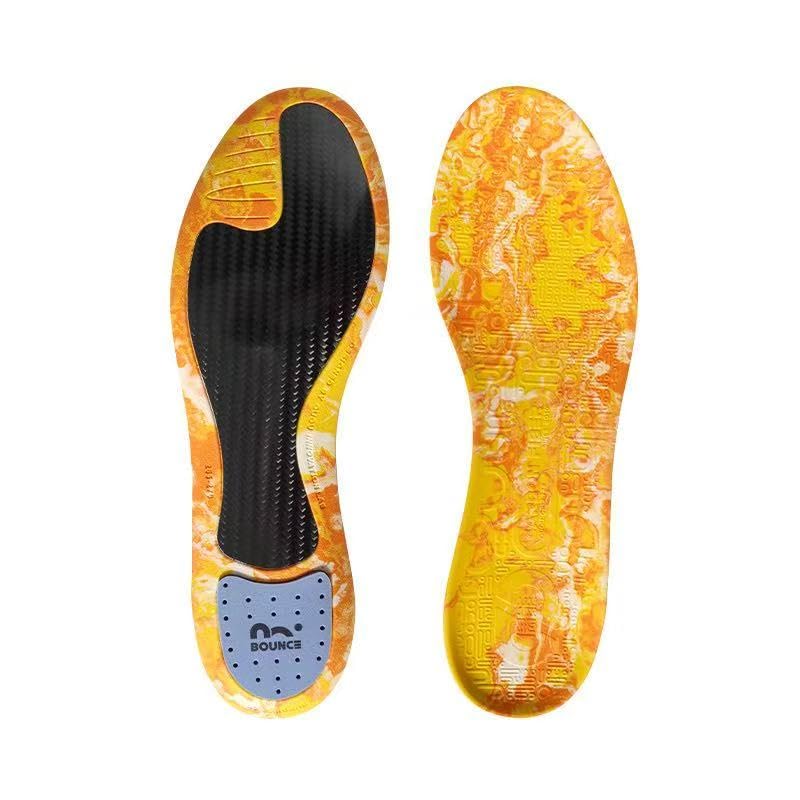
At just 0.5mm thick, these insoles slide into a snug cleat without stealing the toe room you need for touch and control, so your boots keep the fit they were built with. That is the whole appeal. A carbon fiber core is meant to store and return energy through sprints and cuts, while the non-slip base is built to keep the insole from shifting during sharp turns. For a winger or striker who likes a close, locked-in feel, that combination makes sense on paper. The 3D shock absorption is aimed at landings and tackles, and the maker cites up to 30% less stress on knees and joints. Treat that as a manufacturer claim, but the design intent is clear.
A 0.5mm layer has little depth to work with, so anyone chasing plush padding or structured arch shaping may want something thicker. Currex CleatPro is pitched as a thin insole with arch support, cushion and stability, which is a different job from a carbon-focused energy return design. VKTRY Gold is the closest rival, also a carbon fiber insole for cleats, so compare the two if carbon is your priority. Sizing here is listed as US 9.5-10, so confirm your size before ordering. Think of this as a performance tweak for players who already like their cleats, not a fix for foot problems.
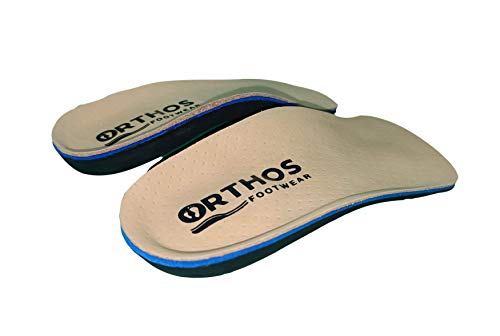
ORTHOS Footwear 3/4 Length Orthotic Insoles
What We Like
- 3/4 length fits tight cleats
- Made in USA construction
- Choice of leather or neoprene tops
- Shock absorption with arch support
Trade-offs
- Universal fit suits only regular width shoes
- Won't suit wide shoes; made for regular width
Three-quarter length means the insole stops short of the toes, so it slips into snug cleats without crowding your forefoot. That matters in a soccer boot, where a close fit is the whole point. You get arch support and shock absorption under the heel and midfoot, aimed at plantar fasciitis, low arches and flat feet. The brand makes it in the USA, which will appeal if you prefer buying domestic. Because it is built to fit most regular width shoes, even footwear without removable insoles can take it. For a player who wants support without losing toe room, it makes sense.
Because this is a universal fit for regular width shoes, it is not shaped specifically for cleats. If your boots are narrow or extremely low volume, a dedicated pick like the Currex CleatPro, listed at 12.6 inches long and 4.3 inches wide, is built specifically for cleats and may sit more naturally. This one is a general orthotic that happens to suit tight footwear, including cleats, golf and ski shoes. Pick it for support and domestic manufacturing, and pick a cleat-specific insole if grip and boot-specific shaping are your priority.
Product photos
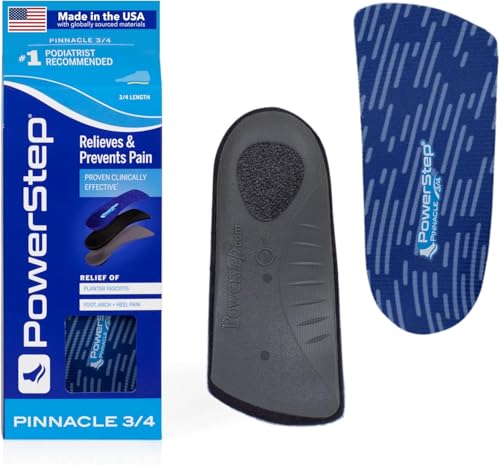
PowerStep Pinnacle 3/4 Orthotic Insoles
What We Like
- Tapered 3/4 length saves toe room
- Contoured arch and heel cradle
- Non-slip heel pad limits shifting
- Plush cushioning for long wear
Trade-offs
- Stops short of toes, no forefoot cushioning
- Neutral arch shape only, one profile
- Listing covers Men's 9-9.5 / Women's 11-11.5
A contoured, firm-but-flexible arch paired with a heel cradle gives the midfoot steady structure, which is what you want from an insole aimed at everyday walking and standing. The listing also points to plantar fasciitis relief, so it speaks to people with sore heels and arches. Plush cushioning softens long stretches on your feet, and the non-slip heel pad is there to reduce shifting inside the shoe. The 3/4 length ends in a tapered edge that leaves extra room at the toes, which makes it a sensible pick for tighter-fitting shoes and for shoes where the factory insole cannot be removed.
The cut itself is the biggest compromise. Because the insole stops short of the toes, there is no cushioning layer under the forefoot, and the arch is a single neutral shape rather than a choice of profiles. Sizing also matters, since this listing covers Men’s 9-9.5 and Women’s 11-11.5. The closest rival is the ORTHOS 3/4 Length insole, which shares the 3/4 cut and USA build, so the decision comes down to fit and feel. If you want cushioning under the whole foot, look at a full-length pick instead.
Product photos
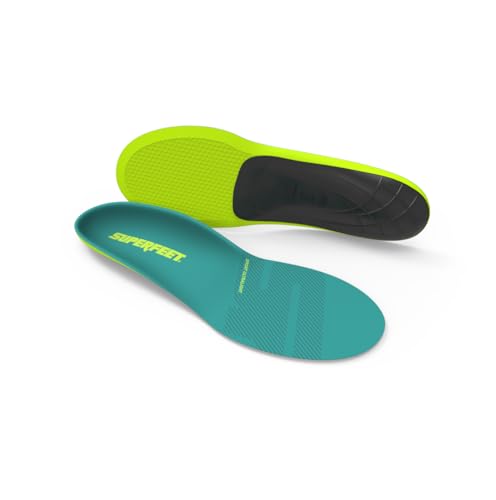
Superfeet Sport Ultralight Insoles
What We Like
- EVOLyte carbon fiber cap stabilizes without bulk
- Lightweight foam cushions across many athletic shoes
- MoistureWick top cover manages sweat and odor
- Sculpted heel cup secures the foot
Trade-offs
- Size 9.5-11 M only suits that range
- Not cleat-specific like Superfeet Cleat Playmaker
Strong yet lightweight support is what the EVOLyte carbon fiber cap is built to deliver, stabilizing the foot without adding bulk. That matters on training days, when you are running drills, doing sprints and swapping between shoes. The contoured arch and sculpted heel cup hold your foot in a natural position, which helps reduce fatigue as the session drags on. The lightweight foam adds responsive cushioning, so the insole works across a variety of athletic shoes. This suits the player who trains often and wants one insole that moves between cleats, trainers and running shoes. The MoistureWick top cover also helps control sweat and odor, a small blessing when your kit bag lives in the trunk of the car.
As a general sport insole rather than a dedicated cleat design, this one asks for some compromise. Superfeet’s own Cleat Playmaker line is the one built for the pitch, so if match-day grip and cleat-specific cushioning matter most, that is the better pick. The fixed size band of 9.5-11 M or 10.5-12 W also leaves no room for trimming guesswork if you sit outside it. Against the PowerStep Pinnacle 3/4, which lists a similar 0.2 pounds, this is a full-length insole, so it fills more of a snug cleat. If your boots already fit tightly, test that carefully. For relaxed training shoes and mixed use, though, the light build is a genuine advantage.
Product photos
How We Evaluated Insoles For Soccer Cleats
This guide is research-led. We reviewed manufacturer specifications and product listings, expert buying round-ups and the patterns that show up in owner feedback. We did not run our own wear tests, so every claim here rests on documented features and what owners commonly report.
Four criteria mattered most. Thickness came first, because cleats have so little interior volume that a bulky insole can create pressure. Heel hold and grip came second, since a foot that slides inside the boot wastes energy and causes blisters. Arch support and cushioning came third, and sizing and trimmability fourth, because several picks cover only a narrow size range or cannot be cut.
The limit of this approach is fit. Two players with the same shoe size can have very different cleat volume and foot shape, so a pick that suits one boot may feel tight in another. Check the size range on each listing, and read our notes on football boot fit before you commit.
What To Look For In Insoles For Soccer Cleats
The right insole depends on your cleat volume, your arch and how you play. Start with the boot, then match the insole to it.
The best soccer insole is thin enough to leave room in a low-volume cleat, holds the heel firmly, and gives arch support that fits your foot. Check the size range, whether it can be trimmed, and whether you want a carbon plate or soft cushioning.
Profile And Fit
Soccer cleats are low volume, so a thin arch-supporting design is the safest route. Options range from the 0.5mm OUPOWER Pro Carbon Fiber Insoles to the thicker Currex CleatPro, which gives more cushioning and a deep heel cup. If the boot has stretched or feels roomy, a slightly thicker forefoot can improve the fit.
Many cleats have a glued-in insert. It can usually be pried up from the middle of the arch, which frees space for a replacement. Browse cleat inserts with that extra room in mind.
Support, Cushioning And Plates
Arch support helps limit overpronation and keeps the foot aligned through cuts and landings. Players with flat feet or who need relief from plantar fasciitis should look at the contoured arch and heel cradle designs, including the 3/4 length picks that save toe room.
Carbon fiber plates, like the VKTRY Gold, target energy return on sprints but add stiffness and give less plush cushioning. If you want softer shock absorption instead, foam designs like Superfeet Cleat Playmaker are a better match.
Heel Hold, Grip And Moisture
A deep heel cup and a grippy top surface keep the foot from sliding when you cut. This also helps with blisters, since a loose foot rubs. Cleats are notorious for odor, so a moisture-managing top layer or antimicrobial treatment is a useful bonus. Players who get heel pain should favor a cushioned, cupped heel.
Before buying, run through these checks:
- Confirm your size falls inside the listed range, since some picks cover only one or two sizes.
- Check whether the insole can be trimmed or must stay uncut.
- Remove the stock insert and compare the shape to the new one.
- Try them with your match socks, not thin liners.
- Replace insoles when the top layer wears through or support feels flat.
Rule of thumb: pick the thinnest insole that still gives the support your foot needs, then confirm the size before you worry about extras.
Insoles For Soccer Cleats Compared
The table below lines up all 10 insoles side by side so you can compare profile, support style and fit limits at a glance. Weigh the pros and cons of insoles against how snug your cleats already are.
| Product | Material | Listed size | Thickness/profile |
|---|---|---|---|
| Currex CleatPro Thin Arch Support Insoles | Bamboo midlayer | L | Thin |
| Superfeet Cleat Playmaker Insoles | Aerospring comfort foam | 7.5-9 Men | Low-profile |
| VKTRY Gold Carbon Fiber Cleat Insoles | Carbon fiber | N/A | 0.4 inches |
| Currex ActivePro Sport Insoles | Heel and toe foam | Medium | N/A |
| FORM Premium Insoles UB-SIZED Insoles | High-density foam | Men's 6-6.5 | Ultra-thin |
| OUPOWER Gen3 Slim Soccer Cleat Insoles | N/A | US10.5-11 | Slim thickness |
| OUPOWER Pro Carbon Fiber Insoles | Carbon fiber | US 9.5-10 | 0.5mm |
| ORTHOS Footwear 3/4 Length Orthotic Insoles | Leather or neoprene | N/A | N/A |
| PowerStep Pinnacle 3/4 Orthotic Insoles | N/A | Men's 9-9.5 | Low-profile |
| Superfeet Sport Ultralight Insoles | EVOLyte carbon fiber | 9.5-11 M | N/A |
Frequently Asked Questions
What is the best insole for soccer cleats?
The Currex CleatPro Thin Arch Support Insoles are our best overall pick. They offer low, medium and high arch options, a deep heel cup and a grippy surface that keeps the foot connected to the boot. If your cleats are extremely tight, the thinner picks such as the OUPOWER Pro Carbon Fiber Insoles may fit better.
Should you put insoles in soccer cleats?
Usually yes. Stock cleat inserts are often thin and generic, with minimal support. A better insole can add arch support, reduce rubbing that leads to blisters and cut foot fatigue late in a match. The catch is volume: choose a thin design so the boot does not feel crowded.
Do professional soccer players wear insoles?
Many do. Expert round-ups note that many pros use custom insoles, and that aftermarket options for everyday players have improved a lot. If you have major foot issues, custom insoles are worth considering over an off-the-shelf pair.
How thin should an insole be for soccer cleats?
As thin as your cleat allows. Soccer cleats are low volume, so look for a thin arch support rather than a bulky cushion. The OUPOWER Pro Carbon Fiber Insoles use a 0.5mm layer, while the VKTRY Gold is listed at 0.4 inches and can crowd snug cleats.
Can I trim insoles to fit my cleats?
Some can. Superfeet Cleat Playmaker Insoles are trim-to-fit, though cutting is permanent, so trace the stock insert carefully. The VKTRY Gold carbon plate must never be cut, so it needs the correct size from the start.
The Bottom Line
The Currex CleatPro Thin Arch Support Insoles are the best overall choice for players who want arch support, heel lock and cushioning in a narrow cleat. They suit most players looking for dependable soccer insoles without a complicated setup.
If you want a carbon plate for sprints, the VKTRY Gold Carbon Fiber Cleat Insoles are the best carbon fiber plate pick, while the OUPOWER Pro Carbon Fiber Insoles are the best ultra-thin carbon option. For heel or arch discomfort, the PowerStep Pinnacle 3/4 Orthotic Insoles are the best for plantar fasciitis. Players who want cushioning cut to their boot should look at the Superfeet Cleat Playmaker Insoles.
Whatever you choose, fit decides the result. Match the insole thickness to your cleat volume and confirm the size range first.
