
How to Clean Football Boots: The Universal 5-Step Method
This post contains affiliate links. As an Amazon Associate, we earn from qualifying purchases.
Clean football boots by hand-washing them with mild detergent and warm water immediately after use, scrubbing with a soft brush, rinsing thoroughly, and air-drying indoors away from heat. Never use a washing machine, dryer, or harsh chemicals.
That routine is the single biggest factor in whether a pair lasts one season or three. Knowing how to clean football boots properly is essential. The alternative isn’t just dirty boots, it’s degraded glue, frayed materials, and a loss of the precise touch you paid for.
What follows is the consensus method every major brand agrees on for how to clean football boots, plus the specific tweaks for your boot’s material, and the honest disagreements on the details (like how often to wash laces) so you can pick your own routine.
Key Takeaways
- Clean boots after every session; dried mud abrades materials and weakens glue.
- Use only mild detergent and a soft brush; harsh cleaners and stiff bristles strip coatings and void warranties.
- Air-dry indoors, never with heat; direct sun or radiators can warp soles and damage synthetic uppers.
- For modern knit uppers (Flyknit, IntelliKnit), avoid soaking, wipe with a damp cloth to prevent waterlogging the fibres.
- Never use a washing machine; the spin cycle knocks boots against the drum, breaking studs and compromising structure.
The Universal 5-Step Cleaning Method
The core process for how to clean football boots is the same for Nike, O’Neills, and Under Armour. It’s about removing the mud, sweat, and bacteria that break boots down. Skip this, and you’re not just looking at stains.
Remove loose dirt, hand-wash with a soft brush and mild detergent in warm water, rinse thoroughly, stuff for shape, and air-dry at room temperature away from direct heat sources. This preserves the structural integrity of the soleplate and upper materials.
Step 1: Knock off the bulk. Do this right on the pitch if you can. Knock the soles together or use a stick to dislodge packed mud and grass from the studs. That gritty layer acts like sandpaper once it dries, grinding away at the outsole every time you walk.
Step 2: Prep your wash station. Fill a sink or bucket with warm water, not hot. Use warm water, not hot. Add a small squirt of mild dish soap or laundry detergent. Harsh chemicals like bleach will discolour and degrade synthetic materials.
Step 3: Scrub, but match the brush to the material. This is the why-layer. A stiff brush on a knit upper will pull and fray the threads. A soft brush on a tough synthetic soleplate won’t get the mud out.
- For the soleplate and studs: Use a firmer brush (an old toothbrush works). Scrub along the grooves to clear debris. Under Armour explicitly says it’s fine to scrub studs with water and a hard brush.
- For synthetic leather uppers (like the Nike Tiempo): A soft-bristled brush or flannel is safe. You can apply a bit more pressure here.
- For knit uppers (Nike Flyknit, Under Armour IntelliKnit): Use only a soft brush or a damp cloth. Nike’s guide is clear: avoid soaking the upper.
Step 4: Rinse and remove insoles. Hold the boots under a gentle stream of cool water or pour water over them to rinse all soap away. Rinse all soap away. Pull out the insoles; this step is required for proper drying. It’s also your chance to tackle odor at the source by cleaning the inside of your boots.
Step 5: Stuff for shape and start drying. Immediately after rinsing, loosely stuff the toe box with newspaper or a clean cloth. This absorbs moisture from the inside and prevents the upper from collapsing as it dries. Then, move to the critical drying phase.
Drying: The Make-or-Break Phase
This is where most boots are ruined by good intentions. Heat is the enemy.
Common mistake: Putting wet boots on a radiator or in direct sun to dry faster. The synthetic materials and glues can warp, stiffen, or crack, and O’Neills states this will void their warranty.
You must let them air-dry at room temperature. A warm room is fine; a heat source is not. Place them in a well-ventilated spot, not a damp basement or a sealed kit bag. Remove the laces and open the tongue wide to maximize airflow.
The newspaper trick has different recommendations from official guides. You can pick. * Nike suggests stuffing synthetic leather boots lightly with newspaper while air-drying to maintain shape. * O’Neills recommends stuffing boots with newspaper overnight if they become wet. * Under Armour advises loosely packing with scrunched newspaper or kitchen towel and replacing it every hour or so until the inside is drier.
Whichever you choose, the goal is a boot that’s completely dry to the touch inside and out before you even think about storage. For more on avoiding traps, see our guide on the right way to dry football boots.
Material-Specific Rules You Can’t Ignore
Not all boots are made the same, and treating them that way shortens their life. The biggest divide is between knit and traditional synthetic uppers.
| Upper Material | Cleaning Tool | Key Limitation | Drying Note |
|---|---|---|---|
| Knit (Flyknit, Gripknit, IntelliKnit) | Soft brush or damp cloth | Avoid soaking – waterlogs fibres | Stuff lightly; air-dry flat |
| Synthetic Leather (e.g., Nike Tiempo) | Soft brush or flannel | Can tolerate firmer scrubbing | Stuff to hold shape |
| Traditional Synthetic | Soft to medium brush | Avoid harsh chemicals | Standard air-dry |
For Knit Uppers: The rule is simple: damp, not wet. Soaking stretches the knit and compromises the fit. Nike’s guide says to wipe with a damp cloth and mild detergent, not submerge.
For Synthetic Leather (e.g., Nike Tiempo): These can be more forgiving. Nike says you can use a slightly firmer scrub, but the same mild detergent rule applies. The shape is crucial, always stuff them while drying so the material doesn’t crease or collapse.
Understanding these differences between leather and synthetic boots informs your whole care approach from day one.
What About the Laces and Insoles?
Here the official brands disagree, so you have a legitimate choice.
Nike and O’Neills treat lace cleaning as part of the every-time routine, while Under Armour suggests cleaning sockliners and laces roughly once a month unless it was super muddy. Nike even says you can machine-wash football boot laces in a mesh bag (but air-dry them). Under Armour offers a more relaxed take: unless it was a super muddy game, clean your sockliners and laces roughly once a month.
My take? Follow the mud. If they’re caked, wash them. Removable insoles are the exception. Under Armour says removable sockliners can be machine-washed on a cold, delicate cycle. Always air-dry them separately.
This same logic applies to the rest of your kit. Knowing how to remove grass stains from your kit allows you to handle the worst messes without damaging the fabric.
The “Never-Ever” List (This Voids Warranties)
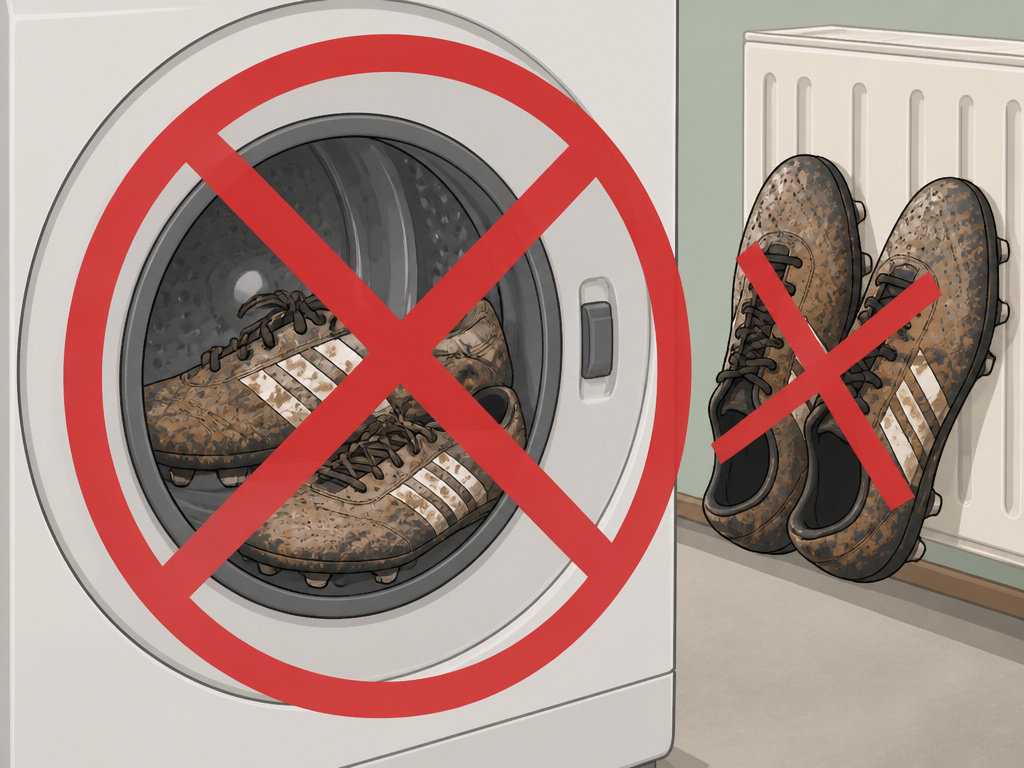
Some mistakes have immediate, costly consequences.
- The Washing Machine: Every source bans this. The spinning drum batters the boots, breaking or loosening studs and destroying the structural integrity. It’s not a shortcut; it’s a death sentence.
- The Dryer, Radiator, or Hair Dryer: Direct heat warps plastic soleplates and can melt glues. O’Neills explicitly states that using a heater or hairdryer voids their warranty.
- Harsh Chemicals: Bleach, strong detergents, or abrasive cleaners strip away protective coatings and discolour materials permanently.
- Soaking Knit Boots: Submerging Flyknit or similar uppers compromises the fit and feel they’re designed for.
- Storing Wet or in a Sealed Bag: This is an invitation for mold and permanent, foul odors. Always ensure boots are bone-dry before storage.
Storage is the final guard. Keep them in a cool, dry, well-ventilated place, not a damp gym bag, airtight box, or car boot. A simple shelf is perfect.
Frequently Asked Questions
Can I clean football boots in the washing machine?
No. Every manufacturer’s guide prohibits it. The machine’s spin cycle knocks the boots against the metal drum, which can crack the soleplate, break studs, and damage the shape of the upper.
How do you get rid of bad smells?
Prevention is best: clean and dry them promptly after every use. If odor persists, spray the inside with a 50/50 mix of white vinegar and water after cleaning, or place a sock filled with baking soda inside overnight. For a full breakdown, our guide on how to stop football boots from smelling has more tactics.
Can I use a brush on the studs?
Yes. The studs and soleplate are designed for wear. Under Armour’s guide says it’s fine to scrub them with water and a hard brush to remove packed mud and grass.
How often should I clean my boots?
Clean them as soon as possible after every match or training session. Dirt and moisture left on the boots start degrading the materials and glues. A quick post-game wipe-down is vastly better than a weekly deep clean.
What’s the best way to dry boots quickly?
Loosely pack them with scrunched newspaper, replace the newspaper every hour, and leave them in a well-ventilated room. Do not use direct heat. Removing the laces and insoles is essential for speed.
Before You Go
The one habit that changes everything is the post-session wipe-down. Even if you don’t do a full wash, knocking off the mud and wiping the uppers with a damp cloth adds weeks of life to your boots. Everything else, the deep cleans, the odor battles, becomes less urgent.
And just like you maintain your boots, don’t forget the other gear. The same care principles apply to cleaning your shin guards and knowing how to clean a football properly. It all adds up to gear that performs when you need it.
