
Common Football Injuries Explained: What the Data Says
This post contains affiliate links. As an Amazon Associate, we earn from qualifying purchases.
Common football injuries are primarily lower limb muscle and ligament issues, with hamstring strains, ankle sprains, and knee injuries like ACL tears being most frequent. Recovery spans from days to over nine months, but a significant portion are preventable through structured programs like the FIFA 11+ warm-up.
That 60–90% figure for lower limb injuries defines what you see in a physio’s waiting room. The game’s demands, sprinting, cutting, jumping, and contact, dictate where the body breaks down. Understanding this isn’t about fear; it’s about mapping risk so you can build a defense, and a starting point is to have common football injuries explained.
What follows is a breakdown of the most common diagnoses, grounded in studies tracking professional clubs. We’ll look at why men and women get hurt differently, how long comebacks really take, and the one warm-up routine that cuts injury rates almost in half.
Key Takeaways
- 60–90% of football injuries affect the lower limbs, with hamstring strains, ankle sprains, and knee ligament issues being common, though the leading injuries differ by sex.
- The FIFA 11+ warm-up program reduces overall injuries by 30–47% and lower limb injuries by 39–44%, making it the single most proven prevention tool.
- Re-injuries cause significantly longer absences than the first occurrence, especially for hamstrings, which have a 12–41% recurrence risk in elite football.
- Sex and age change the risk profile: hamstrings are the top issue for male players, while females face higher rates of knee and ankle injuries.
The Injury Landscape: Where and How They Happen
Football isn’t a random collision sport. Injuries follow predictable patterns tied directly to the mechanics of play. The data from a 16-year UEFA study of elite clubs paints a clear picture: this is a game played from the waist down.
Most soccer injuries occur in the lower limbs (60–90%), with common sites including the ankle, knee, and thigh. About two-thirds are traumatic (like a tackle), and one-third (27–33%) stem from overuse. Non-contact injuries, those from sprinting or cutting alone, account for 26–58% of all injuries.
The “when” is just as telling. Injuries spike in the initial or final 15 minutes of a match. The start points to inadequate warm-ups; the finish screams fatigue. This pattern alone argues for better preparation and smarter substitutions.
| Injury Mechanism | Percentage of All Injuries | Typical Examples |
|---|---|---|
| Traumatic (Contact) | ~66% | Ankle sprain from a tackle, knee MCL blow from a side challenge |
| Overuse | 27–33% | Shin splints, patellar tendonitis, stress fractures |
| Non-Contact | 26–58% | Hamstring strain during a sprint, ACL tear during a cut |
Sex plays a major role too. For male players, the hamstring is public enemy number one, followed by the ankle, knee, and groin. The story shifts for female players, where knee and ankle injuries top the list, followed by thigh and hamstring issues. This isn’t trivia, it means prevention advice needs tailoring. A hamstring-focused program might miss the mark for a women’s team concerned about ACL risk.
I’ve stood on that muddy touchline watching players jog a lap and call it a warm-up. That’s how you guarantee someone pulls up in the first ten minutes.
Common Injuries: A Closer Look
The language around injuries often gets fuzzy. “Pulled muscle” or “twisted ankle” doesn’t help you understand the recovery clock. We need to get specific about the big hitters.
Hamstring Strain
This is the king of muscle injuries in the men’s game, making up 37% of all muscle issues in male pros. It’s that sharp, grabbing pain in the back of the thigh during a full-speed sprint. The recovery window is the tricky part. A UEFA study found a median absence of 13 days for structural hamstring injuries, while a meta-analysis pegged return-to-match at 21 days. That gap shows the difference between being “available” and being truly match-fit.
Where this goes sideways: Returning the moment the pain fades. A hamstring has a 12–41% risk of re-injury in elite football, and the second tear always costs more time than the first.
Ankle Lateral Ligament Sprain
The classic “rolled ankle.” It happens landing from a header, in a tackle, or just stepping on uneven turf. It typically falls into the moderate injury category, which causes a median absence of 8–28 days. The meta-analysis data suggests a return-to-training timeline of about 19.9 days. The real danger is instability, a poorly rehabbed sprain becomes a recurring nightmare.
Anterior Cruciate Ligament (ACL) Rupture
The most severe common diagnosis. It often happens without contact: a planted foot, a sudden change of direction, and a pop. The median time lost for a pro is 205 days (just under 7 months), though less than 15% of players take longer than 9 months. This contrasts with many recent clinical guidelines which recommend 9–12 months of rehab. The shorter pro timeline hints at the immense pressure to return, which is a risk in itself.
Calf Strain
Another muscle injury that loves acceleration and jumping. Recovery can be as short as four to five days for a mild grade or stretch to 45 days for a severe tear. It’s a great example of why “strain” is useless without a grade.
Knee Medial Collateral Ligament (MCL) Injury & Meniscus Tears
The MCL is often injured by a direct blow to the outside of the knee. It’s painful but often heals without surgery in a few weeks. A lateral meniscus tear, however, is a severe injury typically causing an absence of more than 28 days. These are the joint injuries that can grind a season to a halt.
For a deeper dive on any specific issue, our guides on ACL injury and meniscus tear recovery walk through the details.
Recovery Timelines: What the Data Actually Says
“How long until I can play?” It’s the first question anyone asks. The answer is never simple, but large-scale studies give us realistic brackets. The UEFA Elite Club Injury Study classifies injuries by severity based on time lost, which is far more useful than just a diagnosis.
| Severity Category | Median Absence | Common Examples |
|---|---|---|
| Mild | 7 days or less | Minor contusions, some joint pain. Often “stay-and-play” injuries. |
| Moderate | 8–28 days | Hamstring strain (13 days), ankle sprain, groin pain, calf strain. |
| Severe | >28 days | ACL rupture (205 days), lateral meniscus injury. |
We can apply this. That hamstring strain? Likely moderate, so plan on 2–4 weeks. That tweaked ankle? Also moderate, so similar timing. The calf strain? Could be mild or moderate, hence the 4-to-45-day range.
A systematic review of injury mechanisms and timelines reinforces that recovery depends entirely on the mechanism and force involved. A non-contact grade 1 hamstring tear is a different beast from a grade 3 rupture.
Recovery has a strict rule: the clock resets if you rush it. A re-injury isn’t just a setback; it’s a longer, more complicated absence. This is why a proper return to play protocol is essential for protecting your next season.
Common mistake: Using pain as the only guide for return. Pain eases long before the tissue has regained its strength or the neuromuscular control has been restored. That gap is where re-injuries live.
Why Prevention Isn’t Just Luck
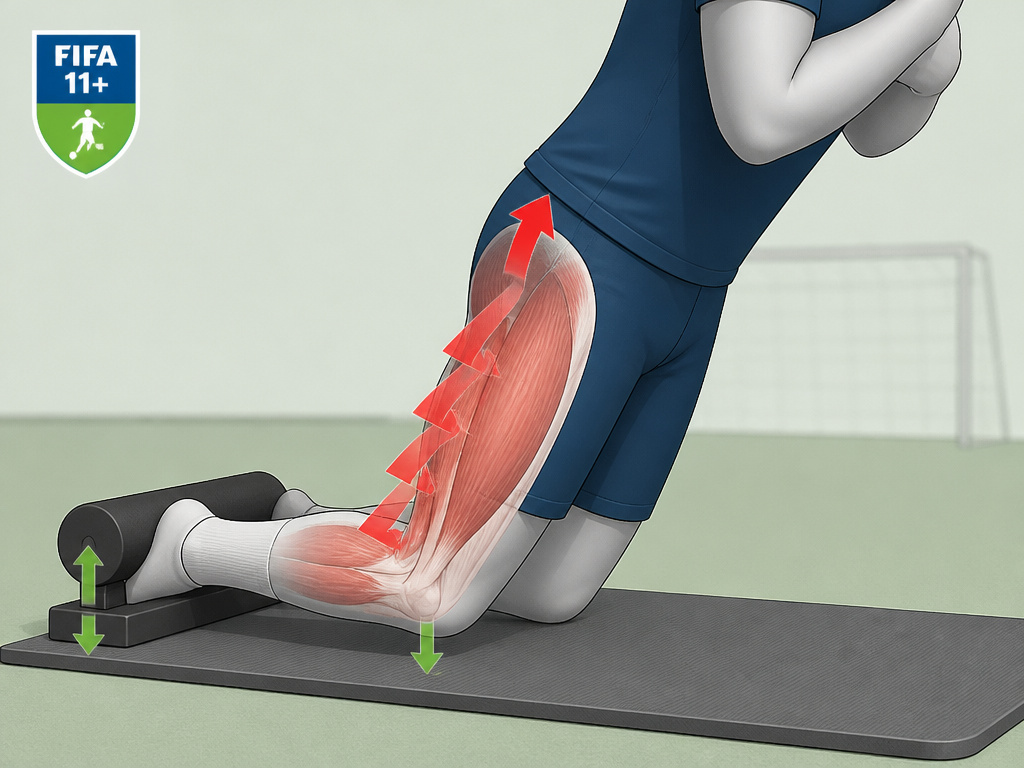
Too many injuries get chalked up to bad luck. The research disagrees. A significant portion, especially non-contact muscle and ligament tears, are preventable with the right preparation. This is where the commodity advice of “warm up properly” meets the non-commodity specificity of a named, proven program, a key distinction in any common football injuries explained resource.
The gold standard is the FIFA 11+ warm-up program. This program is a structured, 20-minute routine of running, strength, plyometric, and balance exercises. The evidence is robust: it reduces overall injury rates by 30–47% and lower limb injuries by 39–44%. For kids under 12, the 11+ Kids variant cuts all injuries by 48%.
Those numbers come from the Springer football injury review, an umbrella analysis of the best prevention evidence. It’s not a marginal gain; it’s a decisive advantage that most amateur teams still ignore.
A complete injury prevention strategy builds on this foundation. It includes:
- Adopting the FIFA 11+ as the mandatory team warm-up.
- Managing workload. Sharp, sudden spikes in training volume are a classic trigger for overuse injuries like stress fractures.
- Incorporating targeted strength work. Nordic hamstring curls cut hamstring strain rates. Hip and glute strength protects the knee.
- Prioritizing recovery. Sleep and nutrition aren’t soft topics; they’re when the body repairs the micro-damage from training.
My stance? Compression gear and taping are overrated as primary prevention tools. They might offer support or proprioceptive cueing, but they don’t address the strength and control deficits that cause injuries. The British Orthopaedic Association guidelines agree, emphasizing neuromuscular training over passive aids.
What To Do If You Get Injured
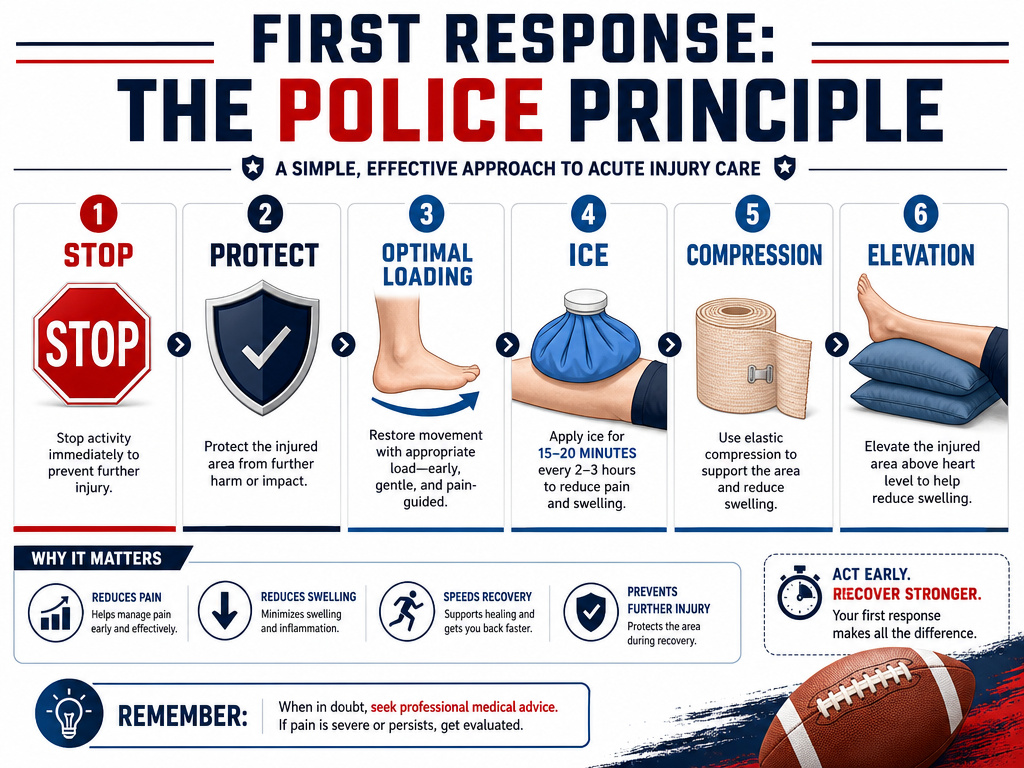
The moment of injury is chaos. Having a clear first-response plan cuts through the panic and can improve outcomes. This involves sensible first aid while you seek a professional diagnosis.
- Stop. Immediately. This is the hardest rule. Trying to “run it off” or play through sharp pain turns a grade 1 strain into a grade 2 tear. Your first job is to prevent more damage.
- Apply the POLICE Principle. The old RICE (Rest, Ice, Compression, Elevation) has been updated.
- Protect: Avoid movements that cause pain.
- OL (Optimal Loading): Start gentle, pain-free movement as soon as possible to promote healing.
- Ice: Apply for 15-20 minutes every 2-3 hours for the first 48 hours.
- Compression: Use a bandage or sleeve to manage swelling.
- Elevation: Keep the injured area above heart level when resting.
- Get a Professional Diagnosis. “It’s just a sprain” is a guess. A physiotherapist or sports doctor can identify the specific structure damaged, grade its severity, and map out a rehab plan. This step is essential for anything more than minor soreness.
- Follow a Structured Rehab Plan. Rehab for a sprained ankle or a calf strain follows specific phases: reducing pain/swelling, restoring range of motion, rebuilding strength, regaining sport-specific function, and finally, returning to play.
The timeline you discussed with your physio is a guide, not a promise, a crucial nuance in the common football injuries explained process. If a step causes pain, you repeat the previous step. The end goal isn’t just being pain-free; it’s being as strong and resilient as you were before.
What to Know About Shoulder Injuries in Football
While football is primarily a lower-body sport, shoulder injuries like dislocations and rotator cuff problems do occur. These are typically traumatic contact injuries, often resulting from a direct impact or a hard fall onto the shoulder or outstretched arm. Goalkeepers and outfield players competing for headers are particularly susceptible. Recovery time varies significantly based on the severity of the injury, ranging from a brief absence for a mild issue to a prolonged period for a severe structural problem. Management focuses on restoring stability and range of motion before a gradual return to play.
How Proper Equipment Prevents Football Injuries
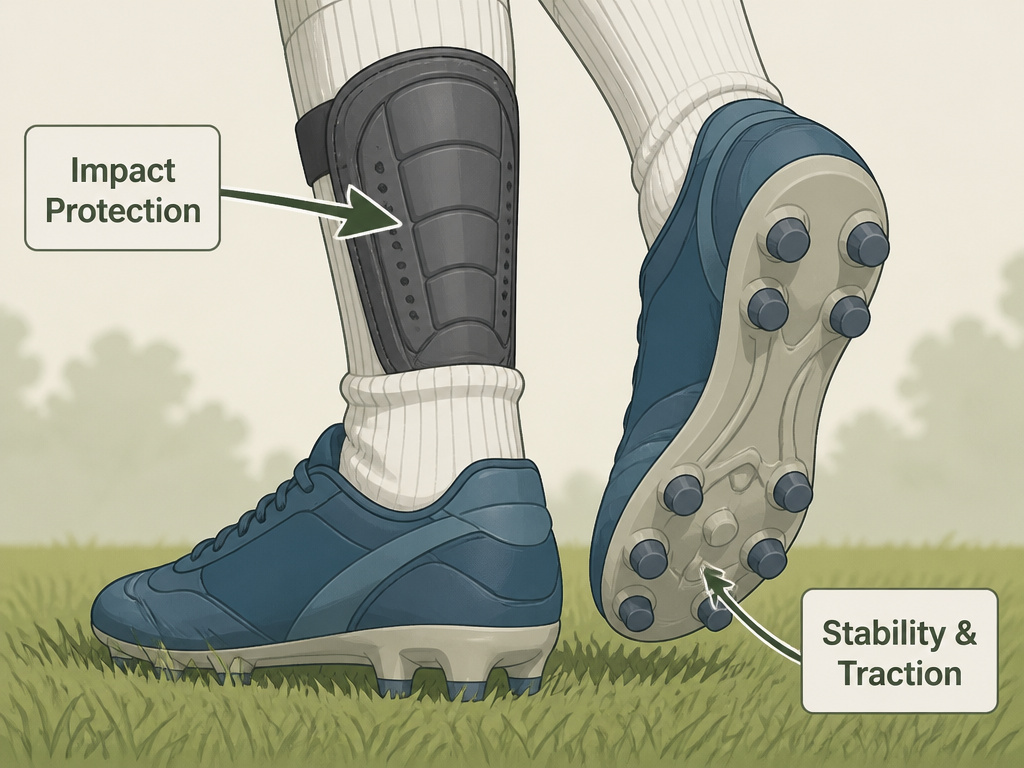
Using the right equipment is a fundamental part of injury prevention. Well-fitted footwear appropriate for the playing surface provides essential traction and stability, helping to reduce non-contact slips and twists that can lead to ankle and knee injuries. Shin guards are mandatory for protecting against direct impact trauma to the lower legs. For younger players, ensuring equipment is the correct size and not outgrown is crucial. While gear cannot prevent all injuries, it addresses specific external risks, allowing players to focus on performance. Incorporating a structured warm-up program alongside proper equipment offers the best combined protection.
Football Injury Statistics and Frequency
The vast majority of football injuries, between 60 and 90 percent, affect the lower limbs. Muscle and tendon injuries are the most prevalent type, accounting for nearly one-third of all injuries, with 92 percent of those occurring in the lower body. Hamstring strains are the single most frequent diagnosis. Patterns differ by gender: among male players, hamstring issues are most common, followed by ankle, knee, and groin injuries. For female players, knee and ankle injuries lead, followed by thigh and hamstring problems. About two-thirds of all injuries are traumatic, often occurring during the opening or closing stages of a match.
Frequently Asked Questions
What are the top 3 most common injuries in football?
For male players, the most common injuries are hamstring strains, followed by ankle sprains and knee injuries (including ACL and MCL issues). For female players, knee and ankle injuries are most common, followed by hamstring/thigh injuries.
What’s the worst common football injury?
For time lost, an ACL rupture is the most severe common injury, with a median absence of over 6 months for professionals. Its long rehab and high risk for long-term joint health issues make it the injury players and clubs fear most.
Can common football injuries be prevented?
Yes, a significant portion can. Research shows that implementing the FIFA 11+ warm-up program reduces overall injuries by 30-47%. Proper load management, targeted strength training (like Nordic hamstring curls), and adequate recovery are also key pillars of preventing injuries.
How long does it take to recover from a hamstring strain?
Recovery varies by severity. A mild (grade 1) strain may allow a relatively quick return, but recovery varies by severity. A moderate (grade 2) tear typically results in an absence consistent with the moderate injury category (8–28 days). A complete (grade 3) rupture results in a prolonged absence, with one meta-analysis indicating a return-to-training time of 65.3 days. The specific hamstring injury rehab protocol dictates the exact timeline.
What should I do first after getting injured on the pitch?
Stop playing immediately. Apply the POLICE principle (Protect, Optimal Load, Ice, Compression, Elevation) and seek a professional diagnosis from a physiotherapist or doctor. Do not try to self-diagnose the severity.
The Bottom Line
Football will always carry injury risk, it’s built into the sport’s explosive, contact nature. But that risk isn’t a mystery. We know 60–90% of problems will be in the legs, that hamstrings and knees are the biggest targets, and that the first and last 15 minutes of a match are the most dangerous.
The single most powerful thing any team or player can do is commit to the FIFA 11+ warm-up. A 30–47% reduction in injuries isn’t a marginal gain; it’s the difference between a full squad and an injury crisis by November. Pair that with smart load management and respect for recovery timelines, and you’re not just preventing injuries, you’re building a more resilient athlete.
Watch the back line in your next match. Notice how they move as one unit, communicating and covering. Treat your body’s weaknesses the same way. Don’t leave your hamstrings or knees isolated and exposed. Build a cohesive defense from the ground up, starting with your next warm-up.
