
How to Save a Penalty: The Goalkeeper’s Playbook
This post contains affiliate links. As an Amazon Associate, we earn from qualifying purchases.
Saving a penalty requires matching three things: your starting position, your reading of the taker’s cues, and your dive timing. You must stay on your goal line until the ball is struck, use the taker’s run-up and body shape to predict direction, and launch with power to cover the corners. A key part of how to save a penalty is that, for most keepers, the biggest edge comes from delaying the dive and reacting to the shot, not guessing.
That edge is physical, but it’s won in the mind first. The seconds before the whistle are a negotiation, and everything from where you stand to how you move your arms is part of the script. This isn’t about being a mind reader. It’s about knowing which tells are real and which are cheap theater.
What follows is a keeper’s playbook for how to save a penalty. We’ll break down the taker’s unavoidable signals, walk through a four-step routine from whistle to save, and explain why the middle of the goal is the hardest place to score. By the end, you’ll have a concrete plan for the next penalty you face.
Key Takeaways
- Delay your dive and react to the shot; guessing early gives the taker an easy chip down the middle.
- Read the taker’s planting foot and hip rotation, these are the most reliable cues for shot direction.
- In a shootout, control your routine and walk slowly back to the line after every kick to reset the pressure.
- Practice diving to cover the top corners, not just the bottom ones; most savable penalties are placed high.
- Your starting position should be a foot off the center, forcing the taker to reconsider their favored side.
The Goalkeeper’s Built-In Advantage
The odds are published, and they’re not in your favor. But they’re also a lie. The static 75% conversion rate ignores the moments where you, the keeper, can tilt the math. Your advantage isn’t supernatural reflexes. It’s a set of physical constraints the taker cannot hide.
Every penalty taker must place the ball on the spot, take a run-up, and make a final planting step before striking. In that planting step, their hip and shoulder orientation locks in. A shooter aiming for the bottom right corner cannot plant their left foot open to the left and make a clean connection. The biomechanics won’t allow it. Your job is to watch for that lock.
The taker’s planting foot points within 30 degrees of their intended shot direction in over 80% of penalties. The hip rotation that follows in the next tenth of a second confirms it. These are mechanical facts, not guesses.
This is why highlight reels of how to save a penalty so often show the keeper diving the correct way before the ball is struck. They aren’t guessing. They’ve seen the foot plant, seen the hips start to turn, and they’re moving as the shooter’s leg begins its swing. The ball still travels at 60+ mph, but you’ve bought yourself a few critical milliseconds.
Reading the Taker: Spotting Real Tells vs. Cheap Theater
Takers know you’re looking for tells. The good ones will try to sell you a fake. They’ll glance at one corner, open their hips early, or stutter in their run. Ignore the eyes and ignore the stutter. The two signals that cannot be fully disguised are the planting foot and the position of the kicking foot’s instep at the moment of contact.
The Planting Foot
Watch the non-kicking foot. As the taker makes their final step before the shot, the toe of that planted foot will generally point toward their target. A foot pointed toward your right post strongly suggests a shot to that side. It’s the body’s way of lining up the swing.
The Hips and Shoulders
Immediately after the plant, the hips and shoulders will rotate to generate power. If the hips open early to your left, the shot is likely going to your left. A taker trying to go against their hip rotation will usually sacrifice significant power or accuracy.
The Run-Up: Straight vs. Angled
This is a more subtle cue. A long, straight run-up is often for power. The taker is building momentum to blast it. A shorter, angled run-up, approaching from the side, is typically for placement, often a finesse shot into the side-netting. A power shooter gives you less time to react but a smaller target to cover if you guess correctly. A placement shooter gives you more time but demands perfect precision in your dive.
Common mistake: Chasing the taker’s eyes. A professional penalty taker’s glance is a deliberate piece of misdirection more often than not. Train yourself to watch the waist down.
The 4-Step Penalty-Saving Routine
Once you know what to look for, you need a repeatable process. This routine turns theory into muscle memory, from the referee’s whistle to the moment your hands make contact.
1. Establish Your Presence
As the taker places the ball, take your position. Stand tall, maybe stretch your arms to make your frame look bigger. Tap each post deliberately. This isn’t superstition; it’s a timing mechanism for you and a visual intrusion for the taker. You are marking your territory. Then, settle into your stance: feet shoulder-width apart, weight on the balls of your feet, knees slightly bent, hands loose at your sides.
2. The Trigger: Watch the Plant
The whistle blows. The taker begins their run. Your eyes are locked on their torso and feet. The moment you’ve waited for is the planting of the non-kicking foot. This is your primary trigger. See the direction of that foot.
3. Commit and Explode
As the planting foot lands and the hips begin to rotate, you have your signal. Now you move. Push off powerfully with the leg opposite your dive direction. Drive your arms and hands toward the ball’s trajectory, leading with your fingers. Your body should be extended, like a spear, to maximize your reach. Aim to get your fingertips to the post.
4. The Follow-Through
If you make the save, parry the ball wide and away from danger, ideally out for a corner, not back into the six-yard box. If the ball beats you, get up immediately. Your job isn’t over. Be ready for a rebound, though the rules state other players cannot enter the box until the kick is taken.
| Step | Your Focus | The Taker’s Tell | If You Skip It… |
|---|---|---|---|
| 1. Establish Presence | Own your goal area, settle stance | Observes your confidence level | You start the duel on the back foot, reactive. |
| 2. Watch the Plant | Non-kicking foot direction | Foot plants, committing to shot vector | You are guessing, not reading. Odds drop significantly. |
| 3. Commit & Explode | Push-off power, full-body extension | Hips rotate, kicking foot makes contact | A slow, short dive leaves the corners uncovered. |
| 4. Follow-Through | Parry direction, immediate recovery | Ball is past you or in your hands | A soft parry leads to a tap-in rebound. |
Perfecting the Dive: It’s About Reach, Not Flair
A save at full stretch isn’t about looking good for the cameras. It’s a mechanical problem of covering the maximum area in the minimum time. The difference between a goal and a spectacular save is often six inches of extra reach from your fingertips.
Power vs. Placement Dives
You need two dive techniques. For a powerful shot aimed at the bottom corner, you need a fast, compact dive to get your body behind the ball. For a well-placed shot heading for the top corner, you need a full extension, sacrificing some downward coverage to reach upward.
- The Power Dive: Generate force from a lower center of gravity. Push off hard, tuck your lead shoulder slightly, and get your entire torso behind your hands. The goal is to make a solid block.
- The Placement Dive: Launch yourself upward and outward. Extend your arm fully from the shoulder, reaching with your fingers. Your legs will split for balance, but the power comes from your core and your push-off leg.
Hand Shape
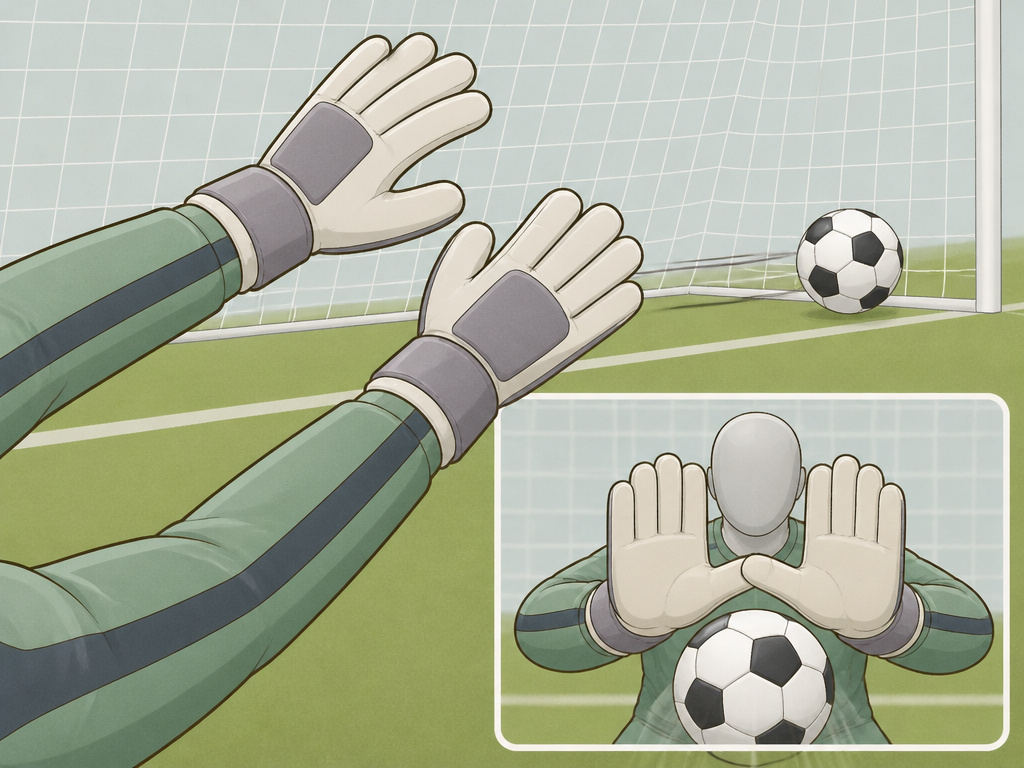
Your hands are not fists. For a low shot, your palms should face forward with fingers spread, forming a barrier. For a high shot, your fingers should be up and spread, trying to get fingertips to the ball to parry it over the bar. A common mistake is turning the palms inward on a high dive, which reduces your reach and control.
The Psychology of the Shootout vs. The In-Game Penalty
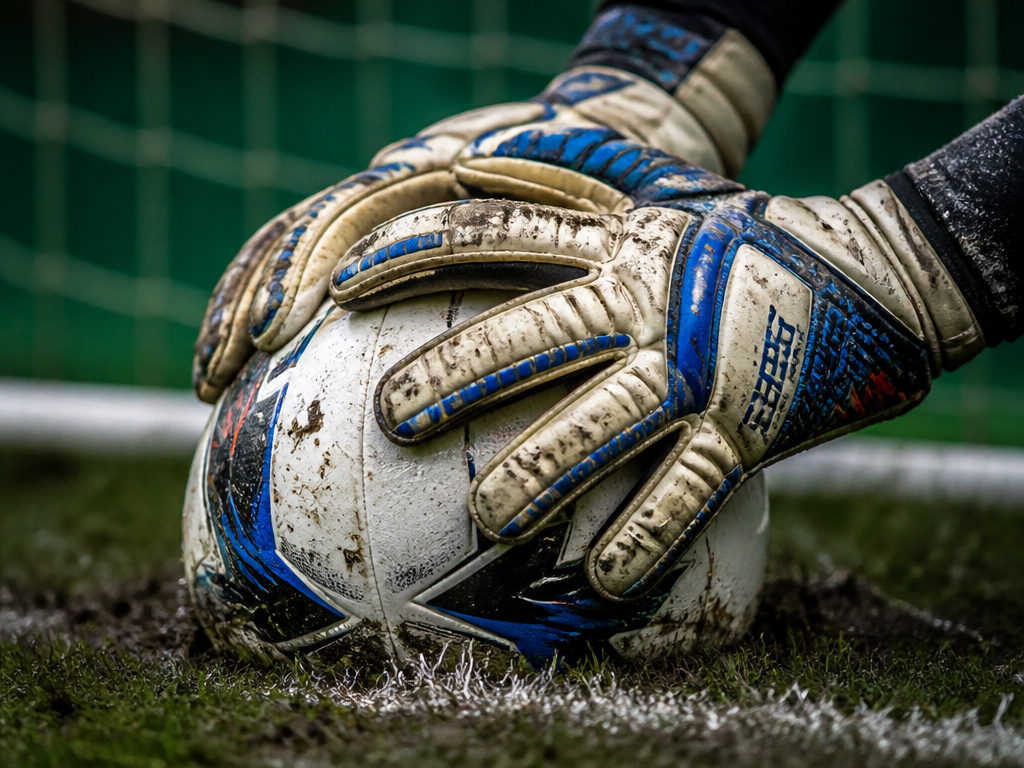
The technique is identical. The context is everything. An in-game penalty is a sudden, high-pressure event, often charged with emotion from a foul. A shootout is a cold, procedural war of attrition. Your strategy must adapt.
During a Match
The pressure is immediate and intense, but it’s also singular. Use the time the referee spends setting up to your advantage. Walk slowly to your line. Make eye contact with the taker. The message is simple: you are here, you are focused, this is not a free goal. Your primary goal is to make the save; your secondary goal is to disrupt the taker’s rhythm just enough.
During a Shootout
This is a marathon of nerve. You are no longer trying to win one duel; you are trying to win the series. Your routine between kicks is as important as your dive.
- After each kick (whether a goal or a save), walk slowly back to your line. Do not run. This controls the tempo and gives you time to breathe.
- Do not watch your teammate take their penalty. Turn your back, face your goal, and focus on your breathing. Their result is out of your control; your next save is not.
- If you save one, stay calm. Celebrate with your team, but reset quickly. The next taker will be even more determined.
Where this goes sideways: Changing your successful routine after conceding a goal in a shootout. If your process of walking slowly and focusing was sound, stick with it. Doubting your system mid-stream is how shootouts are lost.
Common Mistakes That Cost You Saves
Even with the right knowledge, keepers fall into predictable traps. These aren’t failures of ability; they’re failures of discipline.
Leaning Before the Kick
You see the taker glance left, so you subtly shift your weight to your right foot. This “lean” tips your hand and tells an observant taker to shoot the other way. It also kills your explosive power for the dive you just signaled. Stay centered until your read is complete.
Diving Too Early
This is the most common and costly error. The temptation to guess is overwhelming. But a premature dive turns a 24-by-8-foot goal into an open net for a composed taker. They will simply wait for you to go and pass the ball into the empty space. Your greatest weapon is patience.
Neglecting the Middle
Because keepers are trained to dive, shots straight down the middle are surprisingly effective. Takers know this. You must be mentally prepared to stand your ground if your read is inconclusive. Sometimes, holding your position and making yourself big is the correct “dive.”
Forgetting the Rebound
The save isn’t complete until the ball is cleared. A weak parry back into the center of the penalty area is a gift for any following attacker. Always try to deflect the ball wide or over the bar. And get to your feet instantly, the play is still alive.
Can you trust the penalty taker’s eyes?
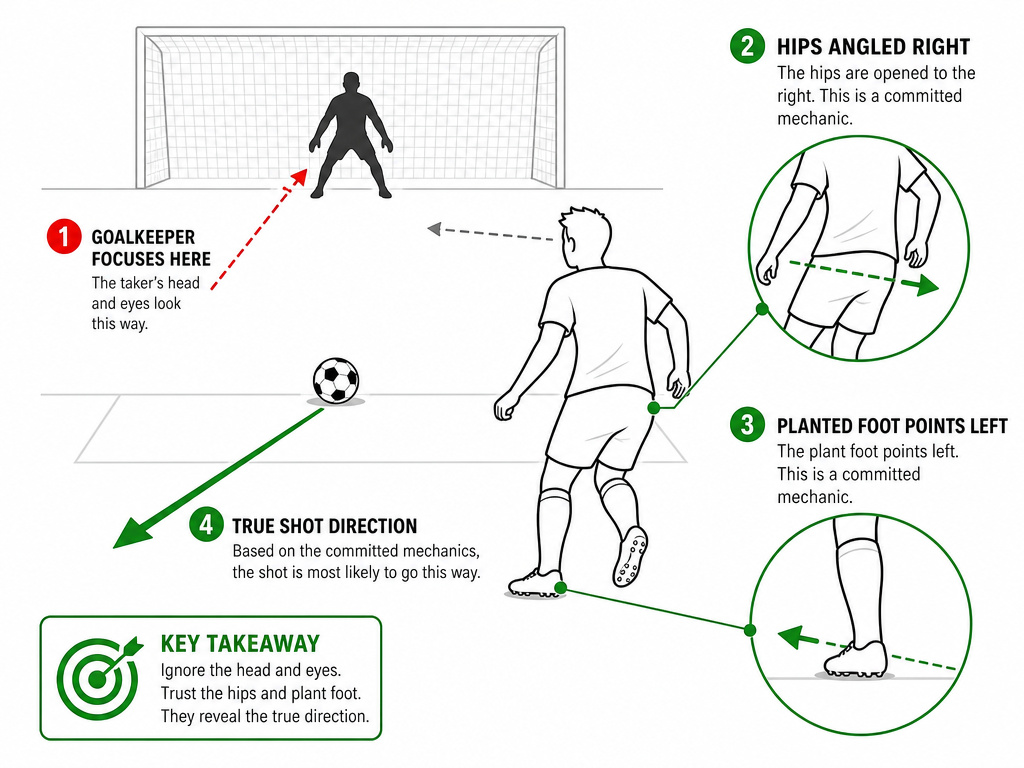
A taker’s eyes are the classic feint, a tool for misdirection. They will often look deliberately at one corner, selling a story to pull you early. This is a conscious performance. Your job is to watch for the point of no return. In the final stride before the foot meets the ball, the hips and plant foot must commit to a direction. The eyes can still be locked on the opposite side, but the body’s mechanics are now telling the truth. Ignore the opening act. Focus on the final, physical commitment that dictates where the ball will go.
Frequently Asked Questions
How hard is it to save a penalty shot?
Statistically, it’s one of the hardest tasks in sports, with professionals scoring about 75% of the time. But that’s an average. A prepared goalkeeper who studies takers and masters their technique can significantly beat those odds in a specific moment. The difficulty is less about reaction time and more about reading cues correctly under immense pressure.
What are the odds of saving a penalty?
For professional goalkeepers facing professional takers, the historical save rate is roughly 25%. This means you can expect to save about one in four penalties over a long career. In a single shootout, however, psychology and preparation can swing these odds dramatically for or against you.
What is the best way to score a penalty?
The most effective penalty is a firm, placed shot into the side-netting, about a foot inside the post and at waist to chest height. This area is far enough from the keeper to be unreachable on a correct dive, but high enough to avoid a comfortable save if they guess correctly and stay on their feet. Blast it down the middle is the second-most effective tactic, capitalizing on the keeper’s instinct to dive.
Can you move before the penalty is taken?
You must have at least part of one foot on the goal line when the ball is struck. You can, and should, move along the line. You can also shift your weight and use your arms. What you cannot do is come off the line forward before the kick. This is goalkeeper encroachment, and it results in a retaken penalty if the shot is missed, or a goal is awarded if it’s scored.
What happens if the goalkeeper saves a penalty?
Play continues immediately. If the keeper parries the ball back into the field of play, any player (except the kicker, who cannot touch it twice) can play the rebound. This is why parrying wide or over the bar is safer than parrying back to the penalty spot.
Before You Go
The next time you face a penalty, your job isn’t to be a hero. It’s to be a scientist. Observe the planting foot. Trust the hip rotation. Explode with technique, not hope.
One rule most guides skip: if you’re in a shootout and you’ve conceded two goals in a row using your normal read, switch to staying on your feet for the next kick. The law of probability says the taker is due to try the middle, and you’d be surprised how often that gamble pays off. Everything above assumes a shooter going for a corner, a truly brave shooter aims for the one place you’re told not to go.
Watch a shootout this weekend. Ignore the commentary and just watch the keepers. Count how many lean, how many guess early, and how many hold their nerve. You’ll start to see the game within the game.
